The Best Glass Bakeware of 2026

I switched from dark metal pans to glass bakeware years ago, and the reason is a little embarrassing: I like to watch. A clear dish lets me see the edges of a lasagna browning without cracking the oven door and dumping the heat. What glass actually buys you is one pan that goes from the freezer to the oven to the table to the fridge, which is why my metal pans now live at the back of a cabinet.

That's the promise, anyway. To find out how often it holds up, we cooked in 12 glass baking dishes and sets, from a 9x13 for family lasagna down to 6-ounce custard cups. Two things surprised us. Wall thickness varies far more than photos suggest, and the lid is where these sets are usually won or lost — a cover that seals beautifully but takes two hands and a prayer to pull off ends up in a drawer by February.

Our seven are sorted by the way people actually bake: a workhorse rectangle, a small square for two-person dinners, a loaf pan for meatloaf, cups for custards. They all survived my kitchen; where they differ is size, thickness, and how pleasant the lid is to live with.

Our Top Picks

The Best Glass Bakeware

1

OXO Good Grips Glass Baking Dish Best Overall
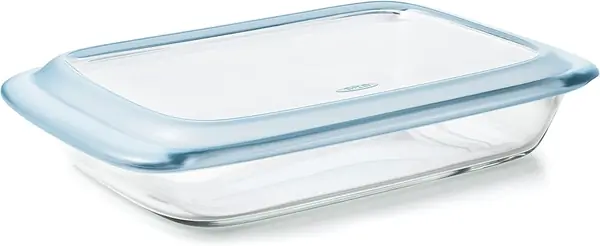
OXO glass 9-by-13 baking dish with clear glass body and BPA-free lid

Freezer-to-oven baking

Bake Score 96/100
Material
Borosilicate glass
Capacity
3 quarts
Weight
4.5 lb
Lid
Slosh-proof BPA-free lid
View on Amazon

Borosilicate is the word that decides this one. OXO's 9-by-13 is thermal-shock-resistant borosilicate glass, rated to go from the freezer straight into a preheated oven, which is the move that cracks ordinary tempered bakeware. Practically, that means a lasagna assembled on Sunday can be frozen and baked on Wednesday with no overnight thaw, and a frozen casserole goes into the oven in the dish it was frozen in.

The handles are what we noticed first in the kitchen. They're wide, they stand clear of the rim, and a mitt gets a full grip instead of pinching a corner, which matters when the dish is full and hot. The interior carries dimension markings that save getting out a measuring cup, and the 3-quart capacity is the size most casserole recipes assume. At 4.5 pounds empty it feels solid without being a struggle.

The lid is honest about what it is: it seals tightly enough to carry a casserole across town and it stacks on a fridge shelf, but it's plastic and stays off until the dish has cooled. That lid is also why it has displaced plainer dishes in our cabinet — a 9-by-13 you can put in the fridge with a cover on earns its space in a way a bare pan does not.

Worth Noting

  • Sold as a single dish; multi-piece sets cost about the same
Our Verdict

This is the 9-by-13 we reach for: borosilicate glass that takes the freezer-to-oven jump, handles wide enough for a mitt, and a lid that won't slosh in the car.

Check Latest Price
2

Libbey Baker's Basics 3-Piece Casserole Set Best Round Set

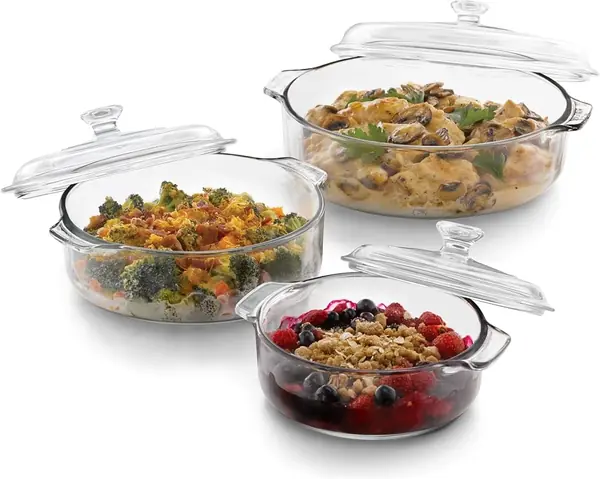
Libbey round glass casserole dishes in three sizes with matching glass covers

Oven-to-table serving

Bake Score 95/100
Capacity
1, 2, and 3.2-quart dishes
Weight
7.8 lb
Shape
Round
Covers
Glass lids included
View on Amazon

Round is the shape we reach for when the dish is going on the table rather than into a bag. These three have a curved, pedestal-style profile that looks deliberate next to a plain rectangle, and the shape suits what we cook in them: scalloped potatoes, a baked dip, a braise with the sauce spooned over the top.

The sizes are the other half of the argument: 1, 2, and 3.2 quarts, with the dimensions embossed on the handles so you can tell them apart in a dim cabinet. The 1-quart handles a dip or a dessert for two, the 2-quart covers a family dinner, and the 3.2-quart takes a double batch without crowding the rack.

The covers are glass, which we prefer to plastic: nothing to warp, nothing to stain with tomato sauce, and you can see what's left without lifting the lid. What they don't do is nest — the covers sit on top of the dishes rather than inside them, so the set wants shelf height instead of stacking flat. The handles are generous and stay cooler than the body of the dish, which we appreciated carrying the big one to the table.

This is the premium set in this group, and you're paying for the look as much as for the glass. If your bakeware spends its life on a buffet or a dining table, that money is well spent. If it spends its life in the fridge, a covered rectangle does more work for less.

Worth Noting

  • Glass covers don't nest, so the set needs shelf height
Our Verdict

Three round dishes with glass covers, from a dip-sized quart to a 3.2-quart batch — the set we take to the table and leave there.

Check Latest Price
3

Anchor Hocking 2-Piece Glass Baking Dish Set Best Two-Dish Set

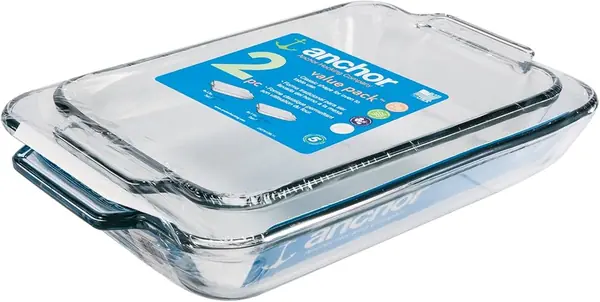
Anchor Hocking clear tempered glass baking dishes, 2- and 3-quart rectangles

Two-dish value

Bake Score 94/100
Material
Tempered glass
Capacity
2 and 3-quart dishes
Warranty
Limited 5-year
View on Amazon

Two dishes for roughly what a single pan costs elsewhere in this group is the whole argument, and it's the one we keep making. You get a 2-quart and a 3-quart rectangle in clear tempered glass, both dishwasher, microwave, freezer, and preheated-oven safe, both covered by a limited five-year warranty and made in the U.S. For a household that cooks most nights, having the smaller one free while the big one is in the oven is worth more than any single feature the pricier sets add.

Where it gives ground is in the details. Anchor lists the freezer and a preheated oven as separate safe uses rather than a freezer-to-oven jump, so thaw a frozen casserole overnight before it goes in. There's no tint and nothing decorative about it, and the 3-quart is a two-hand lift once it's full. Nothing here is designed to be admired; it's designed to be used, and it will be.

Worth Noting

  • Sold by quart, so check the footprint before ordering
Our Verdict

Two tempered-glass rectangles, 2 and 3 quarts, for roughly the money of one of our other picks — the best value per dish in this group.

Check Latest Price
4

Pyrex Colors Tinted 8x8 Baking Dish Best Small Dish

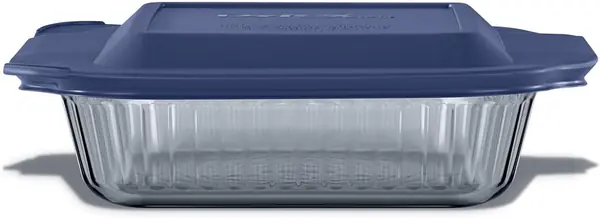
Pyrex smoke-tinted 8-by-8 glass baking dish with plastic lid

Small two-person meals

Bake Score 93/100
Material
Tempered glass
Lid
BPA-free plastic lid
Size
8 x 8 inches
Color
Smoke tint
View on Amazon

An 8-by-8 square is the pan for the night you're cooking for two rather than eight: half a recipe of lasagna, four chicken thighs with rice, a small pan of brownies, a single layer cake. Pyrex's tinted version does all of that in smoke-colored tempered glass, and the color is the reason to choose it over a clear dish — it looks like something you can put on the table instead of something you hide in a cabinet.

We came down on the side of liking the tint, with one caveat: you see less of what's happening at the bottom of the pan through the oven door, so judge browning by the edges and by smell rather than by color. The lid is the practical half of the package — it snaps on snugly and keeps a half pan of brownies from turning into tiles — and the tempered glass goes from room temperature into a preheated oven and then into the dishwasher. It's small enough for a toaster oven, which is where ours spends July.

Worth Noting

  • Tint hides browning at the bottom of the pan
Our Verdict

The small dish we use most: an 8-by-8 square that fits a two-person casserole or a pan of brownies, with a lid that actually seals.

Check Latest Price
5

OXO Good Grips Glass Loaf Pan Best Loaf Pan

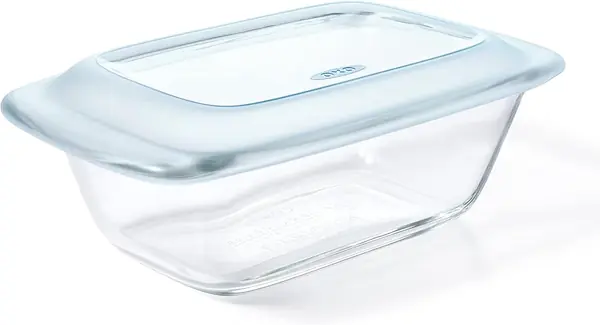
OXO borosilicate glass loaf pan with snap-on lid and wide end handles

Bread and meatloaf

Bake Score 92/100
Material
Borosilicate glass
Capacity
1.6 quarts
Weight
2.2 lb
Lid
Leakproof lid
View on Amazon

1.6 quarts is the number that matters, and it comes with a footprint: 8.5 by 5.5 by 2.5 inches outside — a standard loaf's worth of batter in a pan a little wider and flatter than the metal tin you may be used to.

The lid is what makes it more than a pan. It snaps over the rim hard enough to seal, keeps the cut end of a loaf from going stale, and being clear means you can see what's in the fridge without unwrapping foil. Getting it off takes a deliberate pull at one corner rather than a yank from the middle — once you know that, it stops feeling like a fight.

We like glass for bread for a reason that has nothing to do with the lid: you can watch the crust color on the sides through the pan, which is nearly impossible in a dark metal tin. OXO's borosilicate takes the freezer-to-oven trip, so a meatloaf assembled on the weekend goes straight into a weeknight oven. The end handles are wide enough for a mitt, which is more than we can say for most loaf pans.

Worth Noting

  • Wider and shallower than a standard 9-by-5 pan
Our Verdict

Our pick for bread and meatloaf: 1.6 quarts of borosilicate glass, freezer-to-oven rated, with a lid that keeps the second half of a loaf fresh.

Check Latest Price
6

Pyrex 6-Ounce Custard Cups Best for Individual Portions

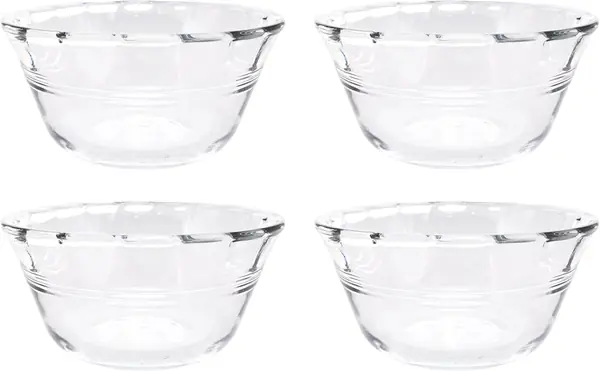
Pyrex 6-ounce clear glass custard cups, set of four nesting bowls

Individual portions

Bake Score 91/100
Material
Nonporous glass
Capacity
6 ounces each
Weight
1.4 lb
Count
Set of 4
View on Amazon

These aren't a casserole, and they don't pretend to be. Four 6-ounce cups spend more time in our kitchen holding diced onion, beaten egg, and measured spices than they do in the oven, which is exactly why we keep reaching for them: they're oven, microwave, freezer, and dishwasher safe, and they're the least expensive way into good glass bakeware in this group.

The glass on current cups is thinner than the vintage Pyrex custard cups people inherit, and you can feel the difference in the hand. Ours have been through the dishwasher and a hot oven without complaint, but if you're replacing a 1970s set, don't expect the same heft.

What they aren't is storage. There are no lids, so leftovers get plastic wrap or a plate on top, and 6 ounces is smaller than it sounds — a custard or a lava cake each, and two of them hold a baked-egg breakfast with room to spare. On a prep night, all four end up on the counter at once, which is the point.

Worth Noting

  • No lids, so storage means wrap or a plate
Our Verdict

Not a casserole, and that's the point: four 6-ounce cups we use for custard, lava cakes, baked eggs, and holding prepped ingredients.

Check Latest Price
7

M MCIRCO 8-Piece Glass Baking Dish Set

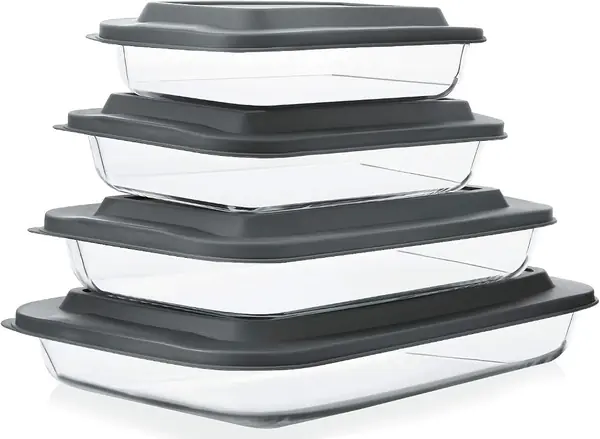
M MCIRCO glass baking dish set, four rectangular dishes with gray lids

Meal prep

Bake Score 89/100
Material
Borosilicate glass
Set
4 dishes with 4 lids
Set Capacity
8.2 quarts
View on Amazon

The lids are the first thing to know about, and they're the reason this set sits at the bottom of our list rather than the top. They seal hard — properly tight, no leaks across a car ride — which is great on a fridge shelf and less great at seven in the evening when you're prying one off with a thumbnail. They need two hands, a start at one corner, and a slow peel.

What MCIRCO gives you for the money is a lot of glass: four borosilicate dishes totaling 8.2 quarts, four gray lids, and a widened, thickened handle on each one that stays comfortable through a mitt. The 1-quart is right for a dip or a single serving of enchiladas and the sizes climb from there; the middle dishes got the most use from us for meal prep.

Where it lands: four dishes and four lids for less than the round Libbey set costs, which is the trade — breadth instead of finish. This is a set for stocking a fridge for the week, not for carrying a casserole across town. The dishes themselves are honest borosilicate; it's the lids that decide whether you love it.

Worth Noting

  • Listed dimensions include the handles, so interiors run small
  • Weakest durability record of the sets here
Our Verdict

Four dishes and four lids for the price of a couple of pans — worth it if you can live with lids that fight you every time.

Check Latest Price

How We Tested Glass Bakeware in a Working Kitchen

We started by gathering every glass dish and set we could find in the sizes people cook in most — 8x8 and 9x13 rectangles, 1.5- to 3-quart casseroles, loaf pans, and custard cups — then read through owner reviews for the complaints that repeat: dishes that crack, lids that warp, lids that stop fitting after a few washes. From that shortlist we bought 12 pieces across price points and cooked in them for eight months.

Every dish went through the same rotation: Sunday lasagna, weeknight meatloaf, a batch of custard, and freezer meals portioned on a weekend and reheated on a Thursday. We measured usable interior space against a standard lasagna noodle, weighed each dish empty, and noted where the glass ran thick at the base and thin at the rim. For durability, we moved hot dishes straight onto a cool counter and ran frozen ones under the tap, checking after each round for chips, crazing, and the cloudy scuff that shows up once glass gets scratched.

Lids got their own trials. We filled each one with soup, sealed it, flipped it upside down, and shook it over the sink — then repeated the whole thing after 20 dishwasher cycles to see whether the seal still gripped. Lid removal was timed with one hand while the other held a greased dish towel, because that is roughly the condition of my hands at 7 p.m. We also stacked the lidded dishes into a crowded cabinet to see whether they nested cleanly or slid around.

Appearance and value came last. We watched for clouding and utensil scratches after a month of serving out of the same dish, checked how the handles felt through an oven mitt, and compared what each set actually delivered for the money — three genuinely different sizes, or three dishes that all do the same job.

How to Choose Glass Bakeware

Borosilicate or tempered: the difference you can't see

Some dishes here are borosilicate and rated to go from the freezer straight into a preheated oven. Most American glass bakeware is tempered, which handles the oven, the freezer, and the microwave separately but not the jump between them. Neither type is fragile in normal use.

The trap is reading oven safe as anything goes. No glass bakeware belongs under a broiler or on a stovetop burner, and a hot dish set down on a cold or wet counter is the classic way to crack one. If you cook from frozen, pay for borosilicate; otherwise thaw overnight and tempered glass lasts for years.

Match the shape to what you actually bake

A 9-by-13 rectangle covers lasagna, bar cookies, a double batch of macaroni and cheese, and a weeknight dinner for four. An 8-by-8 does the same food in two-person quantities. Round dishes suit braises, dips, and anything going straight to the table, and a 1.6-quart loaf pan is for bread, pound cake, and meatloaf.

If you cook most nights, two rectangles are more useful than one large dish plus a novelty shape. If you bake for two, the small square earns its shelf several times a week.

Lids decide how often the dish leaves the kitchen

A tight plastic lid turns a baking dish into a fridge container and a potluck carrier, and it is the feature people underestimate. It also has to come off: a lid that seals hard enough to travel can be a two-hand job, so look at the tab before you commit.

Glass covers never warp or stain, but they do not nest, so a set with glass lids needs shelf height. If you plan to transport food, buy for the seal, and keep plastic lids on the top rack — the bottom rack is where they warp.

Handles, weight, and where it lives when it's cool

An empty 9-by-13 weighs about four and a half pounds, and a full one is a two-hand lift, so wide handles that clear the rim are worth paying for. Measure the outside dimensions with the handles before you buy: a 3-quart dish can still be too long for a narrow cabinet or a fridge shelf, and lids that sit on top take more vertical space than sets that nest.

If you stack dishes, put the heaviest on the bottom with a towel between them.

What the money actually buys

Prices in glass bakeware track how many pieces you get and whether covers are included, not how good the glass is. A single 3-quart dish and a two-dish set can cost about the same, and the jump to a three-piece set with glass covers is mostly about how it looks on the table. Decide how many shapes you will use before you pay for a set: two dishes that match your cooking beat five that don't.

Frequently Asked Questions

Final Verdict

The one to buy first is the OXO Good Grips 9-by-13. Borosilicate glass means a frozen casserole goes straight into the oven, the handles are wide enough for a mitt, and the lid turns it into a fridge dish rather than a pan you have to decant.

If three sizes and a dish that goes to the table matter more, the Libbey round set is the better buy. If you want two dishes for one pan's money, the Anchor Hocking set wins on arithmetic.