The 8 Best Pie Pans for Baking of 2026

A pie pan looks like the least consequential thing in your kitchen until you slice into a soggy-bottomed crust. Dark metal browns fast and sometimes too far, glass lets you watch the bottom but bakes slowly, and thick ceramic holds heat so stubbornly that custard keeps setting after the oven door shuts. Depth matters just as much — a deep dish gives you room for a mound of apples and a rim tall enough to actually crimp.

Cleaning is the part nobody warns you about: caramelized juices weld themselves into fluted ridges, and thin metal warps the first time it hits a hot oven. I baked in 12 pie pans, from matte-white ceramic to cast iron, and the gap between a good one and a frustrating one came down to even browning and how willingly the dish gave up a baked-on drip. Spending more mostly bought prettier glazes, not better crusts.

Each pan here earns its cabinet space, whether you bake one Thanksgiving pie or a quiche every Sunday.

Our Top Picks

The Best Pie Pans for Baking

1

MORA Ceramic Pie Pan Best Overall
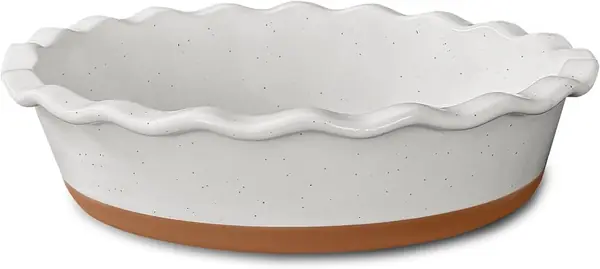
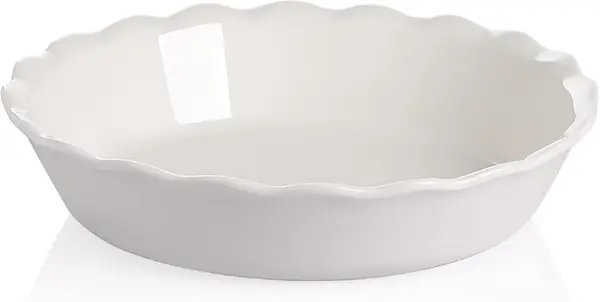
MORA vanilla white porcelain ceramic pie pan with a deep fluted rim

Deep-dish fruit pies

Bake Score 98/100
Material
Porcelain
Size
9 in diameter, 2.5 in deep
Care
Dishwasher safe
Capacity
54 fluid ounces
View on Amazon

Two and a half inches of sidewall is the first thing we look at in a pie pan, and it is why this one is our top pick. That depth gives the MORA room for 54 fluid ounces of filling, so a deep apple pie with the juices running has somewhere to go besides the oven floor. Only the Sweejar holds more, and it gets there by being wider rather than deeper.

The rim is fluted and generous, which matters more than it sounds: the ridges give your fingers something to press a crust against, so a rope crimp or a lattice edge holds its shape instead of slumping in the oven. Porcelain heats slowly and holds what it takes, which is what you want under a custard or a pumpkin pie, because the pastry sets before the filling can soak through it.

It is also the best-looking pan in this group, and that counts for a dish that goes from the oven to the table with a lattice on top. The glaze is smooth and slightly glossy, and dried cherry juice wiped off without staining it. It is rated for the freezer and microwave as well as the oven, and it goes in the dishwasher.

The one adjustment: sides this deep need a crust rolled a couple of inches past the rim, or the dough stops short and you are patching a seam with your fingers while the filling waits.

Our Verdict

Our top pick: the MORA's deep porcelain sides hold a juicy fruit pie and still look right on the table afterward.

Check Latest Price
2

OXO Good Grips Glass Pie Plate Best for Traveling

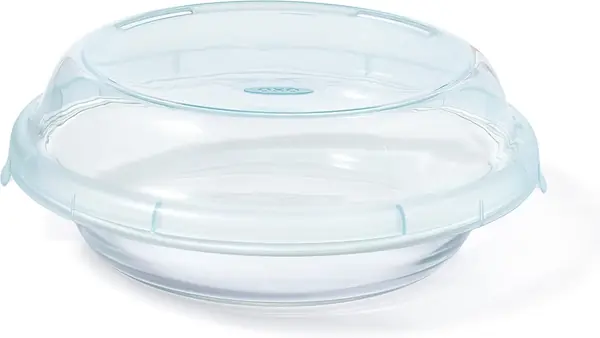
OXO Good Grips clear glass pie plate with a snap-on plastic lid

Traveling with pie

Bake Score 97/100
Material
Borosilicate glass
Size
9 in diameter, 2.1 in deep
Max Temperature
450 °F
Included
Leakproof lid
View on Amazon

A pie that has to leave the house needs a lid, and the OXO is the only pan here that comes with one. The cover snaps over the rim and vents, so a cooled pie can ride in the back seat without a sheet of plastic wrap sliding off it. The plate itself is borosilicate glass with a wide, easy-grip rim and a 9-inch marking pressed into the bottom.

We reach for it when we want to watch what is happening. Clear glass lets you see whether the bottom crust has gone golden before you open the oven, which takes the guesswork out of blind baking and out of the two minutes when a fruit pie goes from pale to burnt. In our baking it went from freezer to oven without a crack, and the rim stayed easy to hold through a towel.

It is the least decorative pan in this guide, and that is the trade: you are buying visibility and a way to move the pie, not a dish that flatters a lattice. Watch the lid, which is plastic and the part that lets go first if you lift a full plate by the rim. Carry it from the base and the glass will outlast the cover.

Worth Noting

  • Heavier than the metal pans at 2.5 pounds
Our Verdict

The pan we take when a pie has to travel: the lid seals, the glass shows the browning, and the plate is fine in the dishwasher.

Check Latest Price
3

USA Pan Aluminized Steel Pie Pan Best Metal Pan

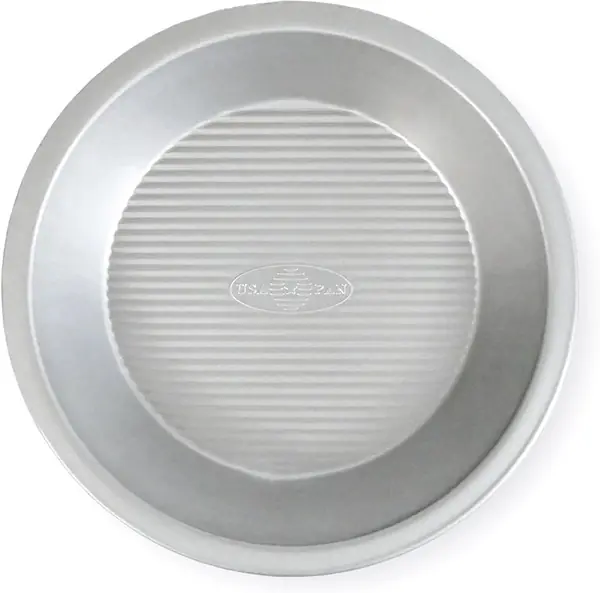
USA Pan silver aluminized steel nine-inch pie pan with a corrugated bottom

Crisp bottom crusts

Bake Score 96/100
Material
Aluminized steel
Size
9 in diameter, 2 in deep
Care
Hand wash
Surface
Silicone nonstick
View on Amazon

Run a thumb across the bottom of the USA Pan and you feel the corrugation, a grid of shallow channels pressed into the steel. Those channels are not decoration. They hold a layer of moving air under the pan, and that air is where a browned, crisp bottom crust comes from.

The gauge is the other half of it. This pan does not flex when you press dough into the corners, the rolled edge holds flat in a 450 °F oven, and the silicone coating lets a slice lift in one piece instead of tearing at the first wedge. It is also the lightest pan here at just over 13 ounces, so you can hold it in one hand and flute with the other.

If your pies come out pale and wet in the middle, this is the fix we point to, and it does not involve changing the recipe. Cast iron browns harder still, but it weighs 3.7 pounds and comes with its own upkeep. The 9-inch interior is true to size, so a standard formula fills it right to the crimp with nothing left over.

Worth Noting

  • Hand wash only
Our Verdict

We recommend the USA Pan to anyone whose pies come out soggy on the bottom: corrugated steel browns a crust without cast iron's weight.

Check Latest Price
4

Lodge Cast Iron Pie Pan Best Cast Iron

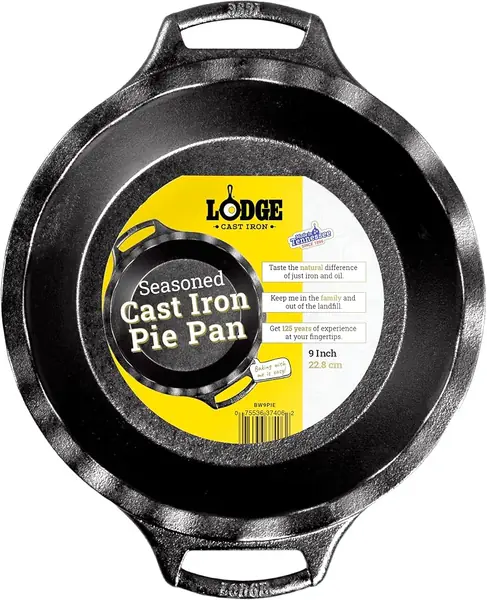
Lodge black pre-seasoned cast iron pie pan with two side handles

Cast-iron crusts

Bake Score 95/100
Material
Cast iron
Size
9 in diameter, 1.69 in deep
Weight
3.7 lb
Handles
Dual handles
View on Amazon

At 3.7 pounds, the Lodge announces itself before you get the wrapper off, and the two handles are why that weight is manageable: one hand on each side and a hot pie moves from the rack to the trivet without a wobble.

Cast iron makes the best crust in this set, and we do not think it is close. It stores heat and gives it up through the bottom of the pan, so the pastry sets and browns hard before the filling has a chance to soak in, which is the difference between a bottom crust that shatters and one that bends. The seasoning is applied at the factory from iron and vegetable oil, with no PTFE or PFOA in the finish.

It also does more than pie. Cornbread, a deep quiche, chicken pot pie, even a small roast: cast iron does not care what goes in it, and the seasoning only improves with the next bake. You buy it for the crust and end up using it for dinner.

Worth Noting

  • Shallower 1.69-inch sides than the ceramics
  • Needs drying and oiling after washing
Our Verdict

For the darkest, crispest bottom crust here, we reach for cast iron, and the Lodge's dual handles make the weight manageable.

Check Latest Price
5

LE TAUCI Ceramic Pie Pans, Set of 2 Best Two-Pack

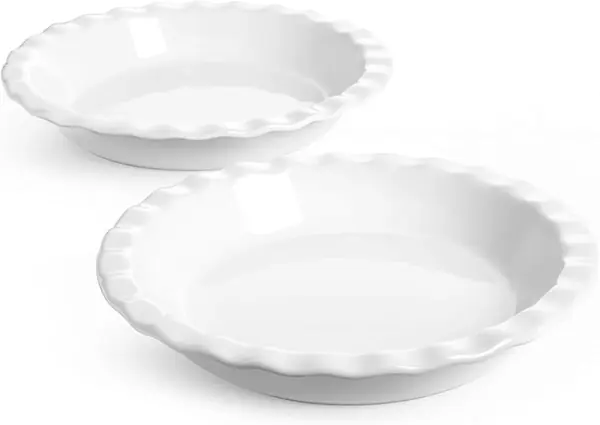
Two LE TAUCI white ceramic nine-inch pie pans with wide fluted rims

Baking two pies

Bake Score 94/100
Material
Ceramic
Size
9 in diameter, 1.7 in deep
Capacity
36 ounces each
Set
Set of 2
View on Amazon

Two 9-inch fluted pans, both dishwasher safe, for about the price of one of the premium ceramics here. That arithmetic is what put LE TAUCI on this list, and the pans themselves do not feel like the compromise the price suggests.

Each holds 36 ounces, roughly a standard fruit pie with a little headroom, and the wide waved rim gives you somewhere to crimp a decorative edge without pinching the dough thin. In white they read as plain rather than rustic, which is a compliment: they look at home under a lattice and under a quiche.

Stoneware heats evenly and holds it, so the crust colors from the edge inward instead of scorching in one spot, and the glaze releases dried filling after a short soak. When the pies are done, the two pans stack in a cabinet corner without a rack.

What settles it for us is the second pan. One can cool on the counter while the other chills in the fridge, and a two-crust pie for a crowd does not have to wait its turn.

Worth Noting

  • Standard 1.7-inch depth, not deep dish
Our Verdict

We recommend the two-pack to anyone baking several pies: it delivers two fluted, dishwasher-safe pans for about the price of one premium ceramic.

Check Latest Price
6

Sweejar Ceramic Pie Pan Best for Big Pies

Sweejar white porcelain ten-inch deep pie pan with a soft wave edge

Oversized fruit pies

Bake Score 93/100
Material
Porcelain
Size
10.3 in diameter, 2.2 in deep
Max Temperature
500 °F
Capacity
55 fluid ounces
View on Amazon

Ten and a third inches across makes the Sweejar the biggest pan here, and that is the whole reason to buy it. A deep-dish apple pie with eight cups of fruit fits with room to spare, and the 2.2-inch sides and 55-ounce capacity mean the fruit pie that always overflowed a 9-inch pie plate finally has somewhere to go.

Porcelain this thick holds heat, so a quiche is still warm when the second slice goes around, and the wave edge is deep enough to shape a crimp without pressing hard. It is rated to 500 °F, the highest of the ceramic pans here, and it goes in the dishwasher.

Beyond pie, it earns its keep with pot pie, a deep quiche, or a casserole that would otherwise go in a 9-by-13. There is enough surface to brown cheese across the top and enough depth for a saucy filling, which is more than we can say for the shallower plates in this guide.

Worth Noting

  • Oversized, so standard recipes need more filling
Our Verdict

For oversized fruit pies and pot pies, we point you to the Sweejar's extra width and depth, and the recipe math is worth it.

Check Latest Price
7

Cuisinart Chef's Classic Deep-Dish Pie Pan

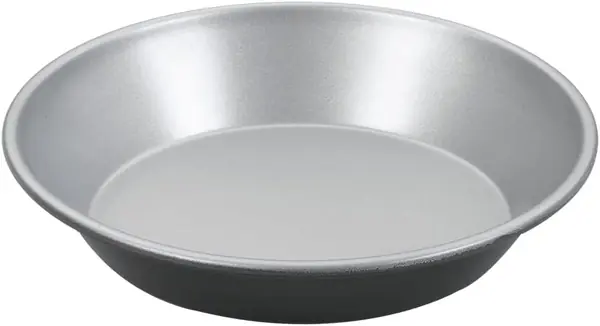
Cuisinart Chef's Classic silver nonstick deep-dish pie pan with rolled edges

Budget deep dish

Bake Score 92/100
Material
Aluminum steel
Care
Dishwasher safe
Max Temperature
500 °F
Diameter
9 inches
View on Amazon

Deep-dish metal is a narrow category, and the Cuisinart is the one that fills it here: heavy-gauge steel with rolled edges, a dark nonstick interior, and sides tall enough to hold a serious fruit pie.

The nonstick does what it promises. A slice lifts out whole, and the pan goes in the dishwasher afterward, which is more than the bare steel and cast iron here can offer. It is rated to 500 °F, so a blind-baked shell and a hot oven are not a worry.

We found it browns a little more gently than the corrugated USA Pan, because there are no air channels under the floor and the coating does the release work instead. Set against that is the depth: a five-cup fruit pie fits here that would crest the rim of a standard 9-inch tin, and the rolled edge stays flat through a hot bake.

Worth Noting

  • Nonstick needs nylon or wooden utensils
Our Verdict

We like the Cuisinart for deep-dish fillings in a pan that goes in the dishwasher, as long as you keep metal utensils out of it.

Check Latest Price
8

Farberware Bakers Advantage Pie Dish Best for Holiday Table Pies

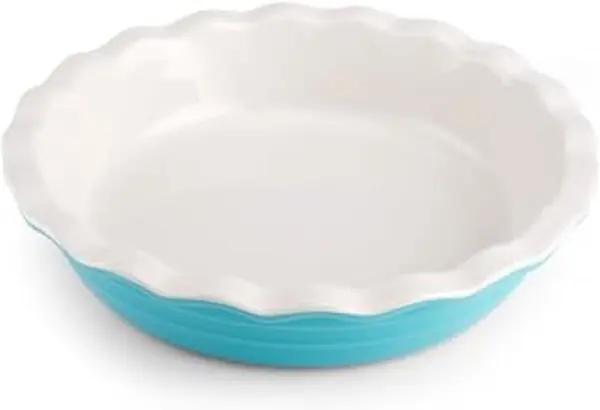
Farberware two-tone teal and ivory stoneware pie dish with scalloped edge

Holiday table pies

Bake Score 91/100
Material
Stoneware
Size
10.24 in diameter, 2.17 in deep
Care
Hand wash
Max Temperature
450 °F
View on Amazon

The teal-and-ivory glaze is what makes people pick this one up, and it is a better reason than it sounds. The two-tone band and scalloped rim mean the dish can go to the table without a transfer, which is half of why anyone owns a ceramic pie plate instead of a tin.

At 10.24 inches across it is wider than most recipes assume, and the 2.17-inch depth puts it in deep-dish territory. A standard 9-inch formula leaves a ring of bare dish around the filling, so plan on a cup or so more fruit and a crust rolled to match. Do that and the extra surface gives you more browned edge, which is the part people fight over.

The stoneware is dense and low-porosity, so it resists staining from berry and pumpkin fillings and holds heat through a second helping. It is rated to 450 °F, and the surface is smooth enough that a soaked crust lifts off without scrubbing.

For a holiday pie that sits on the table between dinner and dessert, this is the ceramic dish we point people to. It is also the least expensive ceramic pan in this guide, and the finish does not cost you anything in browning.

Worth Noting

  • Hand wash only
Our Verdict

The prettiest ceramic dish here, and we recommend it for a holiday fruit pie as long as you scale the recipe up to fill it.

Check Latest Price

How We Tested the Best Pie Pans

I started by rounding up every pan I could find in the 9- and 10-inch sizes most recipes call for, then narrowed by material so the final twelve covered the bakeware aisle instead of one style: fluted ceramic, tempered glass, aluminized steel, cast iron, and a couple of nonstick-coated pans. Oven-safe temperature, overall depth, and price were the filters — a pan that couldn't hold a double-crust fruit pie without bubbling over never made the cut.

Testing ran six months and was built around real baking rather than a lab bench. That meant a Thanksgiving week of back-to-back apple and pumpkin pies, a standing Sunday quiche, and chicken pot pies on cold nights. I blind-baked a crust in every pan to see which turned pale and which raced past golden at the edges, then froze several unbaked shells solid and slid them straight into a hot oven to check for cracking or warping.

Depth got measured the boring way: the same volume of apple filling poured into each pan, with a note on which ones overflowed. After every bake I washed half the pans by hand and ran the rest through the dishwasher, digging at the fluted rims with a sponge to see if the ridges held onto crust and checking edges for chips. Pans went back into the cabinet afterward to see how they stacked.

Where a pan came with a lid, I filled it, sealed it, and tipped it sideways to see whether anything leaked. Last, I set each one on the table empty to judge how it looked going into a holiday spread. None of the strongest performers were the most expensive, which is worth remembering before you pay extra for a glaze.

How to Choose a Pie Pan

Start With Diameter and Depth

Most pie recipes, frozen crusts, and rolling guides assume a 9-inch pan measured across the top, and every 9-inch pan here takes a standard formula without adjustment. Move up to a 10-inch dish and you are adding roughly a cup of filling and a wider circle of dough; skip that step and the pie bakes thin with a bald ring of dish around it.

Depth matters just as much. Standard plates run about 1.5 to 1.7 inches, while deep-dish pans go 2 to 2.5 inches and hold juicy fruit pies, pot pies, and quiche without spilling. For a deep pan, roll the crust a couple of inches past the rim so the dough actually reaches the top.

Choose the Material for the Crust You Want

Glass lets you watch the bottom crust brown, which makes it the forgiving choice for a first pie. Ceramic and stoneware heat slowly and evenly, hold that heat at the table, and look good enough to serve from. Aluminized steel with a corrugated floor and cast iron both brown harder than anything else here, and a nonstick coating trades a little browning for slices that lift out whole.

If your pies consistently come out with a wet center, change the pan before you change the recipe. That is the single biggest lever a baker has over a bottom crust, and it costs less than a new set of skills.

Look at the Rim, the Handles, and the Hand-Off

A fluted or waved rim is not just decoration: the ridges give your fingers something to press a crimp against, and the edge holds its shape in the oven. A wide rim also gives you a grip on a hot pan through a towel, which is the moment most pies get dropped.

Cast iron is the only material here that comes with handles, and on a 3.7-pound pan they matter. Think about the table, too. The ceramic pans and the glass plate can go out as serving dishes, while a dark nonstick tin reads as equipment and usually gets transferred.

Plan for Care, Temperature, and One Extra Pan

Glass, glazed ceramic, and nonstick metal go in the dishwasher; bare aluminized steel and cast iron do not, and cast iron also wants drying and a wipe of oil. Check the temperature rating before you broil, because the pans here run from 450 °F to 500 °F and a broiler element is hotter than that. Never take a hot ceramic dish from the oven to a cold counter or a wet towel.

If you bake often, two pans cost less than baking twice and let one crust chill while the other bakes. A pair also solves the holiday problem of one oven and three pies.

Frequently Asked Questions

Final Verdict

The MORA is the pan we recommend to most bakers. Two and a half inches of porcelain holds a juicy fruit pie without spilling, the fluted rim makes a clean crimp easy, and the glaze looks right when you carry it into the dining room. Its only real demand is a slightly wider circle of dough.

If your pies come out pale on the bottom, the Lodge makes a crisper crust than anything else here and will outlive the oven it bakes in. And if the pie has to leave the house, the OXO's lid and clear glass are worth giving up the deep sides for.