The 7 Best Rolling Pins of 2026

A rolling pin is the rare kitchen tool that looks impossible to get wrong: it's a cylinder, you push it, the dough gets flat. Then a pie crust tears down the middle and you're scraping dough off the barrel with your fingernail. I've made those crusts. What separates a pin that works with you from one that fights you is weight, surface, and shape.

We rolled with 15 pins, from featherweight tapered dowels to a marble one heavy enough to anchor a picnic blanket. Weight is the spec shoppers get wrong most often: a light pin makes you press hard and wobble, while a heavy one wears out your forearms before the second batch of cookies. Surface matters just as much — wood has to stay dry, while marble and stainless stay cool under pastry dough.

Our seven cover both handle styles and every material worth keeping in a kitchen drawer, and they were chosen for how they felt an hour into rolling, not how they looked on the shelf. These are for home bakers, not someone cranking out fifty pounds of fondant a week.

Our Top Picks

The Best Rolling Pins

1

KARRYOUNG French Rolling Pin Best Overall
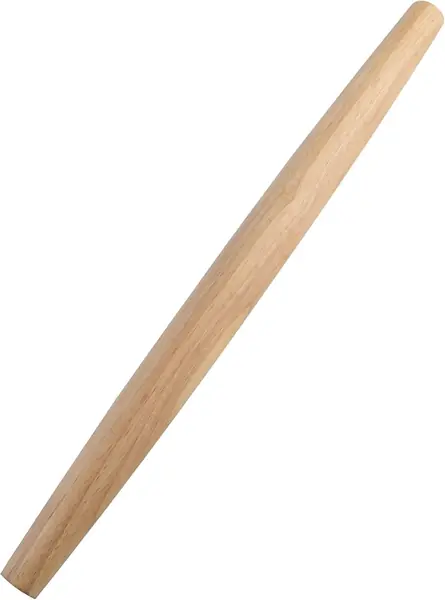
KARRYOUNG French rolling pin in rubberwood with tapered handle-free ends

Everyday dough rolling

Bake Score 99/100
Material
Rubberwood
Length
17 in
Weight
8.4 oz
Design
French tapered, handle-free
View on Amazon

A 17-inch pin with no handles sounds like a tool for experienced bakers. We found the opposite: the KARRYOUNG is the dough roller we hand to anyone who wants more control without fighting a mechanism. The tapered shape puts your hands directly on the barrel, so you feel the dough thinning under your palms, and the 17-inch length covers a pie crust or a pizza round in fewer passes. At 8.4 ounces, it is light enough to keep moving through a batch of cookies, though you supply more of the pressure than you do with marble.

The rubberwood surface is smooth and sealed enough that dough releases easily; a quick wipe is usually enough. We especially appreciate that there are no handles or bearings to trap flour. In our testing, the tapered ends made it easy to roll close to the edge of a crust and to pivot the pin without denting the dough. The lack of a handle also means there is nothing to loosen, which is not true of every handled pin in this group.

The trade-off is storage and feel: a 17-inch handle-free pin needs a drawer at least that long, and some bakers miss the familiar grip of handles. We did not. For everyday pastry, cookies, and pizza, this is the best balance of length, weight, and control in this group. What settled it for us was the lack of moving parts: nothing to tighten, nothing to catch, and nothing between our hands and the dough.

Worth Noting

  • Long handle-free design needs a deep drawer
Our Verdict

For most home bakers, this is the French pin we point to first: direct control, a full-width roll, and a light feel.

Check Latest Price
2

Ultra Cuisine French Rolling Pin Best Stainless Steel

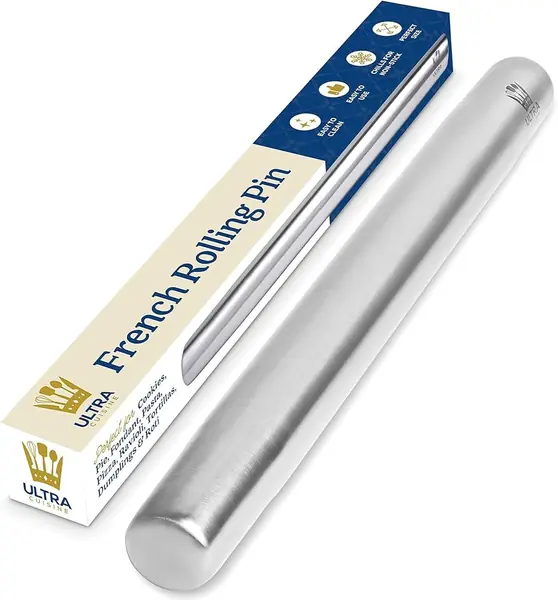
Ultra Cuisine stainless steel French rolling pin with tapered ends

Chilled pastry dough

Bake Score 98/100
Material
Stainless steel
Length
15.75 in
Weight
10.1 oz
Cleaning
Dishwasher safe
View on Amazon

Stainless steel is the pin we choose when dough needs to stay cold or cleanup needs to be fast. The Ultra Cuisine is a handle-free French pin, 15.75 inches long and about 10 ounces, with a smooth brushed finish. It is shorter than the KARRYOUNG, so it takes less drawer space but covers less dough in one pass. The taper is gentle, and the metal gives you a crisp edge when you roll a sheet of pastry.

We found the biggest advantage is temperature control: the pin can go into the freezer before you roll a buttery pie crust or laminated dough, and the cold surface helps keep the dough from softening. It is also dishwasher safe, which is the rare care instruction in this group that does not involve a damp cloth and a drying rack. The nonstick surface releases dough cleanly, and there are no seams or handles to trap flour.

The trade-off is weight and feel. At about 10 ounces it is light enough to maneuver, but it does not press as hard as marble; on stiff cookie dough you use more of your own effort. The metal also feels less forgiving than wood if you bang it against a bowl. For pastry, chilled dough, and anyone who wants a pin that can go straight into the dishwasher, it is the strongest stainless choice here.

Worth Noting

  • Light for stiff or heavy dough
Our Verdict

We choose this stainless pin when dough needs to stay cold or cleanup needs to be quick, and its dishwasher-safe build is the reason.

Check Latest Price
3

Fox Run Marble Rolling Pin Best for Pastry

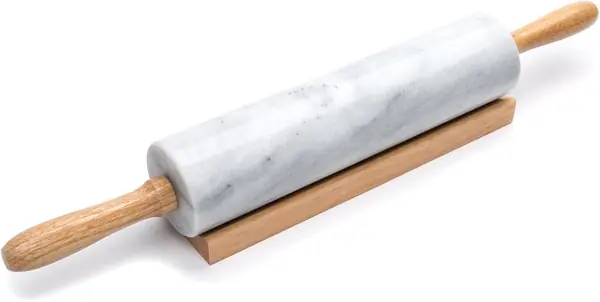
Fox Run marble rolling pin with wooden handles resting in cradle

Pie and pastry

Bake Score 97/100
Material
Marble
Weight
4.6 lb
Barrel
10 in
Included
Wooden cradle
View on Amazon

A marble pin is a specialist, and the Fox Run makes the case for owning one anyway. The barrel is 10 inches, the pin comes with a wooden cradle, and the whole thing weighs about 4.6 pounds. That weight is the point: on pie dough, biscuits, and pastry, the pin does more of the pressing, so you can roll with a lighter hand. The marble stays cool, which helps keep butter from softening too fast.

We appreciated the cradle more than we expected. A round marble pin on a counter is an accident waiting to happen; the base gives it a home and keeps the barrel from rolling away. The nylon bearings in the handles turn smoothly, and the polished surface releases dough well when the dough is properly chilled. We did not find it a universal upgrade: it is heavy enough that a long cookie session can tire your wrists, and it takes up more cabinet space than a wooden pin.

The durability caveat is worth knowing. Marble can chip if it is knocked, and the handles are the part that takes the stress when the pin is dropped or stored badly. Keep it on the cradle, wash and dry it promptly, and it earns its place. For laminated dough, butter-heavy pie crust, and anyone who likes the pin to feel substantial, this is the one. If you bake mostly soft cookie dough and want a pin you can toss in a drawer, the weight becomes a chore.

Worth Noting

  • Heavy for long rolling sessions
  • Marble can chip if dropped
Our Verdict

We keep this marble pin for pastry and pie dough, where its weight and cool surface do more of the pressing.

Check Latest Price
4

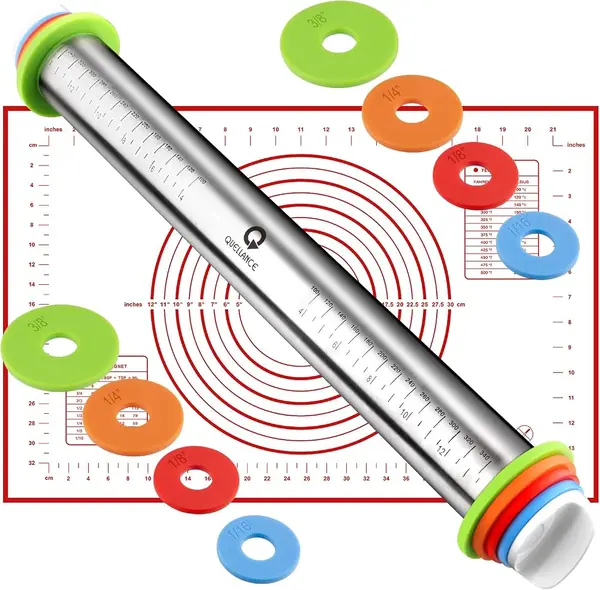
QUELLANCE Adjustable Rolling Pin Set Best for Even Thickness

QUELLANCE stainless steel rolling pin with four thickness rings and red mat

Uniform cookie thickness

Bake Score 96/100
Material
430 stainless steel
Length
17 in
Included
Silicone pastry mat
Thickness Rings
1/16, 1/8, 1/4, 3/8 in
View on Amazon

The QUELLANCE set turns rolling into a measuring task, which is either the best thing about it or the thing you never use. The pin is 17 inches of 430 stainless steel with four removable rings at 1/16, 1/8, 1/4, and 3/8 inch. The rings sit on the ends and set the gap between the barrel and the counter, so a sheet of cookie dough comes out at one thickness instead of drifting thinner at the edges. The set includes a silicone pastry mat with measurements, which gives the rings something to work against and keeps the counter cleaner.

We found the system most useful for cutout cookies and fondant, where a millimeter or two changes how the cookies bake. The mat is large enough to roll a full sheet, and the stainless barrel wipes clean. The trade-off is fussiness: you have to keep track of the rings, and the ends need to be seated properly after a ring change. It is not the pin we reach for when we want to feel the dough and adjust by hand; it is the one we reach for when we want every cookie the same.

The mat is the part we were least sure about. A silicone sheet can slide on a smooth counter, and the measurements only help if the mat stays put. On a dry counter it held well enough for us, but a damp towel under the corners is the safer setup. The rings also take a little practice to swap without overworking the dough.

The set is bulky compared with a bare French pin. The mat rolls up, but the pin and rings still need a drawer or a shelf. For bakers who make decorated cookies, crackers, or fondant, the consistency is worth the extra parts. For rustic bread and pie crust, a plain tapered pin gives more feedback with less to keep track of.

Worth Noting

  • Extra rings and mat need storage
  • Not for rolling by feel
Our Verdict

The QUELLANCE set earns its spot for cookies and fondant when every sheet needs the same thickness, not for rolling by feel.

Check Latest Price
5

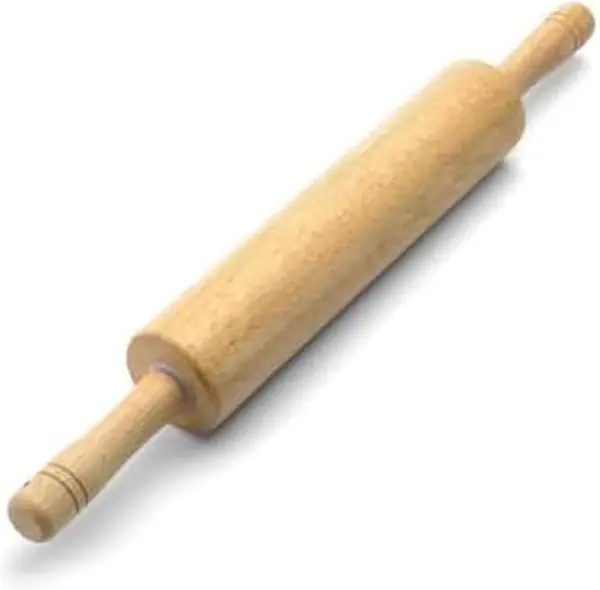
Farberware Classic Wood Rolling Pin Best Classic Handled

Farberware classic rosewood rolling pin with two ergonomic handles

Small batches

Bake Score 95/100
Material
Rosewood
Length
17.5 in
Weight
1 lb
Barrel
10 in
View on Amazon

The Farberware is the rolling pin most of us picture when we hear the word: a hardwood barrel, two handles, and a low price. The barrel is 10 inches, the overall length is about 17.5 inches, and it weighs a pound. That makes it heavier than the French pins here but still easy to lift. The handles give you a familiar grip and keep your knuckles off the counter, which is why we like it for kids or anyone who has never used a handle-free pin.

The hardwood surface is smooth, and the pin rolls evenly when the handles are tight. We found the 10-inch barrel is the real limit: it is fine for a pie crust or a small batch of cookies, but it takes more passes on a large pizza or a wide sheet of pastry. The bigger caveat is longevity. The handles can work loose, and the wood can splinter if it is soaked or left damp. Wipe it clean, oil it occasionally, and keep it out of the dishwasher.

For the money, it is a sensible first handled pin, and the size is right for small kitchens. It is not the pin we recommend for heavy daily use or for anyone who wants a single tool that will last for decades. The KARRYOUNG gives more control for a similar budget if you do not need handles.

What we do not expect is heirloom performance. Treat it as a capable starter pin, not the last one you will buy. The handle is the whole appeal: it gives you leverage and keeps your hands clear, and that is worth more than the spec sheet suggests when you are rolling with a child.

Worth Noting

  • Handles can loosen over time
Our Verdict

This is the handled pin we hand to small-batch bakers who want a familiar grip and do not mind checking the handles.

Check Latest Price
6

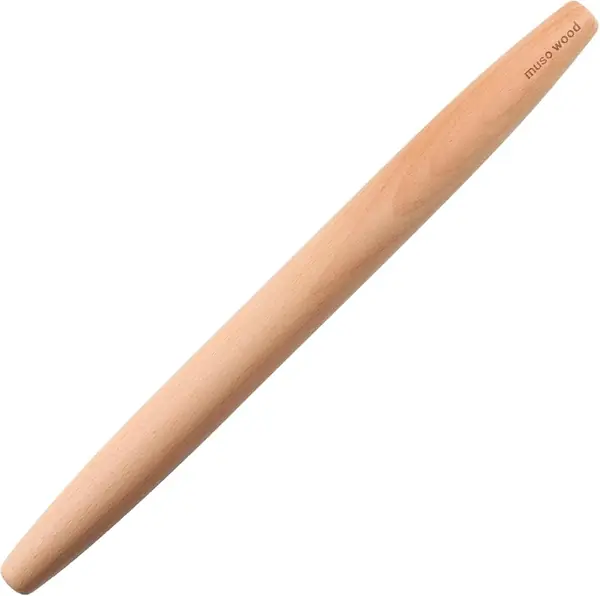
muso wood Beech French Rolling Pin Best Compact

muso wood beech French rolling pin with tapered ends

Small kitchens

Bake Score 94/100
Material
Beech wood
Length
15.74 in
Weight
8 oz
Design
French tapered, handle-free
View on Amazon

At 15.75 inches, the muso wood is the French pin that disappears into a drawer. It is made from European beech, weighs about 8 ounces, and has a 1.37-inch barrel with tapered ends. The shorter length makes it easier to store than the 17-inch pins, and the lighter weight makes it quick to move over a batch of cookies. The trade-off is coverage: you will make more passes on a large pizza or a wide sheet of pastry.

The hand-sanded finish is the detail we appreciated most. The surface feels smooth without looking lacquered, and the tapered ends let you roll close to the edge of a crust. We found it easy to clean with a damp cloth, and the compact size makes it a good first French pin for a small kitchen or a baker who does not want a dedicated drawer. For a baker who makes one pie or a tray of cookies at a time, the size is an advantage rather than a compromise. It is not the pin for heavy dough or big batches; the light weight means you supply more pressure, and the shorter barrel can leave you working in sections. If you regularly roll large sheets, the KARRYOUNG's extra inch and slightly heavier feel are worth it.

Worth Noting

  • Short barrel needs more passes
Our Verdict

We recommend this short French pin for small kitchens and everyday cookies; its control comes without the long drawer footprint.

Check Latest Price
7

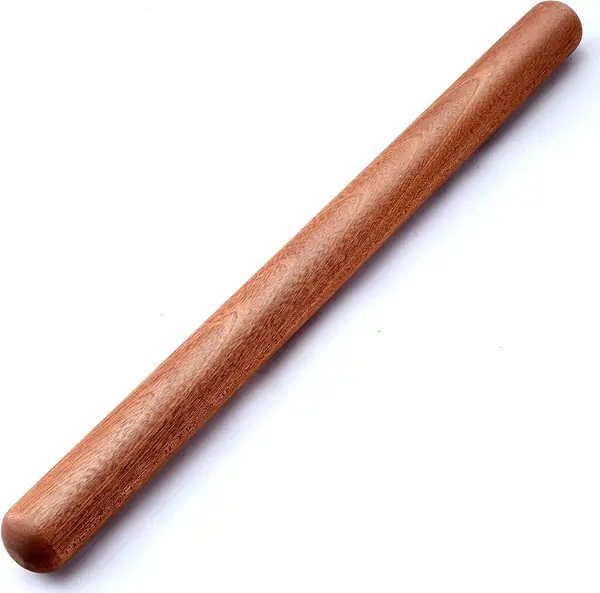
AISOSO French Rolling Pin Best for Large Dough Batches

AISOSO solid wood French rolling pin with tapered ends

Large dough batches

Bake Score 93/100
Material
Solid wood
Length
17.7 in
Finish
Unpainted and wax-free
Diameter
1.38 in
View on Amazon

The AISOSO is what happens when a French pin is stretched to 17.7 inches and left bare. It has a 1.38-inch barrel, tapered ends, and a solid wood body with no paint or wax. The extra length is the selling point: on a large batch of cinnamon rolls or a wide pizza dough, you can cover more surface before repositioning. The finish is smooth, and the wood is left natural, which we like for a pin that touches dough directly.

We found the extra length most useful for big batches, but it is also the reason this one is a more specialized choice. A 17.7-inch pin needs a long drawer, and the added reach does not change the basic technique: you still need to move your hands along the barrel and keep even pressure. The tapered ends are useful for edge work, and the bare wood can be maintained with food-safe mineral oil.

For a baker who regularly rolls large sheets and wants a natural wood pin without handles, it is a strong alternative to the KARRYOUNG. The difference is length and finish, not a radically different feel: both are light, handle-free pins that reward a little practice. If your drawer is tight or your batches are small, the muso wood is the easier fit.

Worth Noting

  • Long footprint for drawers
Our Verdict

We pull this extra-long French pin out for big batches and wide dough sheets, provided there is drawer space to store it.

Check Latest Price

How We Tested the Best Rolling Pins

We started with the rolling pins that come up again and again in baking forums and best-seller lists, then narrowed by material, barrel length, handle style, and price so the group included French tapered pins, classic handled pins, and at least one marble and one stainless steel option. That left 15 pins, which we used in our own kitchens over three months.

Each one went through the same rotation: all-butter pie dough on a Sunday afternoon, sugar cookie dough rolled and re-rolled with the scraps, pizza dough on parchment, and fondant for anyone with a decorating project. We rolled on a bare floured counter and on parchment, noting whether the dough grabbed the barrel, whether we had to keep dusting, and whether the pin tracked straight or wandered.

We weighed every pin on a kitchen scale, then rolled for ten minutes straight to see where our forearms gave out, which is where the light tapered pins and the marble one separated. For sturdiness, we rolled each pin empty across the counter to check for wobble and spun the handles to feel for play. For durability and cleaning, we washed and dried each one per the maker's instructions, watching for raised grain, water stains, cracks, and handles that held water. Anything that stuck, wobbled, or needed constant re-flouring got cut, and we weighed what the survivors cost against how they performed.

How to Choose a Rolling Pin

Start With the Shape in Your Hands

A French pin is a handle-free barrel with tapered ends. Your hands sit on the barrel, so you feel the dough and can shift pressure without a handle limiting your grip. That makes it our preference for pie crust, pizza, and any dough you roll by feel. A handled pin gives you a familiar grip and keeps your hands off sticky dough, but the handles and bearings are extra parts that can loosen. Choose French for control; choose handled for comfort and a more traditional motion.

Match the Material to the Dough

Wood is the all-purpose choice: light enough for long sessions, warm in the hand, and easy to wipe clean. Marble is heavier and stays cool, which helps when butter needs to stay firm in pastry and laminated dough; the trade-off is wrist fatigue and a pin that can chip if knocked. Stainless steel is the easiest to chill and the only material here that can go into the dishwasher. We reach for wood for everyday cookies, marble for pastry, and stainless when cold dough or fast cleanup matters most.

Length Is About Batch Size and Storage

A 15- to 16-inch pin fits more drawers and handles small batches neatly; a 17- to 18-inch pin covers a wider sheet of dough in fewer passes. Neither is better in the abstract. Measure the drawer before you buy, then think about the dough you roll most: large pizza and slab pies reward the longer barrel, while a short pin is easier to store and control in a small kitchen. Compact in a listing usually means drawer-friendly, not a smaller barrel that does less work.

Treat Thickness Rings as a Consistency Tool

Adjustable pins use removable rings on the ends to set the gap between the barrel and the counter. They are genuinely useful for cutout cookies, crackers, and fondant, where a sheet that is slightly thicker at one edge bakes unevenly. They also add parts to store and rings to keep track of. If you rarely need an exact thickness, a plain tapered pin gives more feedback and less fuss; if you bake decorated cookies often, the rings earn their space.

Plan for Care Before You Buy

Wooden pins should be wiped clean, dried promptly, and oiled occasionally with food-grade mineral oil; they should not go into the dishwasher. Stainless pins are the low-maintenance option, and marble pins need a cradle or a padded spot so they do not roll or chip. Handles and end caps are the parts that take the most stress, so check that they feel solid before you commit. The best pin is the one whose care you will actually keep up with.

Frequently Asked Questions

Final Verdict

We recommend the KARRYOUNG French Rolling Pin as the default for most bakers: the 17-inch barrel gives you room, the taper gives you control, and the light rubberwood is easy to keep moving. Choose the Ultra Cuisine when you want a stainless pin for chilled dough and dishwasher cleanup, or the Fox Run marble pin when pastry is the priority and you want the pin's weight to do the pressing. The QUELLANCE set is the one for exact cookie thickness.