The 8 Best Zesters of 2026

A zester is the small tool that decides whether your lemon bars taste like lemon or like pith. Get it right and a lemon gives up its peel in a shower of fragrant curls in about ten seconds, the bitter white layer untouched underneath. Get it wrong and you're sawing at the fruit, tearing the peel into ragged strips, and eventually catching a knuckle.

I zest most weeks — lemon for dressing, lime for rice, orange for a Sunday cake — so differences show up fast. We worked through 14 zesters that way, watching how cleanly each blade lifted peel and left the pith behind, whether the handle still felt fine on the sixth lemon in a row, how much cheese jammed into the teeth, and whether the blade covers and dishwasher claims held up. Sharpness is the whole ballgame: an etched edge keeps cutting curls for years, while a stamped one starts tearing peel long before it rusts.

Picks run from fine citrus zesters to heavier graters for Parmesan and ginger, and a couple of inexpensive ones earned their spot anyway.

Our Top Picks

The Best Zesters

1

Microplane Premium Classic Zester Best Overall
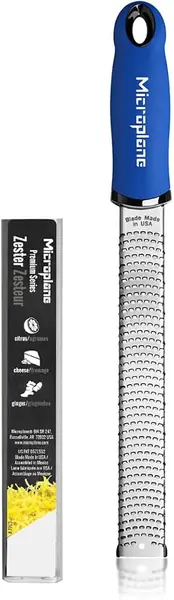
Microplane Premium Classic Zester in Classic Blue with stainless blade and cover

Fine zest

Bake Score 99/100
Included
Protective blade cover
Blade Material
Surgical-grade stainless steel
Overall Length
12 inches
Handle Color
Classic Blue
View on Amazon

A lemon going over the Premium Classic's blade is the quickest demonstration of why we reach for it first. The photo-etched teeth shave the yellow rind into fine, dry curls and stop at the white pith, so the zest carries fragrance without bitterness. The same surface turns a block of Parmesan into fluffy shreds, which is more than we expected from a tool this slim.

What separates it from the cheaper zesters here is control. The 12-inch body gives us room to work a whole lemon without repositioning, and the Classic Blue handle stays comfortable whether we hold the zester upright over a bowl or brace the tip against a board. The included blade cover is a small thing we came to appreciate every time we put it away; it keeps the teeth protected and our fingers out of trouble.

It asks more than the budget picks, and that is the main trade-off: you are paying for a blade that feels keen after repeated citrus and hard cheese, not for extra attachments. For a baker who zests a lemon or two most weeks and wants one tool that does both jobs cleanly, the premium is easy to justify.

Our Verdict

We recommend the Microplane Premium Classic to most bakers because it shaves fine, pith-free zest and handles hard cheese without making either job feel like work.

Check Latest Price
2

Deiss PRO Lemon Zester & Grater Best for Hard Cheese

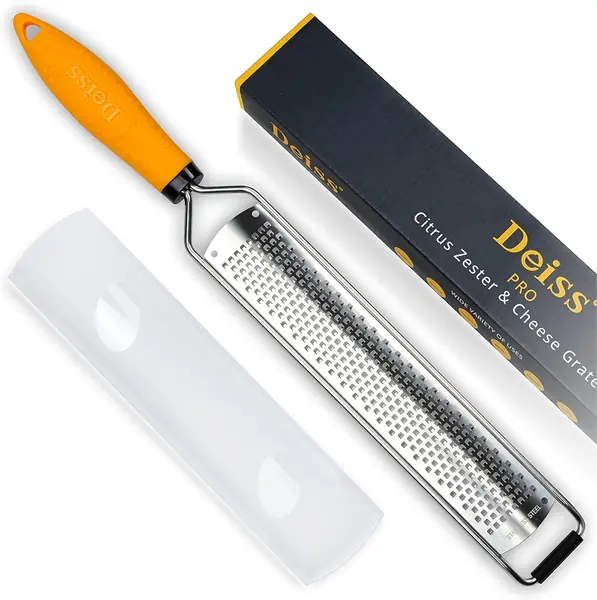
Deiss PRO yellow handheld lemon zester and grater with stainless steel blade

Hard cheese

Bake Score 98/100
Blade Material
Stainless steel
Weight
6.7 oz
Warranty
Lifetime
Overall Size
1.77 x 1.02 x 14.76 inches
View on Amazon

The Deiss is the grater we grab when the recipe asks for a pile of zest and we do not want to baby the tool. Its blade is broad and curved, with a yellow handle that gives a substantial grip. We zested lemons and limes with it and found the cuts quick and consistent; the same surface made short work of Parmesan and ginger.

What we appreciate most is the working room. At 14.76 inches overall, it gives us a long stroke across a fruit or a block of cheese, and the 6.7-ounce weight makes it feel planted rather than dainty. The stainless blade is sharp enough that we use almost no pressure on hard cheese, which is the reason it earns counter space.

The Deiss is not the most refined tool here. It is a broad, practical grater, and the length that makes it fast also makes it a little unwieldy when we only need a pinch of zest for a drink. We keep it for baking sessions and cheese-heavy dinners rather than for tiny garnish jobs.

The one reservation we carry is the handle joint. It can loosen after months of heavy work, so we treat the Deiss as a tool to inspect rather than a buy-and-forget piece. The blade itself has stayed keen, which is why it remains in the rotation.

Worth Noting

  • Long body needs deep drawer space
Our Verdict

We reach for the Deiss when we need a wide blade and a lower price; it zests in volume and grates hard cheese with little pressure.

Check Latest Price
3

OXO Good Grips Etched Zester & Grater Best Ergonomic Grip

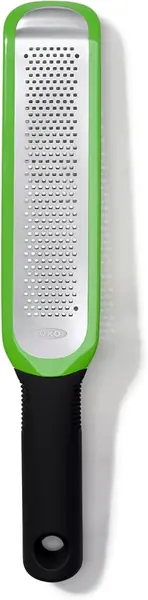
OXO Good Grips etched zester and grater with black and green soft handle

Steady grip

Bake Score 97/100
Included
Blade cover
Overall Length
14.9 inches
Handle
Soft, non-slip
Base
Non-slip foot
View on Amazon

The cushioned handle and non-slip foot are what we notice first on the OXO Etched. Set the foot on a board and the zester stays put while you draw a lemon across the blade; the soft grip gives you something to hold even when your hands are tired. That stability is the reason it suits cooks with arthritis or a weaker grip.

The etched surface is sharp enough for hard cheese and ginger, and it made quick work of lemon zest. The angled handle and blade cover are thoughtful touches that make it easy to live with, and the hole at the end means it can hang within reach instead of disappearing into a drawer.

Where it earns its place is control, not delicacy. If you struggle to hold a slim zester steady, the OXO gives you more to grip and a foot to push against, and that can matter more than the last bit of fineness. We keep it in the drawer for cheese and for days when our hands are tired.

Worth Noting

  • Zest is coarser than fine zesters
  • Long handle takes up drawer space
Our Verdict

We recommend the OXO Etched for cooks who want a secure, cushioned grip and a stable foot, especially when hand strength is limited.

Check Latest Price
4

JOFUYU Lemon Zester Grater Best Value

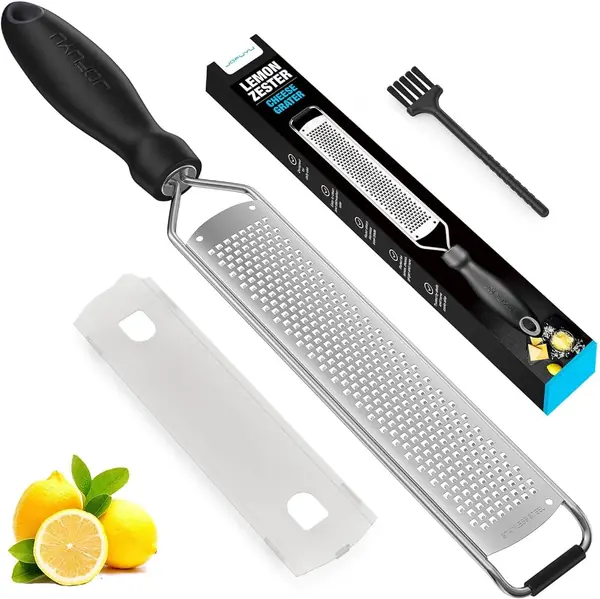
JOFUYU black lemon zester grater with stainless blade and clear safety cover

Budget bakers

Bake Score 96/100
Included
Safety cover and cleaning brush
Blade Material
18/8 stainless steel
Overall Length
15 inches
Weight
6.7 oz
View on Amazon

A zester that comes with its own cover and brush sounds like a small bonus until you live with a sharp blade in a utensil drawer. The JOFUYU kit solves that everyday problem: the clear guard snaps over the blade, the brush reaches the underside, and the whole thing stays tidy between baking projects. That practicality is why we consider it the value pick here.

The 18/8 stainless blade is fine enough for lemon and lime zest, and the 15-inch body gives us a long stroke that covers more fruit per pass. We used it on Parmesan and ginger as well, and it handled both without clogging. The grip is comfortable, and the blade rinses clean with a quick brush.

The brush is the detail that makes it feel finished; it gets into the corners without a separate dish brush. We also like that the cover stays on in the drawer, so the sharp edge is not waiting for an unsuspecting hand.

Worth Noting

  • Long body may not fit shallow drawers
Our Verdict

We think the JOFUYU is the best value here for fine zest, because it includes a cover and brush without charging Microplane money.

Check Latest Price
5

Cambom Lemon Zester Grater Set Best Set

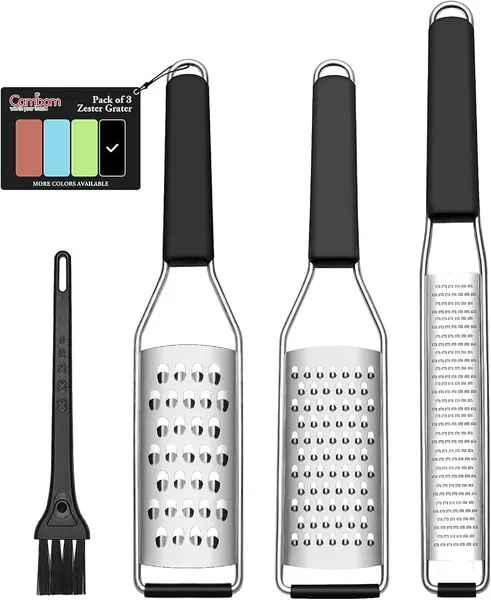
Cambom three-piece stainless steel grater set with black handles and covers

Multi-blade set

Bake Score 95/100
Material
304 stainless steel
Pieces
3
Fine Blade
11.8 inches
Coarse Blades
11.4 inches
View on Amazon

Three blades for about the space of one is the pitch, and the Cambom set delivers it. You get a fine zester plus coarse and extra-coarse graters, each with its own protective shell and a shared cleaning brush. For a kitchen that does not want a box grater, it covers a lot of prep with very little storage fuss.

The fine blade is the one we reach for on lemons and limes; it cuts cleanly without dragging up pith. The wider blades handle Parmesan, vegetables, and chocolate, and the continuous handles feel more solid than the two-piece designs we have used. The anti-skid bars at the bottom are a useful touch when you set a blade over a bowl.

What we cannot promise is a premium feel: this is a budget set, and the handles and covers are where that shows. The blades, though, have stayed sharp through our testing, and that is the part that matters for zest.

Worth Noting

  • Handle coating can flake with washing
  • Covers can be stiff to remove
Our Verdict

We keep the Cambom set for kitchens that need one tool to zest, grate, and shred; the three blades cover more jobs than a single zester.

Check Latest Price
6

ALLTOP Lemon Zester Best for High-Volume Zesting

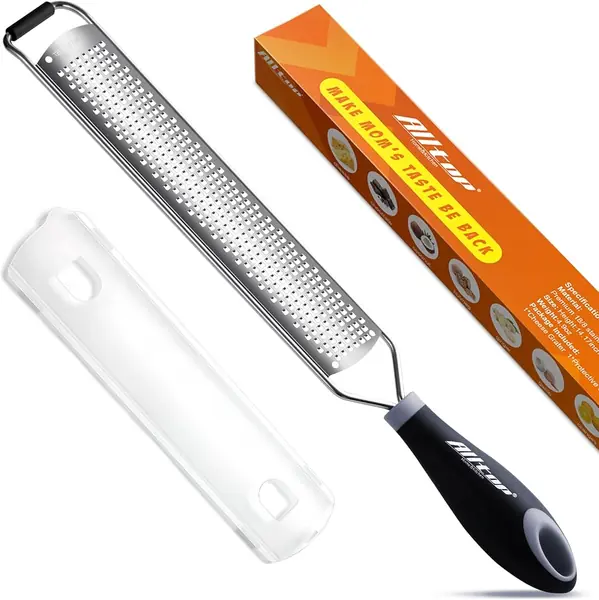
ALLTOP stainless steel lemon zester with black handle and clear blade cover

High-volume zesting

Bake Score 94/100
Included
Protective cover
Overall Length
14.3 inches
Material
18/8 stainless steel
Blade Length
9.7 inches
View on Amazon

Nine inches of blade is a lot of grating surface, and the ALLTOP puts it to work. The 9.7-inch stainless blade and 14.3-inch overall length let us draw a lemon across in one long stroke, so a bowl of zest comes together faster than it does with a short zester. The extra-wide grip gives us something substantial to hold while we work.

The 18/8 stainless steel feels rigid, not flexy, and the protective cover stays put in the drawer. We used it on citrus, ginger, and Parmesan; it handled all three without clogging, and the silicone cap on the tip kept the tool steady when we braced it against a bowl.

We paid attention to the edges, because a wide blade can be unwieldy at the tip. The ALLTOP's handle is long enough to keep our knuckles clear, and the cover protects the teeth when the tool is not in use. It is a simple design, but the proportions are thoughtful.

The blade has stayed sharp through our testing, and the cover makes it easy to store without nicking anything else. For a tool this large, that combination is what keeps it from becoming a drawer relic.

Worth Noting

  • Large footprint for small kitchens
Our Verdict

We choose the ALLTOP when a recipe calls for a lot of citrus; its wide blade makes fast work of zesting and grating.

Check Latest Price
7

OXO Good Grips Citrus Zester with Channel Knife Best for Cocktail Garnishes

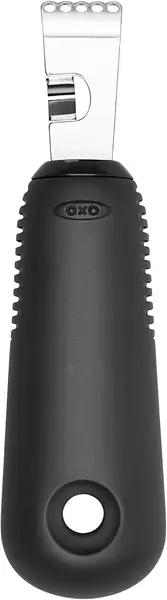
OXO Good Grips citrus zester with channel knife and stainless steel head

Cocktail garnishes

Bake Score 93/100
Material
Stainless steel and silicone
Handle
Soft, non-slip
Dishwasher Safe
Yes
Functions
Zester and channel knife
View on Amazon

A lemon twist for a martini is where the OXO channel zester makes sense. The stainless head has a row of small holes for fine threads of zest and a channel knife for long strips, so one compact tool covers both garnishes. We found the strips came off cleanly, and the soft handle gave us enough control to follow the curve of the fruit.

This is not the tool we reach for when a recipe wants a tablespoon of finely grated zest. The hole side produces short threads rather than a fluffy pile, and the channel knife is best for cocktails, desserts, and anyone who likes a visible curl of citrus on the plate. For that narrow job, it is neat and easy to clean; for everyday baking, a fine zester is more useful.

Our Verdict

We recommend the OXO channel zester for cocktails and dessert garnishes, where long twists matter more than a pile of fine zest.

Check Latest Price
8

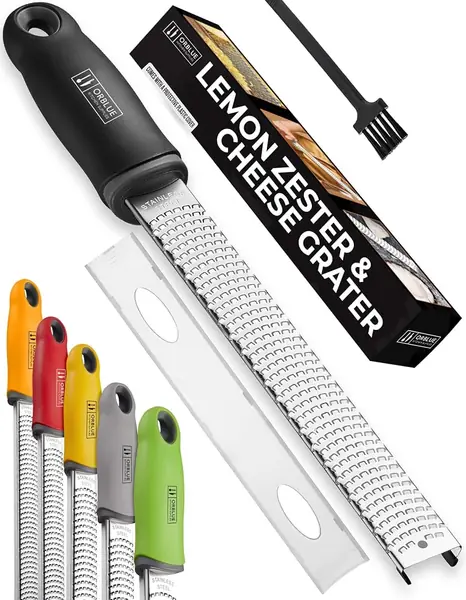
Orblue Lemon Zester & Cheese Grater Best for Small Drawers

Orblue black flat lemon zester and cheese grater with protective cover

Small drawers

Bake Score 92/100
Included
Protective cover
Blade Material
Stainless steel
Dishwasher Safe
Yes
Color
Boundless Black
View on Amazon

The Orblue's flat body slides into a crowded drawer without the bulk of a handled zester. It feels light in the hand, and the snap-on cover keeps the blade from nicking nearby utensils. That drawer-friendly shape is the first reason we keep it around.

On citrus, it behaves like a much more expensive zester. The stainless blade produces fine zest with light pressure, and it stayed sharp through repeated washes in our testing. We also used it on Parmesan and garlic; it handled both, and the flat profile made it easy to brace against a board.

The cover is the part we trust least. It can crack if it is forced onto the blade, and a cracked cover leaves the sharp edge exposed in the drawer. Treat the guard gently, and it earns its place as a low-cost zester that disappears into the drawer.

Worth Noting

  • Narrow blade is slower on large blocks
Our Verdict

We see the Orblue as the flat, affordable alternative for a crowded drawer, with zest quality close to our top pick.

Check Latest Price

How We Tested the Best Zesters

We started with the zesters that keep surfacing in kitchen-tool coverage and in high-volume reviews, then narrowed the field by blade type (etched versus stamped), handle shape, whether a blade cover came in the box, and whether the maker actually claimed dishwasher-safe. Price had to make sense for what you get. That left 14 tools, from slim bar-style zesters to multi-piece sets with interchangeable blades.

Testing ran for three months in real kitchens: Sunday morning baking, weeknight pasta, and a cocktail hour that went longer than planned. We counted strokes to a tablespoon of lemon zest and looked at what came up with it — clean curls, or strips dragging white pith. We ran each blade over the same block of Parmesan until it hit the rind, then checked whether the cheese fell away from the teeth or had to be dug out with a fingertip. Ginger, garlic, nutmeg, and chocolate got the same treatment.

For ease of use, we zested six lemons back to back and noted where each handle started digging in, then handed the same tools to a left-handed tester to see if the grip still worked. We put on and pulled off every blade cover with damp hands, the way you'd actually do it mid-recipe.

Cleaning was a hand wash at the sink right after use, plus a full dishwasher cycle for the ones that promised it, checking the next morning for trapped zest and dulled edges. We came back to each zester in week ten to see whether it still cut or had started to tear — that's where the cheaper tools give themselves away.

How to Choose a Zester

Start With the Zest You Want

A zester's tooth pattern decides whether you get fluffy zest, short threads, or long twists. Fine photo-etched teeth shave the colored rind without tearing the pith; wider punched holes and channel knives make bigger pieces that suit garnishes and infusions. If you bake, fine is the priority. If you garnish cocktails, a channel knife earns its place.

We treat a zester as a baking tool first, so we favor a fine blade that leaves the pith behind. That does not make a coarse grater wrong; it just makes it a different tool. Buy for the zest you actually use, not for the widest array of holes.

Match the Handle to Your Hands

Grip matters more than length for many cooks. A soft, non-slip handle and a foot that rests on the board keep the tool steady when you press hard cheese. If your hands tire easily, a cushioned handle with more bulk is easier to control than a slim steel zester. We noticed the difference most when zesting several lemons in a row.

Test the hold before you commit: your fingers should sit behind the blade, and the tip should brace against a bowl or board without sliding. A cover is not a handle, so do not grip the tool through the guard.

Measure the Blade Against Your Drawer

Longer blades cover more fruit per stroke, which is why 12- to 15-inch hand graters show up in busy kitchens. They also need drawer depth or a hanging hook. A short, flat zester is easier to stash and better for a pinch of zest, but it takes more passes.

Measure the inside of your drawer before choosing an extra-long model. If you are short on space, a flat zester with a cover is the practical compromise; if you zest in volume, the long stroke is worth the footprint.

Plan for Cleaning and Storage

Citrus zest clings to the underside of the blade, so rinse promptly and use a small brush to push it out. Many models are dishwasher safe, but a quick hand wash keeps the teeth free of dried pulp and protects the edge. We keep the cover on in the drawer and never stack another tool against the blade.

If you bake often, a brush is not optional; it is the difference between clean zest and a blade packed with fibers. Check that the cover fits securely, especially if children or guests rummage in the drawer.

Decide How Many Jobs It Needs to Do

A single fine zester is enough for citrus, ginger, garlic, nutmeg, and hard cheese. A multi-blade set adds coarse shredding for vegetables and chocolate, but it also adds storage and more edges to manage. We recommend starting with one good fine zester unless you already know you need the wider cuts.

If you grate Parmesan by the block and zest by the lemon, a two- or three-piece set can replace a box grater. If you mostly zest, spend the money on one blade that stays sharp rather than a set that covers jobs you rarely do.

Frequently Asked Questions

Final Verdict

The Microplane Premium Classic is the zester we recommend first because it does the two jobs most bakers need: fine, pith-free citrus zest and fluffy hard cheese, with a blade that stays keen and a handle that feels controlled. It costs more than the budget picks, but it is the one we reach for when we want the job done cleanly.

If you grate more than you zest, the Deiss gives you a wider blade for less. For cocktail twists, choose the OXO channel zester; for a single kit that covers coarse grating too, the Cambom set is the practical choice.