Best Baking Pan Materials
If you want one answer, light-colored aluminum (or aluminized steel) is the best baking pan material for most bakes. It heats quickly and evenly, browns cakes and cookies without scorching them, and doesn't rust. That's why most professional bakeries use plain aluminum sheet pans and cake pans.
No material wins everything, though. Glass shows you a pie crust's bottom, cast iron gives cornbread a crisp edge, and ceramic keeps a cobbler warm at the table. This guide explains how each material behaves so you can choose the right pan for each bake.
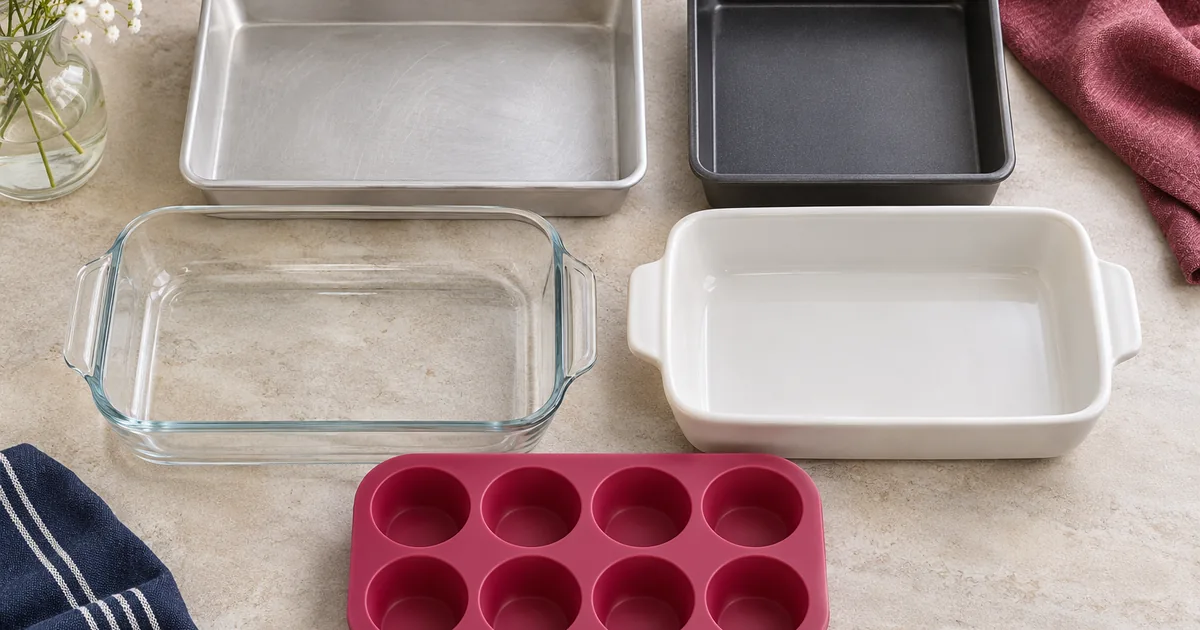
Why the material matters
A pan's job is to move oven heat into the batter or dough. Two properties decide how it does that:
- How fast it conducts heat. Aluminum moves heat roughly four times as fast as carbon steel or cast iron, and many times faster than glass or ceramic. Fast conductors heat evenly and respond quickly when the oven changes.
- How much heat it holds. Heavy materials such as cast iron, stoneware and thick glass take a while to heat, then stay hot. That's good for deep browning and keeping food warm, and bad for anything that needs gentle, even baking.
Color matters too. Dark, matte surfaces absorb more radiant heat than shiny, light ones, so a dark pan browns faster.
Baking pan materials compared
| Material | Heats | Browning | Release | Care | Best for |
|---|---|---|---|---|---|
| Aluminum (bare or anodized) | Fast, even | Golden, even | Good with grease or parchment | Hand wash bare aluminum | Cakes, cookies, sheet pans, rolls |
| Aluminized steel | Fast, even | Golden | Good; often has a coating | Dry promptly | Loaf, cake and muffin pans |
| Nonstick-coated steel | Fast | Darker, faster | Very easy | No metal tools; avoid high heat | Muffins, Bundts, beginners |
| Stainless steel | Uneven alone | Patchy | Sticks unless greased | Dishwasher safe, durable | Roasting, sheet pans with a core |
| Carbon steel | Fast | Dark, crisp | Good once seasoned | Must be dried and oiled | Pizza, bread, Detroit-style pans |
| Cast iron | Slow, then very hot | Deep, crisp | Good once seasoned | Season; heavy | Cornbread, skillet cookies, bread |
| Glass | Slow | Good on bottoms you can see | Fair | Avoid sudden temperature changes | Pies, casseroles, crisps |
| Ceramic and stoneware | Slow, holds heat | Soft edges | Fair to good | Can chip | Casseroles, cobblers, bread puddings |
| Silicone | Slow, insulating | Pale | Excellent | Floppy; place on a sheet | Molds, muffins, frozen desserts |
The main materials, one by one
Aluminum
The workhorse. Bare aluminum, as in Nordic Ware's Naturals sheet pans and Fat Daddio's anodized cake pans, bakes evenly and browns gently. Anodized aluminum has a hardened surface that doesn't react with acidic foods or discolor. Bare aluminum can darken in the dishwasher and react slightly with tomato or lemon, so hand wash it and line it for acidic recipes.
Aluminized steel
Steel coated with an aluminum-silicon alloy. It's stiffer than plain aluminum, so it resists warping, and bakes much like aluminum. Most USA Pan products use aluminized steel with a silicone-based nonstick coating.
Nonstick coatings
Most nonstick bakeware is steel with a PTFE coating, usually dark gray. It releases well and is forgiving for beginners, but it browns faster, so lower the oven about 25°F or check early. Avoid metal utensils and don't heat empty nonstick pans at very high temperatures. "Ceramic" nonstick coatings avoid PTFE but tend to lose their slickness sooner.
Stainless steel
Durable, nonreactive and dishwasher safe, which is why it's popular with buyers who want to avoid coatings. On its own it conducts heat poorly, so thin stainless pans can bake unevenly and stick. Stainless sheet pans work best for roasting; for cakes, aluminum is better.
Glass
Glass heats slowly and holds heat, so the outside of a cake can overbake before the center sets. It's excellent for pies, because you can see when the bottom crust is brown, and for casseroles and crisps. Lower the oven about 25°F for cakes in glass. Never move a hot glass dish onto a wet or cold surface, and don't put a cold one straight into a hot oven.
Ceramic and stoneware
Like glass, ceramic heats slowly and holds heat well. It makes tender-edged bread puddings, cobblers and lasagna and goes straight to the table. It isn't the best choice for cakes or cookies, which need fast, even heat.
Cast iron and carbon steel
Both hold a lot of heat once hot, and both develop a natural nonstick surface with seasoning. Cast iron makes crisp cornbread, skillet cookies and pan pizza. Carbon steel is lighter and heats faster; it's used for pizza pans and Detroit-style pans.
Silicone
Silicone releases almost anything and folds for storage, which makes it good for intricate molds and freezer desserts. It insulates rather than conducts, so cakes and muffins brown poorly and can bake unevenly. Always set silicone pans on a metal sheet so they don't buckle when full.
Which material for which bake
- Cakes: light aluminum or anodized aluminum. See cake pan materials.
- Cookies and sheet-pan bakes: heavy aluminum or aluminized steel half sheets. See baking sheet materials.
- Bread loaves: aluminized steel, or cast iron for a thick crust. See loaf pan materials.
- Pies: glass or ceramic for even, visible browning; aluminum for the crispest bottom.
- Casseroles, crisps and bread puddings: glass, ceramic or stoneware.
- Pizza: carbon steel, cast iron or dark aluminum. See pizza pan materials.
What about non toxic bakeware?
Most concern centers on PTFE and other PFAS used in nonstick coatings. If you'd rather avoid coatings, choose bare or anodized aluminum, stainless steel, glass, ceramic, stoneware or cast iron. All are long-established bakeware materials. Use parchment paper for release instead of a coating.
If you do use nonstick pans, keep them below the maker's maximum temperature, avoid scratching them, and replace them when the coating flakes. Our bakeware sets section notes the coating, if any, on every set we cover.
Frequently Asked Questions
Metal is better for cakes, cookies, muffins and bread because it heats fast and evenly. Glass is better for pies, casseroles and fruit desserts, where slow, steady heat and a visible bottom crust help.
Dark surfaces absorb more heat. Lower the oven by about 25°F, check the cake 5 to 10 minutes early, or switch to a light-colored pan.
A small amount can migrate from bare aluminum into acidic or salty foods. For most recipes it's negligible; anodized aluminum or parchment lining stops it altogether.
Cast iron and stainless steel last the longest. Heavy-gauge aluminized steel is the most durable of the light-colored, all-purpose options.