Best Pizza Stone Materials
For pizza in a home oven, the best "stone" isn't a stone at all. A pizza steel, a slab of plain steel about ¼ inch thick, makes the crispest, best-browned crust, because steel passes stored heat into the dough much faster than stone does. The Baking Steel is the best-known brand.
If you want a true stone, cordierite is the best material. It handles sudden temperature changes without cracking, which makes it the first choice for grills and outdoor pizza ovens, and its gentler heat suits bread. Here's how the materials compare.
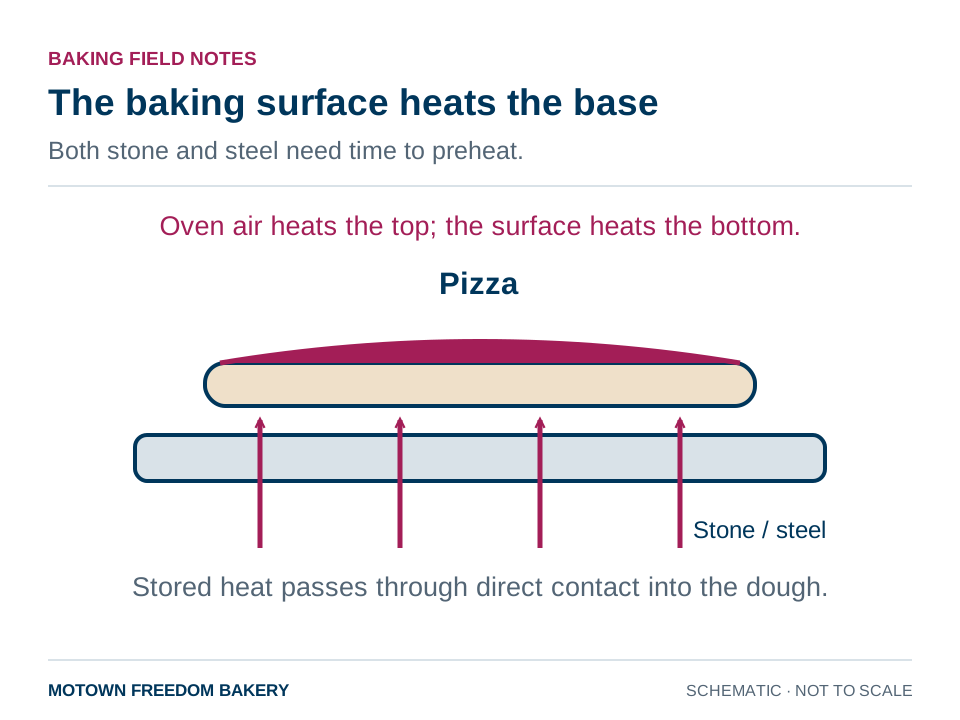
What a baking stone does
A home oven's air doesn't move heat into dough fast enough to crisp the bottom before the top overcooks. A baking surface fixes that. You preheat it for 45 to 60 minutes so it stores heat, then slide the pizza onto it, and it pours that heat straight into the crust.
Two properties decide how well it works:
- Conductivity: how fast the surface hands its heat to the dough. Steel is roughly 20 times more conductive than cordierite or ceramic.
- Heat capacity: how much heat it stores, which depends on the material and its thickness. A thicker stone or steel recovers faster between pizzas.
High conductivity is why a pizza on a steel often bakes a few minutes faster than the same pizza on a stone, with a browner bottom. Too much conductivity can be a problem in a very hot outdoor oven, though, where steel can burn the bottom before the top cooks.
Pizza stone materials compared
| Material | Heat transfer | Thermal shock | Weight | Care | Best for |
|---|---|---|---|---|---|
| Steel | Fastest | Won't crack | Very heavy | Season; keep dry | Home ovens; New York and thin crust |
| Cordierite | Moderate | Very resistant | Heavy | Scrape only; no soap | Grills, pizza ovens, bread, all-round |
| Ceramic or clay | Moderate | Cracks more easily | Medium | Avoid soaking | Occasional pizza and bread |
| Cast iron (pan or griddle) | Fast | Won't crack | Heavy | Season | Pizza and bread; doubles as cookware |
| Composite (e.g. FibraMent) | Moderate | Resistant | Very heavy | Leave in oven | Bread bakers, permanent oven deck |
Steel
Steel conducts heat fast and stores plenty of it, so it browns the bottom crust quickly even in a 500°F home oven. It never cracks, and it can sit under the broiler to blast the top of the pizza too.
- Thickness: ¼ inch is the usual choice; ⅜ to ½ inch stores more heat for back-to-back pizzas but can weigh 30 pounds or more. Check that your oven rack can take it.
- Care: steel arrives seasoned and needs an occasional wipe of oil to prevent rust. Never leave it wet.
- Downside: in grills or pizza ovens running hotter than about 600°F, steel can scorch the bottom.
Cordierite
Cordierite is a mineral-based ceramic used in kiln shelves. Its big advantage is that it barely expands when heated, so it shrugs off temperature swings that crack other stones. That makes it the default for grills, pizza ovens such as Ooni's, and anyone who might slide a cold, wet pizza onto a hot stone.
It heats more gently than steel, which suits thicker crusts and free-form bread. Look for at least ½ inch thick, and ⅝ to ¾ inch for better heat storage. Stones stain with use; that's normal and doesn't affect baking. Scrape them clean and never use soap, which soaks in.
Ceramic and clay
Many cheaper stones are plain ceramic or clay. They work, but they crack more easily, especially if they're put into a hot oven cold or hit with water. Glazed ceramic stones, such as Emile Henry's, are easier to clean and more durable than unglazed clay ones.
Cast iron
A cast iron pizza pan or griddle, such as Lodge's 14-inch pan, conducts heat faster than stone and never cracks. It's lighter than a thick steel and doubles as a pan for searing, cornbread and pan pizza. Its smaller size and raised rim can make launching big pizzas a little trickier.
Composite stones
Brands such as FibraMent make thick composite baking stones meant to live in the oven permanently, like the deck of a bread oven. They're heavy and slow to heat, but they hold heat well for bread and multiple pizzas.
How to choose
- Home oven, mainly pizza: a ¼ inch steel.
- Home oven, pizza and lots of bread: a thick cordierite stone or a composite deck.
- Grill or outdoor pizza oven: cordierite.
- Small kitchen, or you want cookware too: a cast iron pizza pan.
Size matters too: a rectangle of about 14 x 16 inches fits most ovens and leaves a couple of inches for air to circulate. Measure your oven before buying. Our specialty pans and molds section covers stones, steels and peels; for pans, see pizza pan materials.
Frequently Asked Questions
In a home oven, yes, for most pizza. It browns the crust faster and never cracks. A cordierite stone is better in very hot grills and pizza ovens, and some bakers prefer it for bread.
Usually thermal shock: a cold stone put into a hot oven, a wet stone heated, or cold dough on a stone that isn't cordierite. Put the stone in a cold oven and let it heat up with the oven.
At least ½ inch for cordierite or ceramic, and about ¼ inch for steel. Thicker surfaces store more heat but take longer to preheat.
No. Stones aren't seasoned or oiled; the dark spots are normal. Steel and cast iron do need seasoning to prevent rust.