The 7 Best Bread Pans for Sourdough of 2026

Sourdough is a slow investment — three days from waking the starter to slicing the first piece — and the pan is where it either pays off or ends up on the counter in two pieces. A good one fixes the last twenty minutes: even browning on the bottom, a crust that doesn't scorch before the center sets, and a loaf that slides out cleanly when you tip it over.

A wet, high-hydration dough exposes weak pans fast, which made the 12 we baked in, from thin nonstick steel to cast iron with lids, easy to sort. A few things first-timers learn the hard way: dark finishes brown aggressively, cast iron rusts the first time you forget it in the sink, and a lid turns any pan into a small steam chamber your oven can't provide on its own.

What follows is a mix of workhorses and budget picks, judged on how they treated a real loaf rather than how they photographed. Some were built to outlast the oven; others earned their spot on price.

Our Top Picks

The Best Bread Pans for Sourdough

1

USA Pan Nonstick Standard Bread Loaf Pan Best Overall
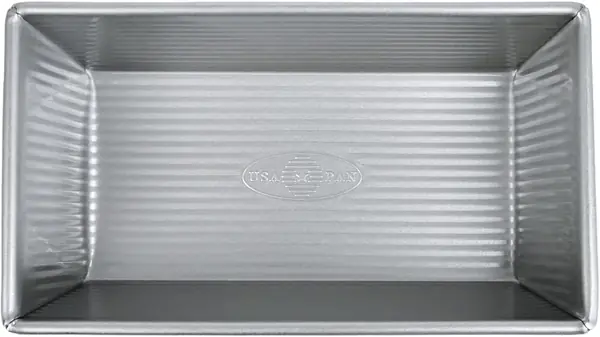
USA Pan nonstick standard loaf pan in silver aluminized steel with corrugated sides

Standard sourdough loaves

Bake Score 97/100
Oven-safe To
450 °F
Material
Aluminized steel
Interior Size
8.5 x 4.5 x 2.75 in
Care
Hand wash
View on Amazon

The corrugated walls are the first thing you notice, and they earn their keep. Those ridges stiffen a fairly thin sheet of aluminized steel so the pan keeps its shape through a hot bake, and they let air move under and around the loaf. The result is a crust that browns evenly from end to end instead of scorching in one corner, which is the failure we watched for most closely across this set.

It's our top pick for a fairly unglamorous reason: 8.5 by 4.5 by 2.75 inches is the size most sourdough sandwich-bread recipes are written for. A one-pound loaf fills it properly, so the dough climbs rather than spreading into a slab, and the slices come out the size you'd pay bakery prices for. The silicone coating released every loaf we baked without greasing, and the pan has stayed flat and free of rust where the cheapest nonstick here has not.

One adjustment worth making: this is a bright silver pan, and bright pans bake slower than dark ones. If your recipe was written for dark nonstick, give the loaf a few extra minutes and judge it by color and by how the center springs back. It's hand wash only, and the square interior corners want a small brush rather than a swipe.

Worth Noting

  • Hand wash only
  • Square corners need a brush
Our Verdict

We recommend this to anyone baking sourdough sandwich bread regularly: it's the right size, it releases cleanly, and it holds up.

Check Latest Price
2

Lodge Pre-Seasoned Cast Iron Loaf Pan Best Cast Iron

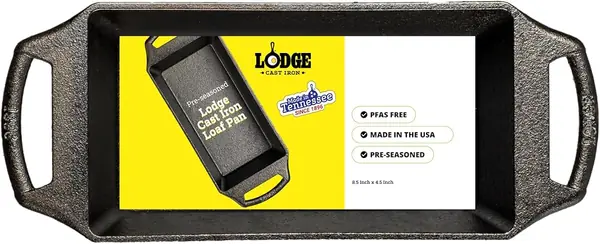
Lodge pre-seasoned black cast iron loaf pan with two loop handles

Crisp cast-iron crusts

Bake Score 96/100
Oven-safe To
500 °F
Material
Pre-seasoned cast iron
Pan Size
8.5 x 4.5 in
Weight
3.8 lb
View on Amazon

Cast iron is the closest a bread pan gets to the Dutch ovens sourdough bakers already own, and this one behaves like it. Nearly four pounds of iron soaks up heat and gives it back slowly, so the loaf gets a deep, dark bottom crust without the oven running flat out. We got the most color on the base of the loaf from this pan of anything here, and because the surface is seasoned iron rather than a coating, there's nothing to peel.

Size is where you should think before buying. The listed 8.5 by 4.5 inches is honest, but the interior feels narrow, and a slack, high-hydration dough that spreads will bake into a taller, narrower loaf than a recipe written for a 9-by-5 pan promises. For a shaped sandwich loaf it's ideal; for a wet dough you're still learning, it's less forgiving. Measure your oven too, since the pan runs about a foot handle to handle.

Then there's the upkeep: hand wash, dry it on the stove, wipe on a little oil, every time. We didn't mind, because that ritual is what keeps the surface nonstick without a coating, but it's a genuine difference from a pan you can leave in the sink while you eat lunch.

Worth Noting

  • Narrow interior makes a taller, smaller loaf
  • Hand wash, dry, and re-oil each time
Our Verdict

We keep this one in mind for anyone chasing a dark, crisp sourdough crust who doesn't mind a quick seasoning wipe-down after each bake.

Check Latest Price
3

USA Pan Pullman Loaf Pan with Cover Best for Square Sandwich Slices

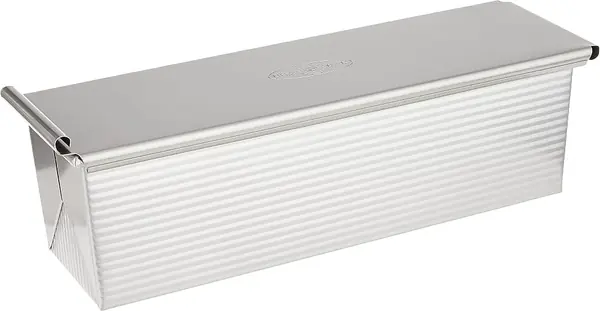
USA Pan Pullman loaf pan in silver steel with its flat sliding cover

Square sandwich loaves

Bake Score 95/100
Oven-safe To
450 °F
Interior Size
13 x 4 x 4 in
Lid
Included
Capacity
16 cups
View on Amazon

Put the cover on this pan and sourdough stops being a boule. The lid caps the rise, so the loaf fills the pan corner to corner and comes out as a square-sided block. Sliced, that's bread that fits a toaster without trimming and stacks flat for sandwiches, which is the whole reason pain de mie exists.

It measures 13 by 4 by 4 inches and holds 16 cups, and it works two ways. Lid on for square slices; lid off and you have a long, narrow sandwich loaf with more crust on every slice than a standard pan gives you. The silicone coating is PTFE-, PFOA-, and BPA-free, and it released both styles without sprays or grease.

Here's where we land: if square slices are the goal, nothing else in this group does the job, and the fiddling is worth it. What we'd change is the lid seating, which slides on fine on the counter but wants two hands on a hot pan, plus thin steel that dents if pans get stacked on top of it. Seat the cover before the pan goes in the oven, hand wash it, and store it with nothing above.

Worth Noting

  • Lid is fiddly to seat on a hot pan
  • Thin steel dents if stacked
Our Verdict

Buy it if you want toaster-perfect square slices; we think it's the only pan on this list that delivers them.

Check Latest Price
4

GoodCook Extra Large Nonstick Loaf Pans, Set of 2 Best Extra-Large

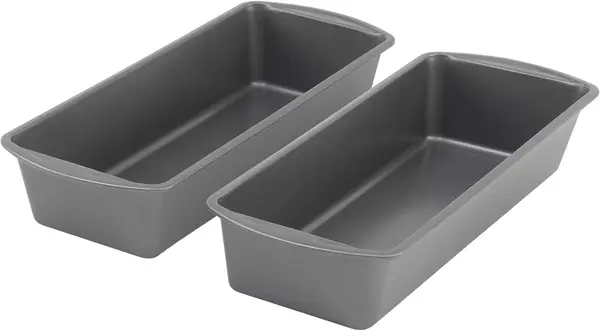
GoodCook extra-large gray nonstick steel loaf pans, set of two with end handles

Oversized bakery loaves

Bake Score 94/100
Oven-safe To
450 °F
Material
Heavy-gauge steel
Pan Size
13 x 5 in
Set
Two pans
View on Amazon

Thirteen inches is a different animal from a standard bread pan. A long loaf puts more crust on every slice, and the pan takes a bigger batch, so a two-pound mix of dough that would climb out of an 8.5-inch pan bakes comfortably in one of these. It's also the least expensive route here to two pans at once, which matters if you bake on Sunday and hand loaves to neighbors.

We like these for big, bakery-style loaves and for a household that goes through a lot of toast. What we don't like is using them for a standard recipe: the same dough that rises tall in an 8.5-inch pan spreads out here into a flatter loaf with a wider crumb and less height. Buy them because you want the size, not as an all-purpose replacement.

The coating is the scratch-resistant sort that tolerates a metal spatula, and the steel is heavy enough that neither pan warped at 450 °F. They're labeled dishwasher safe, but a rolled rim is exactly where a dishwasher cycle starts rust, so we hand wash ours and the rims have stayed clean.

Worth Noting

  • Oversized for standard loaf recipes
  • Rolled rims rust in the dishwasher
Our Verdict

We point big-batch bakers here: two long pans, even heat, and a price that leaves room for more flour.

Check Latest Price
5

Articasting Enameled Cast Iron Loaf Pan with Lid Best Splurge

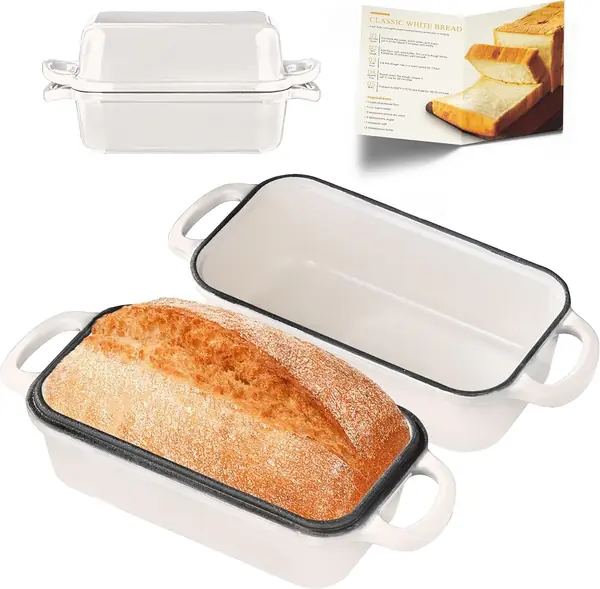
Articasting cream enameled cast iron loaf pan with matching lid and handles

Steam-baked sourdough

Bake Score 93/100
Oven-safe To
500 °F
Material
Enameled cast iron
Pan Size
9 x 5 in
Weight
9 lb
View on Amazon

This is the most expensive pan here, and what the money buys is a covered bake. The base and the lid each work as a pan, so one purchase gives you two loaves at once, or one lidded pan that traps steam around a shaped sourdough loaf and behaves like a rectangular Dutch oven.

The enamel is the reason to choose it over bare cast iron: no seasoning, no oiling ritual, and it wipes clean with a sponge. The gradient cream finish is genuinely handsome in a way bakeware rarely is, and the 500 °F rating means a hot bake is no problem at all.

Two things to know before you commit a recipe. It weighs nine pounds, so lifting a hot loaf out is a two-handed job with good mitts and a cleared landing spot. And the interior runs a little under the advertised 9 by 5, so measure the inside if your formula is scaled tightly to that pan.

Here's what settles it for us: for steam plus a shaped loaf without a round pot, this is the pan that does it, and the enamel makes it the cast iron piece you can hand to a nervous beginner. If you mainly want two pans for the money, the bare cast iron set further down this list gives you exactly that for less.

Worth Noting

  • Nine pounds to lift from a hot oven
  • Interior runs slightly under 9 x 5
Our Verdict

We recommend it to anyone who wants steam and a shaped loaf without buying another Dutch oven.

Check Latest Price
6

Amazon Basics Nonstick Loaf Pan, Set of 2

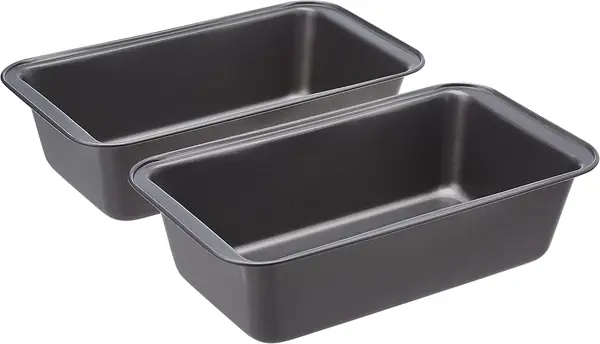
Amazon Basics gray nonstick rectangular loaf pans, set of two in gray finish

Budget two-pan start

Bake Score 92/100
Oven-safe To
428 °F
Material
Nonstick steel
Pan Size
9.5 x 5 in
Set
Two pans
View on Amazon

Two pans for roughly the price of one of the cast iron options is the pitch, and we think it's a fair one for a first sourdough pan. The 9.5-by-5 pan bakes a standard loaf evenly, the coating lets the loaf drop out with a light swipe of oil, and cleanup is a rinse and a wipe rather than a soak.

The ceiling is 428 °F, the lowest in this group, which is fine for sandwich bread at 375 to 400 but not for a hot bake. The coating is the part that ages. It's fine while it lasts, but the rim is where it starts to lift, and once bare steel shows, rust follows. Hand wash it and don't stack anything inside it.

Where we land: this is the pair for baking two loaves at once without spending much, or for someone who isn't sure sourdough will stick as a hobby. If it does stick, the USA Pan is the upgrade that will outlast these.

Worth Noting

  • 428 °F ceiling is the lowest here
  • Coating lifts at the rim over time
Our Verdict

We recommend this pair as a low-risk way into sourdough: two decent pans, even baking, and a coating that asks for gentle handling.

Check Latest Price
7

Northriver Cast Iron Loaf Pan with Lid, 2-Piece Best for Low-Cost Cast-Iron Crusts

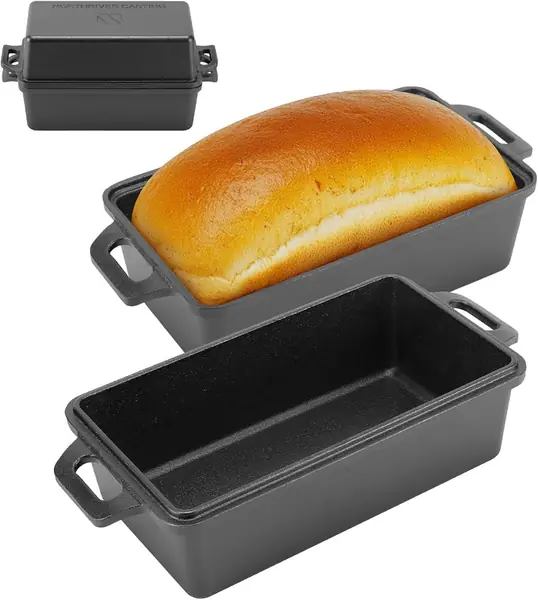
Northriver black cast iron loaf pan and lid as two nesting pieces

Low-cost cast-iron crusts

Bake Score 91/100
Oven-safe To
500 °F
Material
Cast iron
Pan Size
9.1 x 5 x 2.75 in
Weight
10 lb
View on Amazon

Ten pounds, in two pieces. That's the whole proposition: a cast iron base and a cast iron lid that each bake a loaf, or lock together into a covered baker sized for a shaped sourdough loaf. Lifting that lid off a hot pan is a two-handed operation, and you'll want a landing spot cleared before the oven door opens.

What the weight buys is heat. Bare seasoned iron at 500 °F gives a loaf a fast, dark crust and a bottom that never goes pale, making this the closest thing here to baking in a Dutch oven. The halves stack for storage, which matters in a small kitchen, and the curved handles are easy to grab through a mitt.

Care is the honest cost. Hand wash, dry it over a low flame, oil it, and never leave it in the sink or trust it to a dishwasher. If that reads as a chore, the enameled pan above is the same idea without the ritual. If it reads as ordinary, the way it does for us after a few weeks, this set bakes two loaves for less than the enameled one costs.

Worth Noting

  • Ten pounds to handle while hot
  • Full seasoning routine after every wash
Our Verdict

We recommend it if you want two cast iron pans, or one covered baker, and don't mind seasoning them.

Check Latest Price

How We Chose and Tested Sourdough Bread Pans

We started with about 30 pans pulled from baker forums, sourdough blogs, and the best-selling listings, then narrowed them by material, capacity, and whether a lid or cover came in the box. That left 12 pans, which we baked in for eight months — roughly one loaf a week per tester, in home ovens rather than a lab. Dough went in straight from a 12-hour cold retard, always at high hydration, because that's the loaf that finds every flaw in a surface.

Each pan got the same dough and the same oven temperature so we could compare bottoms: we photographed every loaf at the 20-minute mark and again at the end, looking for dark corners, pale centers, and scorching where a thin pan flexed. Then we flipped each one over the sink and watched — some loaves dropped out on their own, some needed a shake, and a few had to be coaxed with a knife around the edge.

Cleaning told us as much as baking. We washed every pan the way its maker instructed, then checked corners and rivets for stuck crust, and put the dishwasher-safe ones through repeated cycles to see whether the coating dulled, scratched, or began to flake at the rim. Rust got its own test: cast iron spent an hour wet in the sink before drying, and we watched the seams on enameled and steel pans for orange bleeding after repeated washes.

Lids and covers we tested both ways — sealed for the first 20 minutes to trap steam, then off to finish — and noted whether the loaf got real oven spring or just a soft crust. Value came down to what the price actually bought: a second pan, a lid that doubles as a skillet, or nothing but a handle.

How to Choose a Bread Pan for Sourdough

Match the Pan to the Loaf You Actually Bake

Most sourdough sandwich-bread recipes are written for a pan around 8.5 by 4.5 inches, which bakes a one-pound loaf that slices into sandwich-size pieces. A 9-by-5 pan takes the same dough and returns a slightly wider, flatter loaf; a 13-inch pan gives a long loaf with more crust per slice and room for a two-pound batch.

The mistake is buying the biggest pan available and expecting a standard recipe to fill it. The dough spreads instead of climbing, and you get a squat loaf with a wide, open crumb. Measure the inside of the pan, not the outside with its handles.

Material Decides the Crust

Aluminized and carbon steel heat quickly and evenly, and they're light enough to move with one hand. Cast iron holds far more heat, so it keeps browning the crust after the loaf leaves the hottest part of the bake, which is what you want if you like a dark, crisp bottom.

Watch the color of the pan as closely as the material. A bright silver pan bakes slower than a dark nonstick one, and a recipe written for dark bakeware will need extra minutes in a bright pan. Bake to color and spring-back rather than the timer.

A Lid Changes the Bake, Not Just the Shape

A Pullman pan's sliding cover constrains the rise, which is how you get square slices that drop into a toaster. A covered cast iron loaf pan does something different: it traps steam early in the bake, holding the crust soft long enough for the loaf to expand before it sets.

Both reward dough with real strength. A slack, wet dough under a lid has nowhere to go and bakes dense, so build structure with stretch-and-folds before you count on a cover to fix it.

Plan for the Finish, Not Just the First Bake

Nonstick is the convenience you're paying for, and it's the first thing to go. Coatings lift at the rim, and once bare steel shows, rust follows. We hand wash every coated pan here whatever the label says, and we stack nothing inside them.

Check the oven-safe rating too, since these run from 428 °F to 500 °F, and a hot bake punishes the low end. Bare cast iron skips coatings entirely but asks for a dry-over-flame-and-oil routine after every wash.

Frequently Asked Questions

Final Verdict

The USA Pan standard loaf pan is the one we point most people to: it's the size sourdough recipes are written for, it browns evenly end to end, and its coating has held up where cheaper pans start to rust. If you want a darker, crisper crust, the Lodge cast iron pan gets you there for about the same money, at the cost of a seasoning wipe-down.

And if square sandwich slices are the whole reason you're shopping, the USA Pan Pullman is the only pan here that turns out that loaf.