The 7 Best Compostable Baking Cups for Muffins of 2026

Compostable baking cups promise two things at once: your muffins release cleanly, and the liner goes in the compost instead of the trash. The thinnest ones only deliver half of that. I've pulled trays out of the oven to find liners gone translucent with butter, and I've watched a tulip cup unfold in the tin like a paper flower running backward.

What separates a good cup from a frustrating one is mostly structural — whether it stands up on its own, whether the seam holds when batter pushes outward, and whether it fits the tin you actually own. A liner an inch too wide puckers at the corners and bakes into folds that never press out. I've baked through 16 different cups, from plain flutes to tall tulip wrappers, and the good ones all behave the same way.

Worth knowing before you buy: tulip styles look lovely on a platter but hold more batter, so the scoop that gives you twelve standard muffins gives you ten.

Our Top Picks

The Best Compostable Baking Cups for Muffins

1

Bake Choice Tulip Baking Cups Best Overall
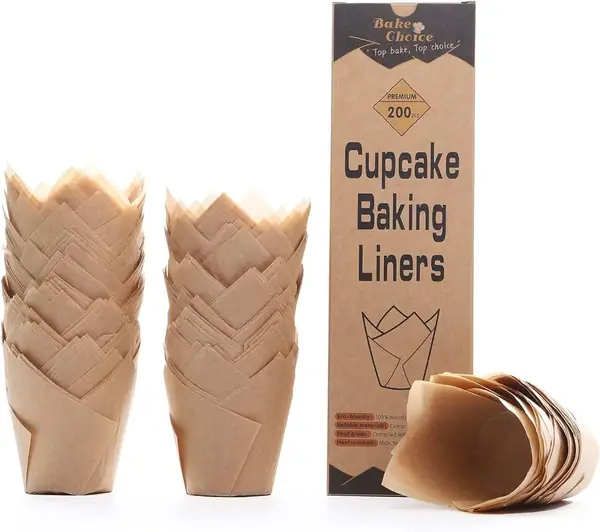
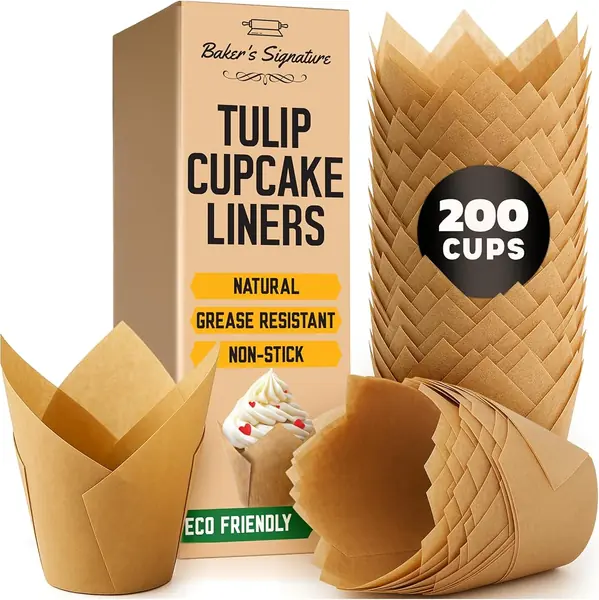
Bake Choice tulip baking cups in unbleached natural parchment, shown with their kraft storage box

Tall bakery-style muffins

Bake Score 97/100
Count
200
Base Diameter
1.97 in
Capacity
3 oz
Paper Weight
50-55 gsm
View on Amazon

The tall pleated wall is the whole argument. These cups run a little over 3 inches from base to point, so the four petals stand above the rim of a standard muffin well and give the batter somewhere to go when it climbs — the difference between a domed, oversized muffin and one that stopped level with the pan. The base is 1.97 inches, which drops straight into a standard tin.

We reach for them with batters that rise hard and lean: pumpkin, banana, bran, anything coarse and heavy on top. The paper runs 50 to 55 gsm, noticeably heavier than a typical liner, so the pleats stay open while you fill instead of folding in against the spoon. Release has been clean on everything we've baked; the paper comes away in one piece and leaves the crust alone. Three ounces of capacity means the muffin, not the wrapper, is the part that gets noticed.

Fill them in the pan rather than on the counter, since the well holds the base steady while the walls are still empty. Then leave them in the kraft box they arrive in, cardboard holder and all — 200 loose tulip cups in a drawer turn into 200 flat sheets of parchment in a month.

The one place this box gives ground is cost per cup, which runs nearly double the plain round cups here. That's the shape and the heavier paper you're paying for, and it's only worth it for the batches somebody is going to look at. For a lunch box muffin nobody sees, we buy the cheap rounds and don't think twice.

Worth Noting

  • Pricier per cup than the plain rounds
Our Verdict

This is the box we keep reaching for: the tall pleated walls hold a domed muffin and the paper lets go cleanly, which is what most cups get wrong.

Check Latest Price
2

Bake Choice Standard Baking Cups Best Value

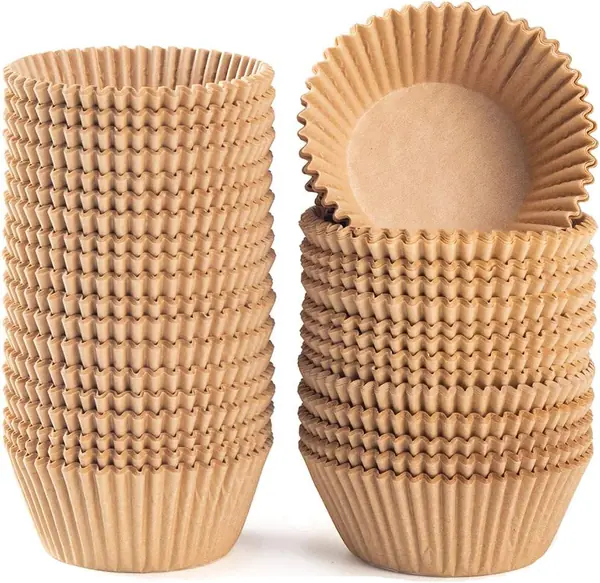
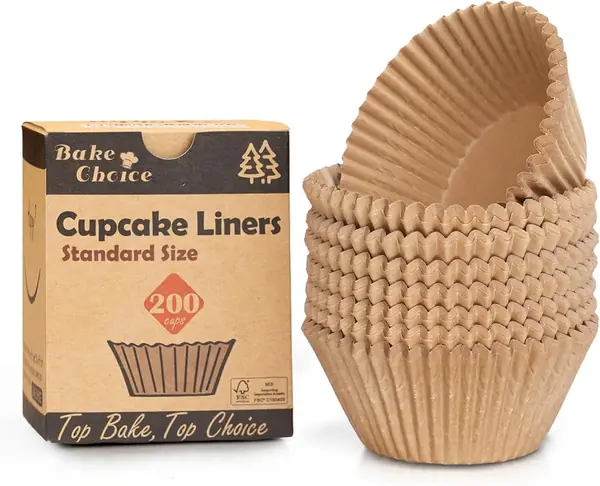
Bake Choice standard round baking cups in unbleached parchment, stacked in a kraft box

Everyday muffin batches

Bake Score 96/100
Count
200
Base Diameter
1.97 in
Heat Rating
428°F
Cup Height
1.37 in
View on Amazon

There's nothing to admire here, and that's the point. This is a plain 200-count box of round fluted cups — 1.97 inches across the base, 1.37 inches tall, unbleached parchment with a silicone coating and a listed ceiling of 428°F — and it's what we hand people who bake muffins most weekends and have never once thought about the wrapper.

Release is where a cheap cup usually shows itself, and this one held up: muffins came out with the crust intact, and the paper peeled away in one piece instead of shredding at the seam. The greaseproofing is done without added fluorocarbons in the paper, which gives the cup a cleaner story if it's headed for a compost pile.

Two things to know. These arrive pressed flat in a stack and only work well from the box — left loose in a drawer, a round fluted cup relaxes, and a relaxed one folds in on itself the moment batter hits it. And there's no pleated collar, nothing that makes a muffin read as bakery; on a plate beside the tulip cups it looks like what it is, a liner. For everyday baking we don't mind at all. This is the box we finish first.

Worth Noting

  • Reads plain next to the tulip cups
Our Verdict

Our value pick: nothing fancy, but a 200-count box of round cups that releases reliably and costs the least of the plain paper options here.

Check Latest Price
3

PaperChef Parchment Baking Cups Best for Sticky Batters

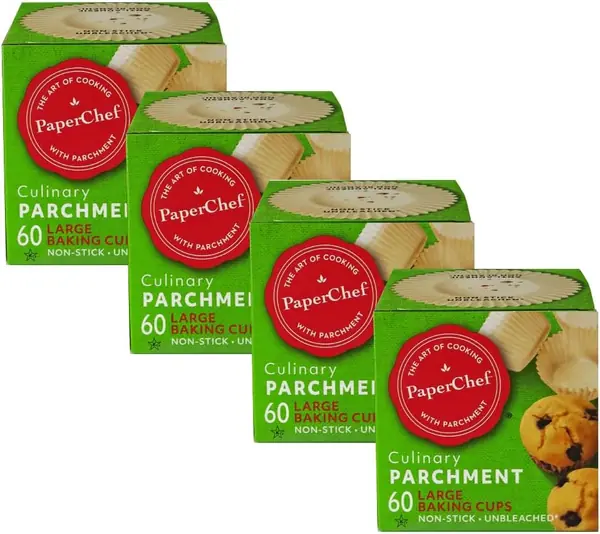
PaperChef parchment baking cups in natural color, four packs of 60 round cups

Sticky, low-fat batters

Bake Score 95/100
Count
240 (4 packs of 60)
Heat Rating
425°F
Shape
Round
Certification
Kosher
View on Amazon

The first thing we put these through was a pan of egg bites with no spray and no oil, a mixture that normally welds itself to whatever it touches. Every cup lifted out with the paper hanging loose. That has been the pattern since: PaperChef is the cup in this group that lets go of the awkward batters.

The paper is unbleached, responsibly sourced, and rated to 425°F, and it arrives as four separate 60-cup sleeves rather than one compressed brick, which is handy if you want some in the kitchen cupboard and some packed away for the holidays. The walls stand straight in the pan while you fill them; nothing collapses in on itself when the spoon goes in.

We recommend it for the messy half of muffin baking: low-fat and no-oil recipes, fruit-heavy batters, savory things like mini quiches and single-serve egg portions. It's kosher certified, and it's the one cup here that carries an explicit compostable claim rather than leaving you to work it out from the material.

The trade is cost, the highest per cup in this set, and the name sets a small trap: large suggests more cup than you get, so treat them as standard muffin size and fill accordingly. If release is the thing that has been ruining your batches, the premium is easy to justify. If your muffins already come out clean, it's money you don't need to spend.

Worth Noting

  • Highest cost per cup in this set
Our Verdict

We recommend it when your batter is the tricky kind — low-fat, fruit-heavy, or egg-based — and the higher cost per cup buys a genuinely clean release.

Check Latest Price
4

Caperci Natural Baking Cups Best Bulk Buy

Caperci natural fluted paper baking cups, 500 count of unbleached round liners

High-volume baking

Bake Score 94/100
Count
500
Base Diameter
2 in
Capacity
90 ml
Heat Rating
428°F
View on Amazon

If you bake two or three times a week, the number that matters here is 500. That's one sealed pack of standard cups — 2-inch base, 1.2 inches tall, about 90 ml of batter — and it's the kind of quantity that quietly ends the do-we-have-any-liners-left question for a year.

We like them for that job. Unbleached, unscented, rated to 428°F, and safe in the oven, microwave, and freezer, so a batch can go from tin to fridge to lunch bag in the same paper. On cornbread and muffins nothing bled, nothing turned greasy-translucent in the oven, and there was no paper smell coming off a hot pan.

Release is the uneven part. With full-fat batters the paper peels away clean; with very moist, low-fat mixtures it can cling to the dome instead of letting go, and a light spray before filling is the fix. That's the same trade you meet across this category, but it's worth knowing before you commit to a year's supply.

What you're buying at this size is the end of a chore, and the paper is good enough that we stop thinking about it. That's about the highest compliment a 500-count box can earn.

Worth Noting

  • Runs slightly small for standard wells
Our Verdict

A 500-cup box for households that bake every week; the paper is sound, the release is decent, and you stop thinking about liners for a year.

Check Latest Price
5

JIRNGLA Tulip Baking Cups Best for Mixed-Color Gift Batches

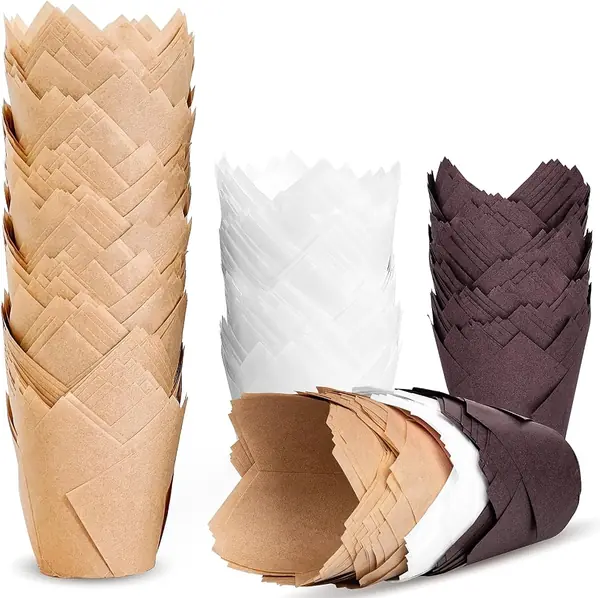
JIRNGLA tulip baking cups in natural, brown, and white parchment, 200 count

Mixed-color gift batches

Bake Score 93/100
Count
200
Base Diameter
1.97 in
Capacity
3 oz
Colors
Natural, brown, white
View on Amazon

Three shades in one box is what sells this one — 100 natural, 50 brown, 50 white, all in the same tulip shape — and it's a better idea than it first sounds. Mixed paper lets you code a batch, blueberry in brown and plain in white, or build a plate that doesn't look like it came out of a single sleeve.

Underneath the colors the JIRNGLA box is a capable 200-count tulip cup: 1.97-inch base, 3-ounce capacity, wood-pulp parchment that holds its pleats while you fill. We baked a lemon-poppy batch in the natural ones and got the tall, slightly uneven top the shape exists to produce, which is most of what anyone wants from a tulip.

Release is good rather than flawless. On a wetter batter a couple of cups held onto the crust at the pleat line, where the paper folds back on itself; a light spray or a slightly lower fill solves it, and drier batters never showed the problem at all. That's the shape's weak spot more than this brand's.

The white cups turned out to be the ones we reached for on chocolate muffins, where the contrast does more work than the brown does. Between the JIRNGLA box and the plain round cups, choose on whether anyone is going to see the plate.

Worth Noting

  • No single-color option in the 200 box
Our Verdict

We keep this one for the batches you hand out — three paper shades in one box, a tall tulip shape, and release that is good rather than perfect.

Check Latest Price
6

Baker's Signature Tulip Baking Cups Best for Presentation-First Baking

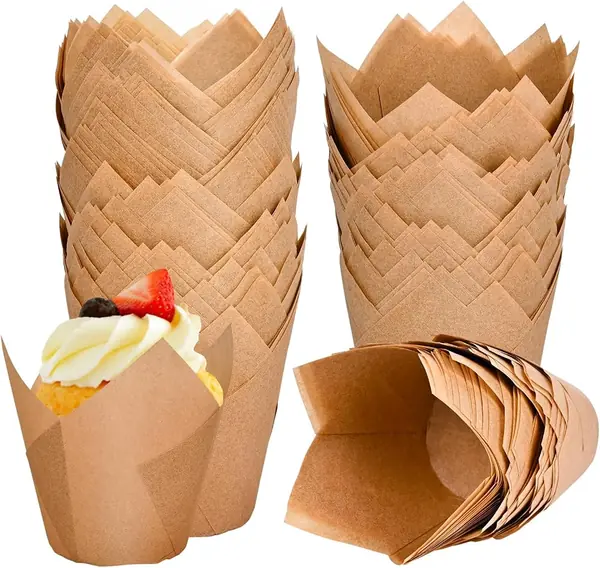
Baker's Signature tulip baking cups in natural brown parchment paper, 200 count

Presentation-first baking

Bake Score 92/100
Count
200
Shape
Tulip
Color
Natural brown
Cup Size
2.5 x 1.5 in
View on Amazon

These are thin. We noticed it pulling the first cup out of the pack — light in the hand, the pleats soft rather than crisp — and it's the fact that shapes the rest of this review, because it decides which batters they suit.

What the light paper buys is a cup that opens and folds without a fight, and a look that photographs like a bakery counter. Natural brown, four petals, greaseproof, a 2.5-by-1.5-inch cup, with a tone that stays warm against a dark plate instead of going shadowy the way printed cups can.

In our baking they were fine with a standard butter-and-sugar muffin batter: they stood in the pan, held their shape, and peeled clean. With a wetter one the walls softened enough that two cups are worth using, doubled paper holding the pleats up and still peeling away together. And eat them within a day, since a muffin stored overnight in the cup can pick up a faint papery taste.

So this is a presentation buy. For a wedding table, a bake sale, or a box going to somebody who will notice, the Baker's Signature tulip is the best-looking cup here and the difference shows in a photo. For Tuesday's lunch bag, you're paying the same per cup as the sturdier tulip box and getting thinner paper for it.

Worth Noting

  • Same per-cup cost as the sturdier tulip cups
Our Verdict

The best-looking tulip here for a party table, though the walls are thin enough that wet batters deserve a second cup.

Check Latest Price
7

Neyimqr Tulip Baking Cups

Neyimqr tulip baking cups in natural unbleached paper, 120 count pack

First tulip cup

Bake Score 91/100
Count
120
Base Diameter
1.97 in
Capacity
3 oz
Heat Rating
428°F
View on Amazon

Every other tulip cup here comes in a 200-count box. The Neyimqr comes in 120, which is the whole reason to look at it: a smaller commitment if you've never baked in a tulip cup and aren't sure you want a cupboard full of them.

The cup itself is standard tulip issue — 1.97-inch base, 3-ounce capacity, unbleached paper rated to 428°F and safe in the oven and microwave. They open without much coaxing and stand in the pan while you fill, and the pleats hold through a normal bake.

We got good results on a dry, crumbly batter and more mixed ones on a sticky batter, where the paper held at the points instead of peeling away; a light spray mostly settles that, and it's the shape's usual weak spot rather than this brand's alone. So it's a starter box, priced per cup in line with the bigger tulip packs rather than below them. If you already know you like the shape, buy the 200 and skip the reshuffling. If you're curious, 120 is ten batches and a fair way to find out.

Worth Noting

  • Some cups arrive creased and need reshaping
Our Verdict

A sensible first box of tulip cups if you want to try the shape without committing to 200; expect a few creased cups to reshape.

Check Latest Price

How We Tested the Compostable Baking Cups

To build the shortlist, I started with the parchment and paper cups sold in bulk, then filtered for food-grade and compostable claims, for whether a pack came in standard, jumbo, or tulip sizing, and for cost per cup rather than cost per box — a 500-count pack and a 60-count pack look like very different deals until you divide. That left 16 cups to bake with over four months.

Weekends were muffin weekends: blueberry, bran, cornbread for a potluck, and one very buttery batch of cupcakes for a birthday. Every cup went into the same 12-cup tin so I could watch whether it stood upright on its own, slumped, or puckered at the corners once batter pressed it against the metal, and whether the tall tulip petals browned evenly or scorched at 400 degrees.

Stickiness got its own test. I cooled each batch ten minutes, peeled every liner slowly, and looked at how much crumb came away with the paper — a clean cup leaves the muffin surface intact, and a bad one takes the domed top off with it. I held the cooled liners against a white plate to see whether butter had bled through, pulled at the seams to check how much tug they took before splitting, and sent the cupcakes out on a party platter to see whether anyone noticed the wrapper before the frosting. Cups that fit the tin and released cleanly earned their place on value; the pretty ones that tore halfway down the side did not.

How to Choose Compostable Baking Cups for Muffins

Start With the Pan, Not the Paper

Cup sizes get loose in the listings, so buy the base, not the word standard. You want roughly 2 inches across the bottom, which is what drops into the well of a 12-cup muffin pan; 1.97 and 2 inches are the same family. Height is the second number, and it sets how far a muffin can climb before batter spills onto the pan. Watch for cups that sit slack in the well — the Caperci box is nominally standard but runs slightly small, and the muffin comes out narrower for it. A cup that rocks in the well is not the one to buy in bulk.

What Compostable Means on a Paper Cup

Paper breaks down; the coating that makes a cup greaseproof is the slow part. Most of these are parchment with a thin silicone layer so batter doesn't soak through, and that layer goes more slowly than bare paper, which makes a municipal or commercial compost stream a better bet than a backyard tumbler. Food-soiled paper isn't accepted everywhere, so check your program before you count on the green bin. Where a listing says the greaseproofing is done without added fluorocarbons — the Bake Choice rounds do — that is a cleaner story for a home pile.

Release Depends on What You're Baking

Two batters can behave completely differently in the same cup. Butter-and-sugar mixtures set a crust and let go; low-fat, fruit-heavy, and egg-based ones stay damp against the paper and cling. If most of your baking is the second kind, pay for the best release you can find — that is where PaperChef earns its premium — and keep a spray can within reach for everything else. If your muffins are the buttery kind, a plain round cup does the job and the money is better spent on vanilla.

Tulip or Round Fluted?

The shape isn't only decoration. A tulip cup's four tall points stand above the rim of the pan, so you can fill past the top and get the oversized, domed muffin that a shallow cup cuts off at the pan line. Round fluted cups — the cupcake liners most of us grew up with — hold a standard scoop and keep a tidier edge. Tulips cost more per cup and are fussier to store; rounds stack flat and vanish into a drawer. Tulips for the plate you carry somewhere, rounds for the lunch box.

How Many Cups, and What a Cup Costs

Count backward from your baking instead of buying the biggest box. A dozen muffins a week is roughly 600 cups a year, which makes a 500-count box or two 200-count boxes sensible and a small pack a stopgap. Compare cost per cup, not the sticker: the same box price can buy twice the cups, and that gap is the whole difference between the value picks here and the premium ones. If you are new to tulip cups, start small — 120 is ten batches, enough to know whether you like filling them.

Frequently Asked Questions

Final Verdict

The Bake Choice tulip box is the one we point most bakers to. The heavier parchment holds a domed muffin above the pan, the paper lets go in one piece, and 200 cups covers a season of weekend baking. If your batters are the sticky, low-fat kind, spend the extra on PaperChef — that release is worth paying for.

Bake twice a week and the 500-count Caperci box ends the liner question for a year, provided a slightly small cup doesn't bother you.