The 7 Best Cupcake Liners of 2026

The best part of baking cupcakes is the moment the tray comes out of the oven; the worst is watching half the cake stay stuck to the paper. A liner that soaks through, buckles under the batter, or refuses to let go turns a fun Saturday project into scrubbing pans and eating crumbs. Good liners are the cheapest insurance in the kitchen: they hold the batter, keep the pan clean, and release the cupcake in one piece.

Across a dozen styles — parchment, foil, tulip and reusable — the gap between good and flimsy showed up on the first batch. Most shoppers get sizing wrong: a standard muffin pan wants a liner with a base around two inches across, and jumbo liners in a standard pan slump and leak batter under the rim. The other trap is math — a 500-count box isn't a bargain if the paper tears coming out of the stack.

These seven kept our pans clean and our cupcakes whole, whether it's six muffins on a Tuesday or four dozen for a party.

Our Top Picks

The Best Cupcake Liners

1

Bake Choice Standard Cupcake Liners Best Overall
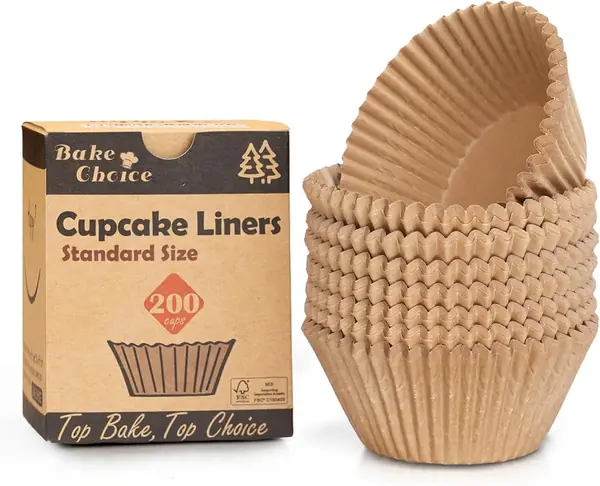
Bake Choice standard cupcake liners, unbleached parchment paper cups in a kraft box

Everyday cupcake baking

Bake Score 98/100
Count
200
Bottom Diameter
1.97 in (5 cm)
Height
1.37 in
Oven-safe To
428°F
View on Amazon

Two figures decide whether a paper liner earns its place, and this one gets both right. The base is 1.97 inches across — the size that drops into a standard 12-cup muffin pan and sits flat instead of crumpling at the corners — and the 1.37-inch wall stands upright while you fill it. We've filled a full tray of these one-handed without a single cup folding in on itself.

The paper is siliconized parchment rather than the plain stuff, and that's what we noticed on a wet chocolate batter that normally welds itself to a cheap liner: the wrapper peeled away in one piece and left the crumb intact. The coating also means no spray and no dusting of flour. It's rated to 428°F, well past anything a muffin pan sees. Warm muffins are the harder case — give them two minutes out of the oven and the paper releases far more cleanly than when you tear in while they're still steaming.

You get 200 in a stiff kraft box at one of the lowest per-liner costs among the paper cups here. Keep them in the box, though. Left loose in a drawer they flatten, and a flattened liner stops sitting neatly in the pan — which turns a thirty-second job into a fight at seven in the morning.

Worth Noting

  • Not sized for jumbo or Texas muffin pans
  • Plain unbleached look, no colors or prints
Our Verdict

This is the box we reach for first: a standard fit, a parchment coating that lets go of wet batter, and enough liners to get through a season of Tuesday muffins.

Check Latest Price
2

Bake Choice Tulip Cupcake Liners Best for Bakery-Style Presentation

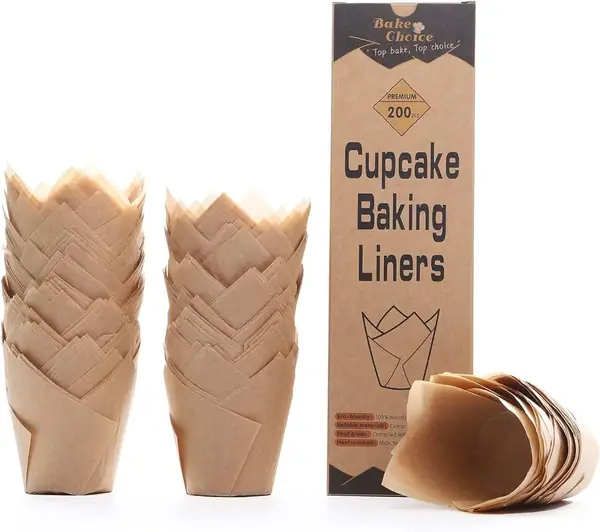
Bake Choice tulip cupcake liners, natural unbleached parchment cups with flared petals

Bakery-style presentation

Bake Score 97/100
Count
200
Material
Unbleached parchment
Bottom Diameter
1.97 in (5 cm)
Height
3.15 in
View on Amazon

Tulip liners solve one problem and solve it well: the wall rises above the rim of the pan, so you can fill past the line a flat cup allows and end up with a muffin that domes over the top instead of stopping politely at the edge. These are 3.15 inches tall on a 1.97-inch base, and that extra height is where the whole effect lives.

The paper is 50 to 55 g/m² European parchment, which the maker calls a fifth thicker than ordinary parchment, and the difference is in the hand — these don't go limp and translucent the moment batter hits them. They look the part, too. A tray of them on the counter reads like a bakery case, and buttercream sits against the petals without tearing them, which isn't true of every paper cup.

Two hundred come in a kraft box with a cardboard collar that keeps the petals from crushing in transit. The height that makes them look good is also why a stack eats a real corner of a cupboard where a flat sleeve would have slid into a drawer. For cupcakes that get iced and handed to someone, that's a fair trade. For the ones eaten standing over the sink, it isn't.

Worth Noting

  • Costs noticeably more per liner than flat cups
Our Verdict

We use these when the cupcakes are for other people — the taller wall holds a generous fill and the petals make a plain muffin look like it came from a pastry case.

Check Latest Price
3

PaperChef Parchment Baking Cups Best for Sticky Batters

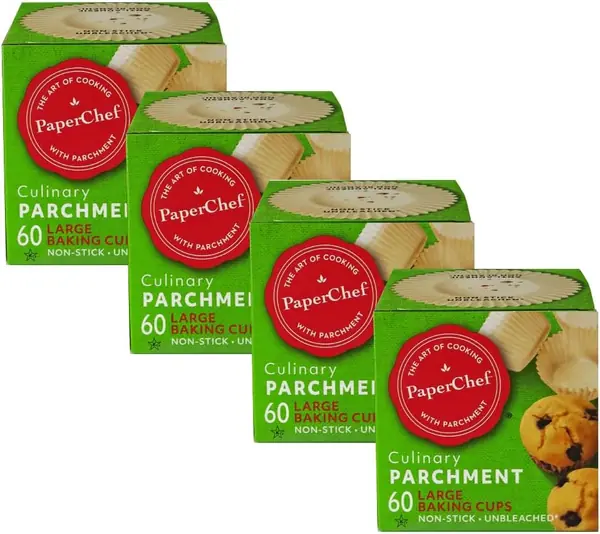
PaperChef large parchment baking cups, natural compostable paper, four sleeves of 60

Sticky, low-fat batters

Bake Score 96/100
Count
240 (4 packs of 60)
Material
Compostable parchment
Oven-safe To
425°F
Size
Large
View on Amazon

Most liners are fine until the batter stops being generous with fat. Egg bites, low-oil muffin recipes, anything loaded with fruit — that's where cheap paper welds itself to the crumb and takes the bottom of the muffin with it. These large parchment cups are the ones that don't. We ran a no-oil egg batch through them and got a clean release with nothing stuck to the paper, which is about the toughest fair test a liner can face.

They hold their shape in the tin instead of folding in as you spoon batter in, and the paper is thick enough that it doesn't go see-through as it bakes. Rated to 425°F, kosher certified, and compostable, which matters if the mound of liners in your trash has started to bother you. We also like that they peel away from the sides cleanly — a cupcake shouldn't lose half its crumb to the wrapper.

The caveat is size. They're sold as large, and on a standard 12-cup tin that plays out differently depending on the pan: some trays take them snugly, others leave a rim of bare metal showing. Bake one tray before you commit to a wedding order. We keep these for the batters that fight back and use cheaper paper for everything else, which is how 240 cups last a long while.

Worth Noting

  • Priciest per liner in this group
Our Verdict

For egg bites, low-fat muffins, and any batter that normally glues itself to paper, these are the liners we trust — test the fit in your own pan first.

Check Latest Price
4

Amazon Basics Reusable Silicone Baking Cups Best Reusable

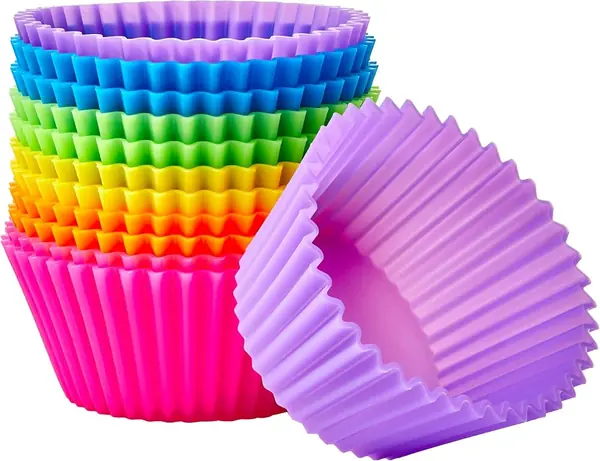
Amazon Basics reusable silicone baking cups, 12-pack in assorted multicolor shades

Reusable, low-waste baking

Bake Score 95/100
Count
12
Height
1.3 in
Capacity
80 ml
Top Diameter
2.9 in
View on Amazon

Reusable cups pay off in a different currency: you stop thinking about them. Twelve of these live in a drawer, go into the muffin tin, and come back out the next morning. Each is 2.9 inches across and 1.3 inches tall with about 80 ml of capacity, so they sit in a standard pan like a paper cup but stand on their own when you set them out on a sheet.

We've used ours for egg bites and mini frittatas as much as for cake, and the release is genuinely slick — no spray, no greasing, the contents tip out in one piece. Rated to 428°F, microwave safe, freezer safe, and dishwasher safe, which covers everything short of a broiler.

The colors do a second job. A silicone cup is the only liner here that leaves the kitchen, and handing a kid a blue one full of grapes at lunch and getting it back at the end of the day is a use no paper cup has.

Silicone has a memory, though. Strong flavors settle into the flutes and can come back in the next bake, and dried batter needs a soak before it lets go. Both are the price of not throwing a cup away every time, and we pay it happily — these have replaced paper in our kitchen for everything except the cupcakes we give away.

Worth Noting

  • Twelve cups won't cover two dozen at once
Our Verdict

If you bake most weeks and hate discovering you're out of paper, these earn their drawer space — keep a separate set for eggy, garlicky things.

Check Latest Price
5

GiFBERA Rainbow Cupcake Liners Best for Colorful Batches

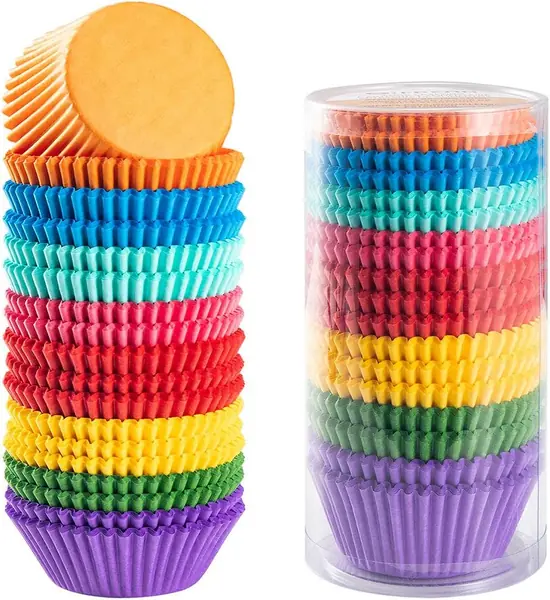
GiFBERA rainbow cupcake liners, 400 multicolor paper baking cups in eight shades

Colorful party batches

Bake Score 94/100
Count
400
Bottom Diameter
2 in (5 cm)
Capacity
90 ml
Colors
8 solid shades
View on Amazon

Four hundred liners in eight solid colors is a different purchase from a plain box: it lets you color-code a tray. Vanilla in yellow, chocolate in blue, the gluten-free batch in red so nobody mixes them up at the bake sale. That's why we keep a box of these in the cupboard, and it's a real advantage — one rainbow pack does the work of three single-color buys.

The cups are standard, with a 2-inch base, and they hold their shape well enough that you can fill them on the counter and then set them into the pan instead of leaning over the oven. The dye holds, too: reds stay red through a bake and the tiffany blue doesn't go grey, which isn't a given with dyed paper.

They arrive in a plastic sleeve rather than a box, and that turns out to be the right packaging — it keeps the stack compressed so the pleats don't splay before you get to them. Store them in the sleeve and keep it closed. With 400 on hand you can be generous: use one to hold chopped nuts, send cupcakes home in them, let a kid pick the color.

Worth Noting

  • Paper grips very sticky batters
  • Some shades run out well before others
Our Verdict

Our pick for party trays and kids' birthdays: eight colors that survive the oven, in a box big enough that you never ration them.

Check Latest Price
6

GiFBERA Gold Foil Cupcake Liners Best for Weddings and Showers

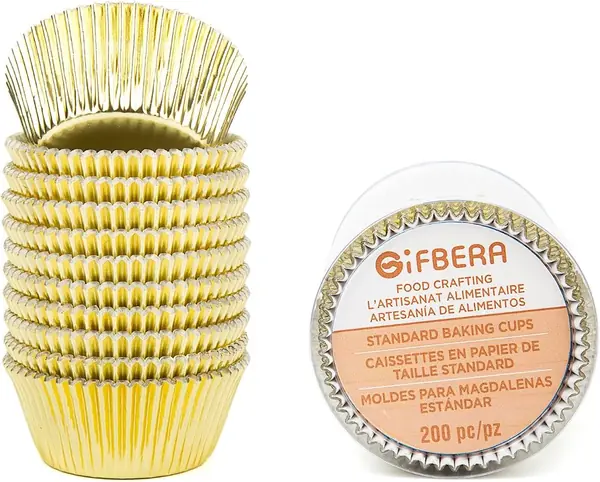
GiFBERA gold foil cupcake liners, 200 metallic paper cups for parties

Weddings and showers

Bake Score 93/100
Count
200
Material
Gold foil with greaseproof paper
Bottom Diameter
2 in (5 cm)
Capacity
90 ml
View on Amazon

A gold foil cup isn't really about the cake. It's about the table: a tray of them on a white cloth looks like a caterer made it, and at a shower or a wedding that's most of the job. Two hundred cover a hundred-cupcake order with a sleeve to spare for the ones that collapse on the drive over.

Where foil liners usually fail is grease. The metal delaminates, the paper underneath darkens, and the pretty cup looks stained from the outside before the party starts. These are bonded to greaseproof paper, and the flutes stayed bright and crisp through a bake — exactly what we were watching for. They're stiffer than paper, too, happy to stand free on a sheet pan and solid enough to hold a cheesecake-sized portion without buckling.

Release is the trade. Foil is less forgiving than parchment and a sticky batter grips the sides, so we keep a can of spray next to the box; the paper-lined interior peels away better than the shiny outside suggests. Check the shade when the container arrives, as well — gold runs from champagne to brass, and it reads differently under reception lighting than it does in your kitchen. For a tray that has to look bought, neither issue is a dealbreaker.

Worth Noting

  • Not compostable, unlike paper cups
Our Verdict

Buy the gold foil when the tray is going on a tablecloth — it holds its shine, keeps grease in, and makes a plain cupcake look catered.

Check Latest Price
7

Green Direct White Cupcake Liners Best for Big-Batch Everyday Baking

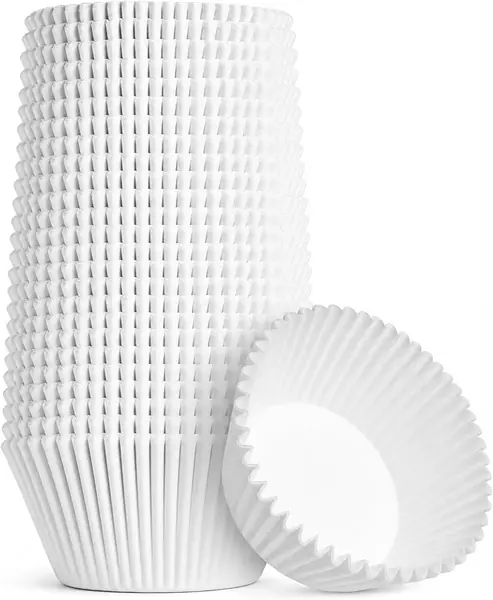
Green Direct white paper cupcake liners, 500-count standard size in a slim box

Big-batch everyday baking

Bake Score 92/100
Count
500
Material
Paper
Color
White
View on Amazon

Five hundred plain white liners is a bake-sale quantity, and that's the buyer this suits: a classroom, a church kitchen, a household that runs a tray a week. White is also the forgiving choice when you don't know what the cupcakes will look like — it goes with every frosting and doesn't fight a holiday table.

The paper is plain rather than siliconized, and it behaves like it: easy to separate, easy to set into the tin, and slightly translucent where butter or oil soaks in. Fit is the thing to watch. They're sold as standard and they drop into a 12-cup pan without complaint, but they sit a little low in the cup, so you get a wider rim of bare metal around each muffin than a fuller cut gives you.

Here's where we land: for volume baking — muffins for the freezer, a hundred cupcakes for the school fair — a wider rim of bare metal is not a problem anyone will mention, and the per-liner cost is the lowest of anything here. Buy the box, keep it in the box, and stop rationing liners.

Worth Noting

  • Plain paper clings to wet batters
Our Verdict

When we need 500 cups for a bake sale, this is the box: plain white, the lowest per-liner cost here, and enough that nobody has to ration.

Check Latest Price

How We Tested Cupcake Liners

The shortlist started with the liners actually on the market, narrowed by size, material, and count per box before anything went near the oven. We looked at base diameter first, then set aside anything with thin, see-through paper or seams that pulled apart in the package. Twelve styles made the cut: standard paper, foil, tulip, parchment, and reusable, in counts from a dozen to 500.

Testing ran for three months, in my own kitchen and at a friend's, on ordinary weeknights and one very long Saturday before a birthday party. I filled each liner with the same measured scoop of batter — plain vanilla first, then a chocolate batch, which is the real test of whether paper wicks — and baked at 350°F. After every batch I checked the pan underneath for grease spots, peeled half the cupcakes while warm and half after they cooled, and noted which ones came away clean and which took a layer of cake with them.

Ease of use got its own round of small annoyances. I timed how long it took to separate a stuck stack with one hand, whether the empty cups stood up in the pan or collapsed, and how much batter a tulip liner actually holds once its petals flare. For value, I counted every box and worked out the cost per cupcake, then stored the leftovers in a cabinet for weeks to see which boxes crushed and which opened cleanly. Reusable cups went through the dishwasher and back into rotation. What separated the winners was boring and consistent: the cupcake released in one piece, the pan stayed clean, and I never had to fish paper out of a muffin.

How to Choose Cupcake Liners

Measure the Base Before Anything Else

Liner sizes are quoted by base diameter because that's the part that has to sit inside the cup of the pan. A standard muffin tin takes roughly a 2-inch base with a top that opens to about 2.75 inches; mini and jumbo pans want their own sizes. Drop an undersized liner in and it slumps, and batter creeps under the paper instead of climbing the sides.

Height is the forgiving dimension. A cup can rise well above the rim and still bake fine — that's the whole idea behind tulip liners. It's the base that has to be right, so measure the bottom of one cup in your pan once and buy to that number from then on.

Match the Material to the Batter

Plain paper is the cheapest option and the one most likely to cling, which is fine for a butter-rich cupcake and maddening for a low-fat muffin. Siliconized parchment, the coating on most of the cups here, releases far more reliably and needs no grease at all. Foil-lined cups resist grease bleeding through and hold a shine, which is why they turn up at weddings; they're stiffer and they aren't compostable.

Silicone baking cups are the reusable route. Nothing to run out of, nothing to throw away — but they do hold onto strong smells, so keep a savory set and a sweet set if you bake both.

Watch What Shows Through the Paper

Thin paper turns translucent where butter and oil soak in, which is why a rich muffin can look stained from the outside before anyone unwraps it. It matters most with dark batters and pale cups, and least when the cupcake is going onto a paper plate at a bake sale.

Heavier parchment and foil-laminated cups hold their surface through a bake. If the outside of the cupcake is going on a dessert table, pay for the thicker cup; if it's going in a lunchbox, don't.

Buy Two Kinds, Not Five

The practical move is one plain workhorse and one dressy cup. A standard parchment liner covers muffins, cupcakes, and egg bites; a tulip or foil cup covers the tray you photograph. An eight-color assortment is worth it only if you actually color-code your bakes.

Two boxes stored flat in their packaging will do more for your baking than a cupboard full of novelty prints you're afraid to use up.

Count, Storage, and the Price per Liner

Large counts bring the per-liner cost down and the storage problem up. Paper liners keep their pleats in the box they arrived in; loose in a drawer they soften and splay, and a splayed liner won't stand up while you fill it.

A 200-count is a few months of weekly muffins for most households, while 400 or 500 is a school-fair purchase. If you buy big, keep the box and store it somewhere dry, since humid cupboards soften paper fast.

Frequently Asked Questions

Final Verdict

We send most bakers to the Bake Choice standard cups: a proper 2-inch base that sits flat in the pan, a parchment coating that lets go of wet batter, and no spray required. Change the pick when the job changes — PaperChef for egg bites and low-fat batters that cling, Amazon Basics silicone if you bake every week and would rather stop buying liners, and the tulip cups when the tray has an audience.