The 6 Best Pizza Steels of 2026

My pizza stone sat in the back of a cabinet for years because it never got hot enough to give me what I wanted: a blistered, leopard-spotted underside in under five minutes. A steel does. It's a slab of carbon steel that soaks up heat and dumps it into the dough the moment you launch, so the same home oven that turned out pale pies suddenly produces a crust worth photographing.

The tradeoff is weight. These run somewhere between 15 and 30 pounds, need the better part of an hour to heat through, and demand a storage spot you can actually lift them out of. We baked on 12 of them, and thickness turned out to be the number worth understanding: quarter-inch plates come up to temperature faster, while three-eighths hold more heat and cost you in heft.

The ones that made the cut browned evenly from edge to edge, didn't bow at 550°F, and earned their price and their shelf space — whether that's a Friday-night pie or a Sunday loaf of sourdough.

Our Top Picks

The Best Pizza Steels

1

Dough-Joe Shogun Pizza Steel Best Overall
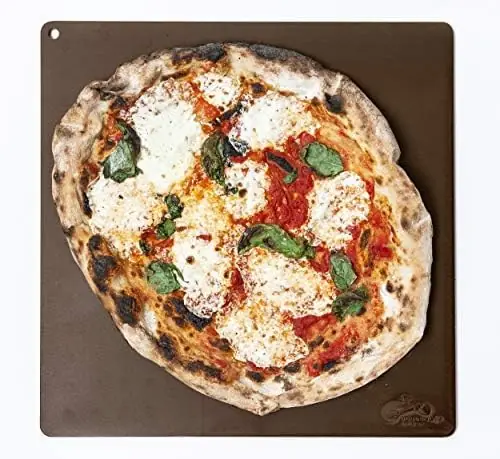
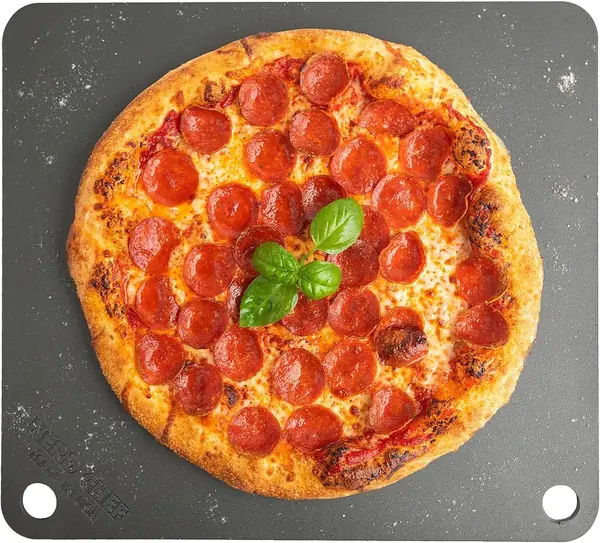
Dough-Joe Shogun 15-inch square carbon steel pizza plate with a matte seasoned finish

Full-size round pies

Bake Score 95/100
Surface
15 x 15 in
Weight
24 lb
Thickness
3/8 in
Seasoning
Pre-seasoned
View on Amazon

Nearly every steel in this guide is a 14-by-16-inch rectangle, and that shape quietly limits the pie you can bake to 14 inches across. The Shogun is a 15-inch square, so a full-size round pizza fits with room to spare. That extra inch is why it earns the top spot: it is the difference between a pizza you split four ways and one you cut into proper slices.

Underneath the shape is 3/8-inch carbon steel, and the mass is the whole point. It soaks up enough heat that a second pie goes on while the first is being sliced, and the bottom still comes out dark and crisp rather than pale. Dough-Joe seasons the surface with flaxseed oil and leaves it matte, which gives steam somewhere to go instead of trapping it under the crust. Our pies have released cleanly every time.

A square also wastes no corners on anything that is not round. A focaccia or a tray of rolls fills it edge to edge in a way a rectangle does not, and the plate is big enough that it becomes the surface you cook on rather than a thing you get out. We noticed the difference most on the second bake of the night, when a thinner plate would still be catching up.

Worth Noting

  • 24 pounds needs two hands and mitts
  • Needs about 1.5 inches of clearance all around
Our Verdict

We make it our top pick because a 15-inch square bakes the largest round pie here, and the 3/8-inch plate keeps the crust crisp through a second.

Check Latest Price
2

NerdChef Steel Stone Best 1/4-Inch Plate

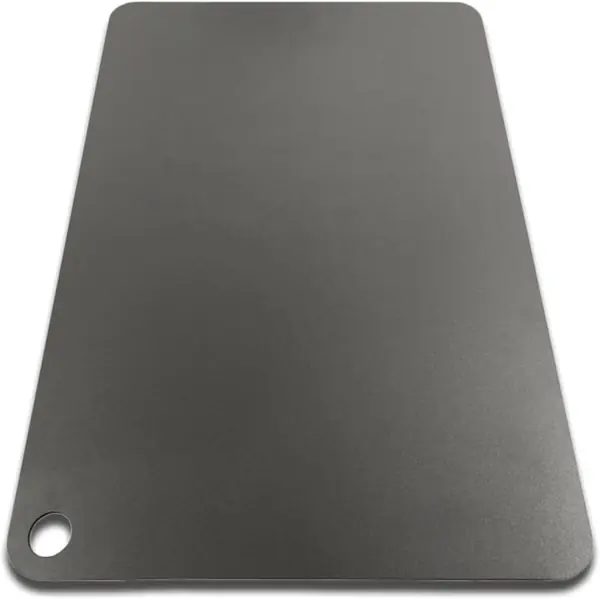
NerdChef Steel Stone rectangular quarter-inch steel baking plate with a sanded gray surface

Standard home ovens

Bake Score 94/100
Surface
16 x 14.25 in
Weight
16 lb
Thickness
1/4 in
Max Temp
1000 °F
View on Amazon

The plate shows up already seasoned, flaxseed oil baked onto a sanded, low-friction surface, so there is no evening spent oiling and smoking bare steel before the first bake. That is the detail we appreciated most, and it is the main reason this is the 1/4-inch plate we point most kitchens toward.

At 16 by 14.25 inches and 16 pounds it slides onto a standard rack and comes back out with two hands and a mitt. The quarter-inch plate heats through faster than the thick slabs here, which matters on a weeknight, and it is rated to 1000 °F, so the grill is fair game. It is solid steel, backed for life, and it will not shatter the way a stone does if you set it down hard.

It also turned out to be the plate that made us stop reaching for a stone when we bake bread. A bâtard set on it at 500 °F comes out with a bottom that crackles, and there is room for two baguettes side by side. That second job is worth weighing if you bake more loaves than pizzas.

Worth Noting

  • Less heat reserve than the 3/8-inch plates
  • Can spot with rust if stored damp
Our Verdict

For a standard oven and one pie at a time, this is the steel we reach for: seasoned out of the box, quick to heat, and guaranteed for life.

Check Latest Price
3

ThermiChef Pizza Steel Best for Back-To-Back Pizzas

ThermiChef 14-by-20-inch rectangular pizza steel in bare silver steel

Crowd pizza nights

Bake Score 93/100
Surface
14 x 20 in
Weight
30 lb
Seasoning
Requires seasoning
Max Temp
1000 °F
View on Amazon

Fourteen by twenty inches is a sheet-pan footprint in steel, and it is the biggest cooking surface in this guide by a wide margin. Two ten-inch pies fit side by side. So does one long rectangular pizza, or a focaccia that fills the plate corner to corner, which is not something the 13-inch-wide plates can offer.

Size is only half of it. ThermiChef laser-cuts the plate from a single piece of steel and it lands at 30 pounds, which is why it keeps producing dark-bottomed pies long after a thinner plate would have gone quiet. This is the plate for a pizza night with company: the first pie comes off, the next goes on, and nothing needs to recover in between.

There is one more thing to know about the shape. For a single round pizza you are limited to the 14-inch side, so the extra width pays off in batches, two pies at once or a long rectangular bake, rather than in one jumbo pie. If you bake one at a time, you are buying surface you will not use.

Worth Noting

  • 30 pounds is the heaviest plate here
  • Requires a full seasoning before first use
Our Verdict

Buy this if pizza night means a crowd; nothing else here holds heat through that many bakes, and nothing else offers this much surface.

Check Latest Price
4

Chef Pomodoro Pizza Steel Best Budget

Chef Pomodoro 16-inch rectangular pre-seasoned steel pizza plate with a corner finger hole

Budget first steel

Bake Score 92/100
Surface
16 x 13.4 in
Thickness
0.24 in
Seasoning
Pre-seasoned
Max Temp
932 °F
View on Amazon

This is the one we point to when someone wants to find out what steel does without spending much to learn. It arrives pre-seasoned, the surface is smooth, and it bakes a crisp, evenly browned bottom from the very first pie rather than asking you to break it in.

At 16 by 13.4 inches and just under a quarter-inch thick, it heats up quickly and does not demand much preheat patience. The finger hole near the edge is a small thing we came to like a lot: it gives you a grip for dragging the plate forward or lifting it out, which matters more than it sounds when the thing is hot and there is nowhere good to put your hand.

It is rated to 932 °F, which covers every home oven and a covered grill, and the pre-seasoned finish means your first bake is a bake, not a maintenance project. That combination is why it holds a place here despite costing so much less than the thick plates.

Worth Noting

  • Caps round pizzas at about 13 inches
Our Verdict

Our budget pick: an inexpensive way to find out what a steel does for your crust, and it arrives seasoned and ready to bake.

Check Latest Price
5

Artisan Steel Baking Steel Best for No-Frills Everyday Bakes

Artisan Steel 16-by-14-inch rectangular carbon steel baking plate in plain steel

No-frills everyday bakes

Bake Score 91/100
Surface
16 x 14.25 in
Weight
16 lb
Thickness
1/4 in
Seasoning
Re-season as needed
View on Amazon

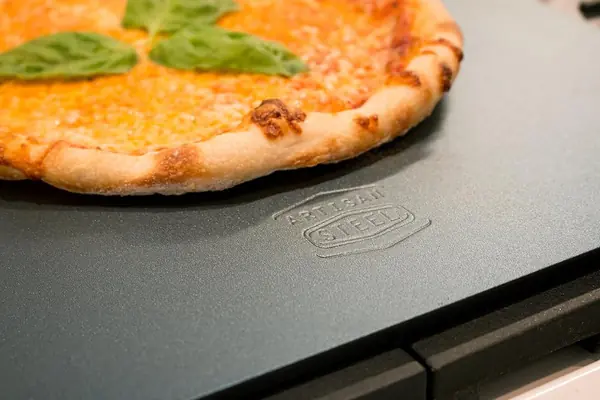
No finger hole, no handle, no factory seasoning. Artisan Steel ships a bare rectangular plate and leaves the rest to you. What you get instead is a hot, low-friction surface that puts color on a crust quickly, and a slab that will not crack if it lands wrong in the sink.

At 16 by 14.25 inches and a quarter-inch thick, it heats through faster than the thick plates here and handles a 550 °F oven without complaint. The 16 pounds is the everyday cost: two hands, dry mitts, and a steady place to set it down. Nothing about the way it bakes feels like a compromise.

What is hard to argue with is the comparison. The NerdChef is the same size and the same thickness for about the same money, and it arrives seasoned with a lifetime guarantee attached. If the Artisan Steel is the one on the shelf, you lose nothing in the oven. If you are choosing between them, there is no reason to take the plate that asks more of you for the same result.

Worth Noting

  • Needs re-oiling to keep the surface slick
Our Verdict

We recommend it to anyone who wants a bare, no-frills plate and does not care about factory seasoning; otherwise the NerdChef gives you more for about the same money.

Check Latest Price
6

Primica Pizza Steel

Primica 16-by-13-inch rectangular pizza steel with a dark seasoned surface

Mid-priced oven upgrade

Bake Score 90/100
Surface
16 x 13.4 in
Weight
14.4 lb
Thickness
1/4 in
Material
Steel
View on Amazon

Sixteen inches by 13.4, a quarter-inch thick: this is the plate for a household that bakes two pizzas on a Friday and a loaf of sourdough on Sunday and does not want to think about it beyond that. It is not the biggest surface here and it is not the cheapest, and for a lot of kitchens that middle position is exactly right.

It heats through quickly and browns evenly across the whole surface, with no pale patch where the crust meets the edge. The heat it holds is enough to bake several 12-inch pies one after another without a long wait between them, which is the thing we test for first. Cleanup is a scrape and a rinse, and it darkens with use the way seasoned steel should.

What keeps it out of the top tier is the width and the record behind it rather than anything in the bake. There is simply less known about this plate than about the Shogun or the NerdChef, and 13.4 inches narrows the round pies you can make. Buy it if the size suits your oven and you want a plate that will outlast the appliance it sits in.

Worth Noting

  • 13.4-inch width limits round pies
Our Verdict

A solid middle-of-the-list plate for two pies and a loaf: quick to heat, even on the browning, and easy to live with.

Check Latest Price

How We Tested the Best Pizza Steels

We started with a list of roughly 30 steels and filtered hard: thickness, footprint (it has to clear a standard oven rack with room to spare), whether the plate shipped pre-seasoned or bare, and a price spread wide enough to say something useful about value. Twelve made the cut. We baked on each one for at least six weeks across eight months, in home ovens, on a gas grill in the summer, and with sourdough boules as well as pizza.

Before the first bake, every steel went onto a kitchen scale. Then it went into a 550°F oven, and we took surface readings with an infrared thermometer at 30, 45, and 60 minutes to see how long each one genuinely needed before a launch. We used the same dough on all of them — same flour, same hydration, same cold ferment — so any difference in the finished pie belonged to the steel.

What we watched for: whether the underside browned evenly from edge to edge or scorched down the middle, how the rim set and puffed, and whether the slice still had a crisp bottom after a couple of minutes on the plate. We lifted each one in and out of the oven with a mitt to judge whether the weight was manageable and whether a handle or finger hole helped, and we stored them in a cabinet between bakes because that's where they live in a real kitchen. We also ran them hot for a full hour to check for warping, then scrubbed and re-oiled each to see whether the seasoning held or flaked.

Value came last, and it wasn't just about price: we weighed what each steel delivered in crust quality against what it cost and how often we found ourselves reaching for it.

How to Choose a Pizza Steel

Thickness Decides How Many Pies You Get

A 1/4-inch plate heats through in a reasonable time and carries enough energy for one or two pizzas. A 3/8-inch plate stores far more and hands it back pie after pie, which is why a 24- or 30-pound slab is the batch-baking choice rather than the everyday one.

The trade is weight and preheat time, not crust quality. The 1/4-inch NerdChef browns a bottom as dark as the thicker plates here. Pick by how many pies you bake per session: one or two, go thin; a production line for a family, go thick.

Measure the Rack, Not the Oven Door

Oven capacity is quoted in cubic feet, which tells you nothing about whether a square plate will clear the walls. Measure the usable width and depth of the rack and subtract about three inches. Dough-Joe asks for roughly 1.5 inches of clearance on every side, and that same breathing room is what lets heat move around the plate instead of baking the edges hard.

A 14-by-20-inch plate often fits by turning it long side left to right. Set it on a rack in the upper third, never on the oven floor, so the top of the pie browns while the bottom crisps.

Weight Is the Part You Live With

These range from about 14 pounds to 30. You lift one into a hot oven, out again, and probably move it to make room for a roast. Two hands and dry, heavy mitts are not optional, and a plate that stays on the rack is easier to own than one that goes in and out of a cupboard.

If you have wrist or shoulder limits, or a wall oven set high, a 1/4-inch plate at around 16 pounds is the difference between using it weekly and avoiding it.

Seasoning Is What Keeps Pies Moving

Steel is not nonstick, and a pre-seasoned plate earns its small premium on the first night you use it. After that, scrape it clean, skip the soap, dry it completely, and wipe a thin film of oil across the surface now and then.

When a pie sticks, the culprit is usually the launch rather than the plate: dust the peel generously with semolina or flour, give the pie a shake before you open the oven door, and do not let a topped pie sit on the peel.

Frequently Asked Questions

Final Verdict

Start with the Dough-Joe Shogun. The 15-inch square bakes the largest round pie on this list, and the 3/8-inch plate still turns out a dark bottom after the first one comes off. That combination is why it is our top pick.

If your rack is tight, or you bake one pie at a time, the NerdChef gives you the same blistered bottom at 16 pounds instead of 24, and it arrives seasoned. Still deciding whether steel is worth it at all? The Chef Pomodoro is our budget pick and needs nothing else to get started.