The 9 Best Silicone Baking Molds of 2026

Silicone baking molds solve the oldest problem in baking — the muffin that won't let go of the tin — and then hand you a new one: a pan with no spine, whose walls fold the second you lift it full of batter. I've watched a tray of cornbread batter slump onto an open oven door, and I've also turned out a dozen egg bites that dropped free without leaving a crumb. The difference between those two pans wasn't luck or technique; it was how the mold itself was built.

That's what we set out to figure out, baking in 16 silicone molds across muffin trays in regular and mini sizes, donut rings, loaf pans, and small candy molds. Wall thickness and a reinforced frame turned out to matter more than any product photo suggests — the flimsy pans were also the ones that stained, warped, and held onto grease in the corners after a dishwasher cycle. And size trips up more shoppers than anything else: a 24-cup mini tray is wider than a standard half sheet, so measure your oven rack and your cabinet shelf before you commit.

Our nine are the ones we kept reaching for on ordinary Sunday mornings, plus the few that earned a permanent spot for holiday candy. Some bake like metal and some are as soft as a potholder, and both kinds have a place in a kitchen.

Our Top Picks

The Best Silicone Baking Molds

1

BAKE BOSS Muffin Pan Set Best Overall
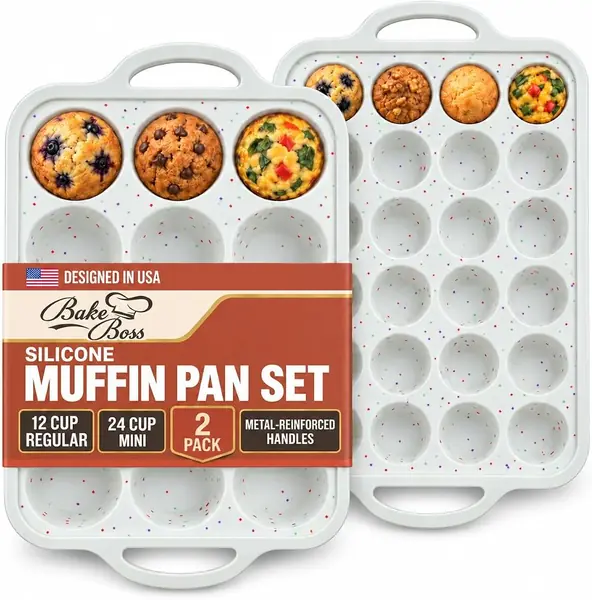
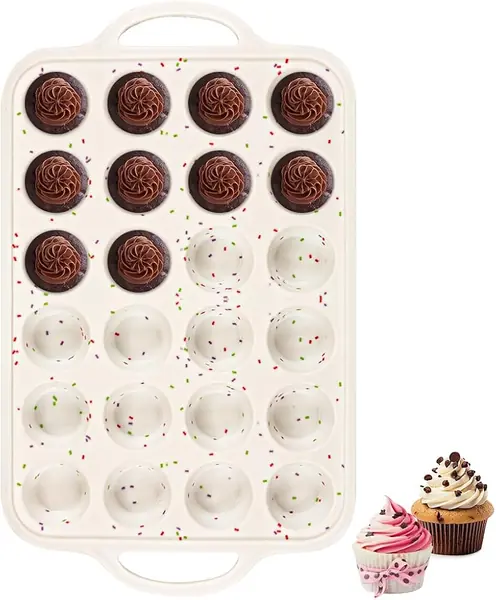
Cream BAKE BOSS silicone muffin pans, one 12-cup and one 24-cup mini, with handles

Muffins and minis

Bake Score 97/100
Pieces
2 pans
Cups
12 regular + 24 mini
Frame
Metal-reinforced
Oven Safe
450°F
View on Amazon

Almost every plain silicone muffin pan here shares one weakness: fill the cups and the tray turns into something closer to a wet noodle than a pan, and it needs a baking sheet underneath just to reach the oven. The BAKE BOSS set skips that step. A stainless frame runs through both pans, so a loaded 12-cup travels to the rack in one hand and sits there on its own. That single design decision is why it is our top pick, because the workaround every other flexible tray on this list requires simply is not part of the routine.

What the money buys is two pans, one 12-cup regular and one 24-cup mini, both rated to 450°F and safe in the freezer and the dishwasher. A standard batch of muffins and a tray of egg bites can go in together instead of one after the other. The cream silicone has stayed clean through repeated rounds of batter, and every cup we filled released with a press from underneath.

Two small things from our batches. Cheese-heavy egg bites and sticky quick-bread batters want a light coat of spray, which is ordinary for silicone and takes seconds. And the handles on the frame turned out to be the detail we use most, because with oven mitts on there is an actual grip instead of a floppy corner to pinch.

Worth Noting

  • Regular cups run small for standard muffins
  • Rigid frame will not fold for storage
Our Verdict

We recommend the BAKE BOSS set as the default silicone buy: it behaves like a metal pan, releases like silicone, and puts regular and mini in one box.

Check Latest Price
2

Amazon Basics Baking Cups Best Baking Cups

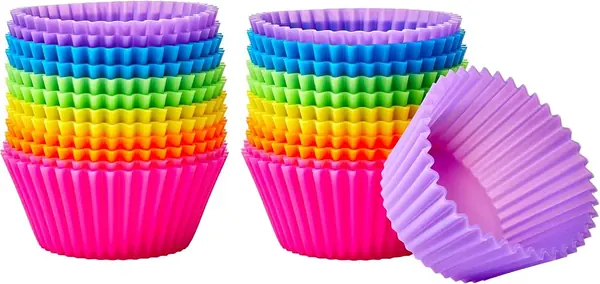
Multicolor Amazon Basics silicone baking cups, 24 round reusable cups with fluted sides

Liners and lunchboxes

Bake Score 96/100
Oven Safe
428°F
Capacity
80 ml each
Cup Size
2.9 x 2.9 x 1.3 in
Count
24 cups
View on Amazon

Paper liners are the thing these replace, and they manage it without a muffin tin in the picture. Each cup is 2.9 inches across and 1.3 inches tall, holds 80 milliliters of batter, and stands on a sheet pan by itself, or drops into a metal tin when you want the extra support. Twenty-four of them in the box means you stop buying paper.

Release is why they stay in reach. Muffins, egg bites, and cornbread all push out with a thumb and no greasing, and the cups rinse quickly enough to reuse the same afternoon. They are rated to 428°F and are fine in the microwave, freezer, and dishwasher, which is what makes them useful beyond baking: salad dressing, measured spices, a divider for a kid's lunch.

One caveat before you commit the whole set: silicone takes on what it cooks with. Strongly spiced batters and garlicky egg muffins can leave a ghost behind in cups that were rinsed rather than scrubbed. Keep four or five aside for savory cooking and the sweet ones stay sweet.

Worth Noting

  • Fluted sides need a brush for dried batter
Our Verdict

Buy these if you want silicone's release without committing to a pan: 24 cups that replace paper, pack into a lunchbox, and outlast a roll of liners.

Check Latest Price
3

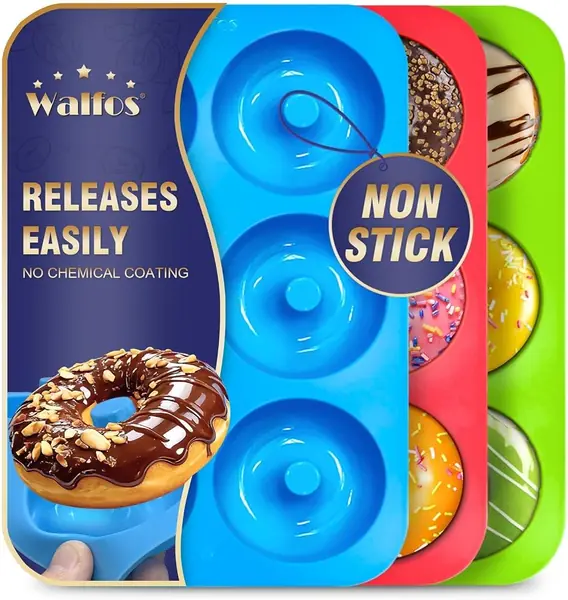
Walfos Donut Pan Set Best for Donuts

Three multicolor Walfos silicone donut molds with round nonstick rings

Baked donuts

Bake Score 95/100
Pieces
3 donut molds
Care
Dishwasher safe
Material
Food-grade silicone
Donut Size
3 in diameter
View on Amazon

A silicone donut pan makes one kind of donut: the baked, cake-style ring rather than the fried one, with a tender crumb and no pot of oil to strain afterward. Walfos sells three molds in a set, each with wells about 3 inches across, which is enough to turn out a weekend batch without running the oven twice.

Sizing is the first thing to straighten out. The rings come out small, closer to two bites than to a bakery donut, and we are fine with that for breakfasts and after-school snacks, where a smaller ring means a second one without an argument. Release is where these shine: cooled cake donuts lift out whole, and the molds clean up with a rinse.

They are floppy, so fill the wells with the mold already sitting on a cookie sheet and slide the whole thing into the oven, because a loaded mold carried by hand will fold and spill. That same softness is why nothing sticks, and all three molds fold flat into a drawer when the baking is done.

Worth Noting

  • Rings come out smaller than expected
  • Needs a spritz of oil for clean release
Our Verdict

We recommend the Walfos set for weekend cake donuts: three molds, small rings, and a release that does not fight you.

Check Latest Price
4

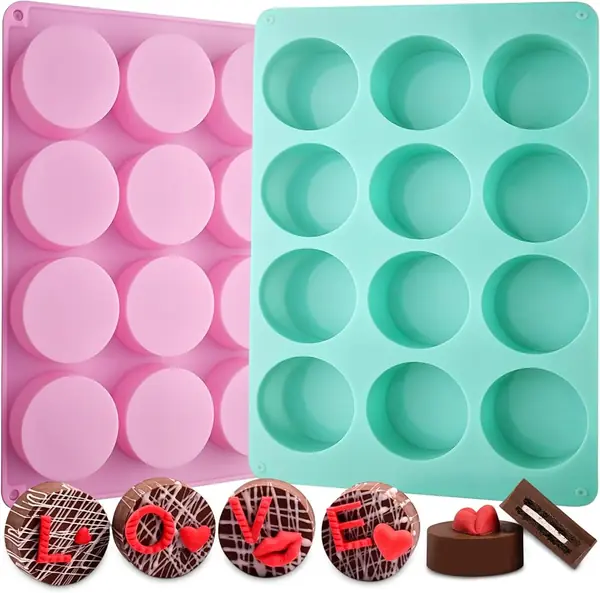
Actvty Chocolate Molds Best for Chocolates and Candy

Two Actvty silicone chocolate molds, each with 12 round cavities

Chocolate-covered cookies

Bake Score 94/100
Pieces
2 molds
Care
Dishwasher safe
Cavities
12 per mold
Cavity Size
2.1 x 0.82 in
View on Amazon

Chocolate-covered sandwich cookies are the whole brief here, and Actvty nails the measurements: two molds, 12 round wells apiece, each well 2.1 inches across and 0.82 inches deep so a cookie drops in with room for a shell above and below. That is a narrow purpose, and it is exactly the one we want from a candy tray, because the cookies come out looking dipped by someone with steadier hands than ours.

The molds are rated from -40 to 230 degrees Celsius, dishwasher safe, and flexible enough that finished candy twists loose rather than needing to be pried. The molded face comes out glossy, which is the difference between homemade candy that looks homemade and candy that looks bought. Twenty-four wells at a time means a holiday batch is one session instead of an afternoon of hand-dipping.

Know this before you melt: deep wells take more chocolate than a thin coating would, and one batch of cookies can absorb more than you planned for. Melt extra at the start rather than stopping halfway with a tray of half-finished shells.

Worth Noting

  • Deep wells use more chocolate than expected
Our Verdict

If you dip cookies or mold candy every holiday, this is the tray we hand people: 24 wells, a glossy finish, and almost no cleanup.

Check Latest Price
5

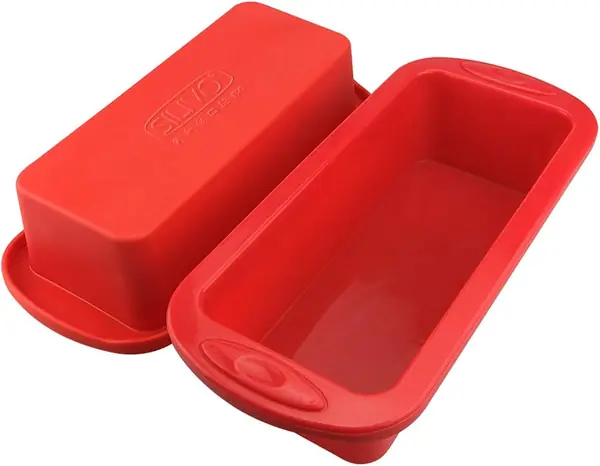
SILIVO Loaf Pan Set Best for Bread Loaves

Red SILIVO silicone loaf pans, two rectangular nonstick bread molds

Quick breads

Bake Score 93/100
Pieces
2 loaf pans
Capacity
1300 ml
Pan Size
8.9 x 3.7 x 2.5 in
Temp Range
-20°F to 450°F
View on Amazon

SILIVO's loaf pans are smaller than a standard bread pan, 8.9 by 3.7 inches across the top, so a recipe written for a metal loaf comes out shorter and you may have batter left over for a muffin cup or two. That is worth knowing before your first bake rather than after.

Everything else is the reason we keep them. They are rated from -20°F to 450°F and dishwasher safe, so banana bread, meatloaf, and molded gelatin all work in the same pan, and there is no coating to chip or seam to rust the way there is on a cheap metal tin. Loaves slide out without greasing, which matters with sticky quick-bread batters.

The trade-off is shape. Silicone has no rigid wall to hold the batter up, and these bow outward as the loaf rises, so the finished bread is a little wider and a little flatter than the pan suggests. Set the pan on a sheet for support and it still slices and toasts properly, just not as a tall sandwich loaf. For quick breads and freezer loaves we take that trade over a scratched tin.

Worth Noting

  • Smaller than a standard loaf pan
Our Verdict

Buy these for quick breads and freezer loaves you plan to slice, not for tall sandwich bread: the release is excellent, the shape is negotiable.

Check Latest Price
6

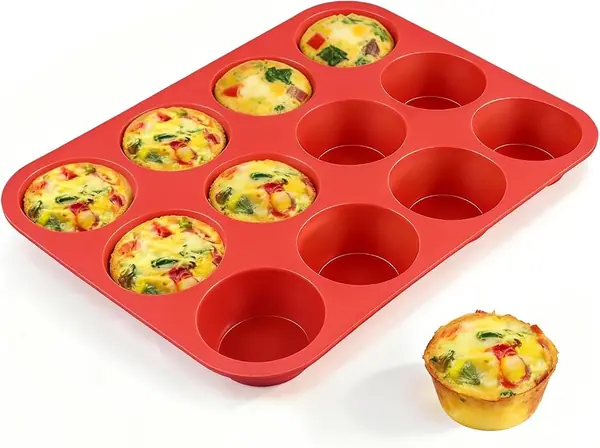
CAKETIME 12-Cup Muffin Pan Best Budget

Red CAKETIME 12-cup silicone muffin pan with round nonstick cups

Budget muffin batches

Bake Score 92/100
Cups
12 regular
Max Heat
446°F
Cup Size
2.75 in x 1.1 in deep
Pan Size
12.8 x 9.6 x 1.1 in
View on Amazon

If you want to find out whether you get along with silicone baking before spending much, CAKETIME's 12-cup is the pan that asks the least. Twelve cups at 2.75 inches across and 1.1 inches deep, about 2.8 ounces of batter each, the same footprint as a standard metal cupcake pan, so old recipes still fit.

It bakes the way silicone should. Muffins push out from the bottom without papers or spray, egg bites pop free, and a rinse plus a dishwasher cycle handles the rest. Rated from -104°F to 446°F, it goes from freezer to oven without complaint, and the pan is light enough to move with one hand, though you should not.

The walls are thin, and a full pan sags in the middle unless it is sitting on a sheet pan. Bake it that way and the floppiness stops mattering; try to carry it loaded and you will wear the batter. We keep a sheet pan under ours and stopped thinking about it, which is a small thing to ask for the least expensive full-size silicone pan here.

Our Verdict

We recommend this one as the cheap way into silicone: it releases and cleans like pans costing more, as long as you bake it on a sheet pan.

Check Latest Price
7

Fimary Mini Muffin Pan Best for Mini Muffins

Cream Fimary mini silicone muffin pan with metal-reinforced frame, 24 cups

Mini muffins

Bake Score 91/100
Cups
24 mini
Frame
Metal-reinforced
Oven Safe
450°F
Cup Diameter
1.8 in
View on Amazon

Mini muffin pans are where silicone earns its keep: egg bites, two-bite muffins, frozen yogurt drops, all things that tear coming out of a metal tin. The Fimary pan covers 24 of them, and unlike most mini trays this size, a metal frame runs around the outside so the whole thing holds its shape as you lift it out of the oven. That is why it is the mini pan we reach for first.

Cups measure 1.8 inches across, and the pan is rated to 450°F and dishwasher safe, so portioning broth or yogurt and going straight from freezer to oven is one move instead of two. Muffins and egg bites have released cleanly for us; a light coat of oil helps once the surface has seen a lot of use.

The frame stops at the rim, leaving the cups themselves flexible, which is what you want when you are pushing a set egg bite out from underneath. It also means the pan sits level on a rack without anything under it, a small thing that stops being small on a weekday morning.

Worth Noting

  • Only bakes mini-size portions
Our Verdict

A mini muffin pan that does not need a sheet under it: we recommend it for egg-bite meal prep and snack-size baking.

Check Latest Price
8

Vinino Muffin Pan 2-Pack Best for Two-Pan Baking

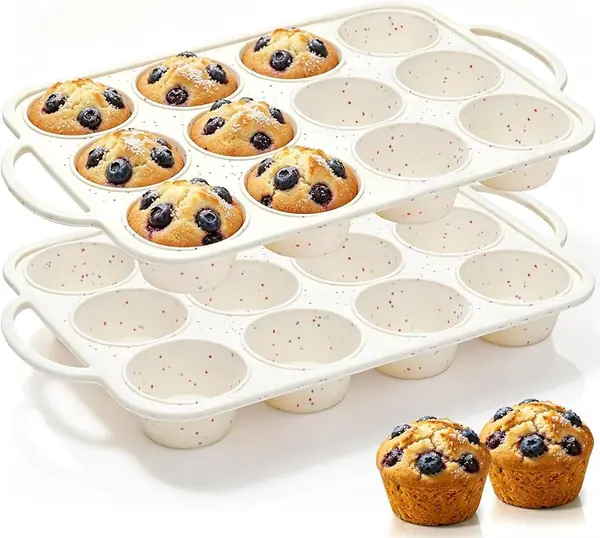
Two cream Vinino silicone muffin pans with reinforced frames and handles

Two-pan baking

Bake Score 90/100
Pieces
2 pans
Cups
12 per pan
Frame
Metal-reinforced
Max Heat
446°F
View on Amazon

Getting a loaded silicone pan out of a hot oven is the moment most of these trays get awkward. Vinino solves it with a stainless frame that includes handles at each end, so both hands have something solid to hold while the pan is over the rack. The set gives you two pans of 12 regular cups, rated to 446°F.

Two pans is the part we did not expect to care about. One can be in the oven while the other gets filled and cooled, and the pair nests inside itself for storage, so it takes roughly the cabinet space of one rigid pan. For anyone baking in rounds, whether a bake sale, a birthday, or a week of meal prep, that halves the standing-around time.

The cups are a touch narrower than a standard metal tin, so muffins come out slightly smaller; consider it a portion shift rather than a problem. Everything else is quiet competence: muffins slide out unscathed, egg bites release with a thumb, and both pans come out of the dishwasher clean.

Worth Noting

  • Cups run slightly smaller than a standard tin
Our Verdict

We recommend the Vinino pair if you bake in two rounds: the handles and frame make the oven part feel safe, and it costs less than the top pick.

Check Latest Price
9

BAKER DEPOT Heart Mold Best for Shaped Desserts

Two green BAKER DEPOT silicone molds with six heart-shaped cavities each

Shaped desserts

Bake Score 89/100
Pieces
2 molds
Max Heat
445°F
Cavities
6 hearts per mold
Cavity Size
2.95 x 2.75 in
View on Amazon

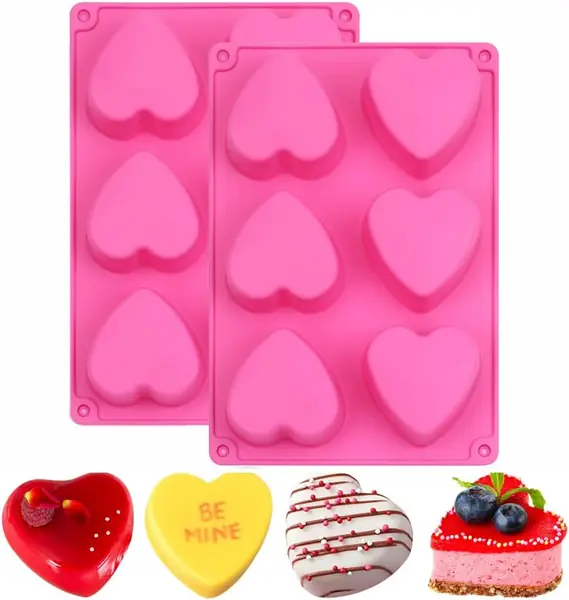
Six hearts per mold, each cavity about 2.95 by 2.75 inches, big enough for a mini cheesecake, a molded jelly, or a chocolate shell you fill later. The BAKER DEPOT set includes two molds, so a dozen hearts go at once.

We used them for no-bake work as much as baking. Mousse and gelatin release with a gentle push from behind, the shape survives the unmolding, and the hearts come out with the kind of clean edge that fluted cups do not give you.

The silicone is softer than the muffin pans here, so a filled mold needs a tray underneath or it will fold on the way to the fridge. That same softness is why the detail on each heart stays intact. For a birthday, a Valentine's batch of chocolates, or jelly for a party, this is the mold we pull; it is a specialty, not the pan you use every Sunday.

Our Verdict

Buy it for the shape: large, well-defined hearts for mini cakes, jelly, and molded chocolate, with a release that keeps the edges sharp.

Check Latest Price

How We Tested (and Baked In) 16 Silicone Molds

We started with a spreadsheet of best-selling and well-reviewed silicone molds, then narrowed by format — standard 12-cup muffin trays, mini 24-cup trays, individual baking cups, donut rings, loaf pans, and small candy molds — and by the claims that actually affect baking: food-grade and BPA-free material, a stated oven-safe temperature, dishwasher-safe labeling, and overall dimensions. Anything without a temperature limit got cut. We tested 16 molds over four months, baking in my kitchen on weeknights and weekend mornings.

Sturdiness separated them first. I filled every tray to the same line and lifted it by one corner off the counter; metal-reinforced frames barely flexed, while thin pans bowed until batter pooled to one side. I measured wall thickness at the rim and base with calipers, then baked at 425 degrees to see which rims sagged or curled.

For release and browning, I baked the same recipes in every mold — muffins and egg bites in the standard trays, mini quiche in the small cups, sandwich loaves and meatloaf in the loaf pans, donuts, and a batch of chocolate candy — then pressed and twisted each cavity by hand and counted how many came out whole. I noted, too, whether crusts browned or steamed pale, since silicone insulates and a soft mold needs longer in the oven.

Cleaning got its own pass: I scrubbed half the molds by hand in warm soapy water and ran the rest through the top rack of the dishwasher, then checked corners and rims for grease film and stains. Across the four months I tracked which ones scratched, whitened, or held onto the smell of a meatloaf batch, and I nested each set in a drawer to see how much space a 24-cup mini tray really eats.

How to Choose Silicone Baking Molds

Match the Cavity Size to Your Recipe

Regular and mini are not standardized, so read the cup dimensions instead of trusting the label. A regular cup here runs about 2.75 inches across and holds roughly 2.8 ounces; a mini cup is closer to 1.8 inches and 0.6 ounces. If your recipe makes a dozen standard muffins, a 12-cup regular cupcake pan is the right buy. Mini trays are for egg bites, two-bite portions, and snacks, and batter meant for regular cups will overflow them.

Shaped molds are a separate purchase, not a substitute. Donuts, hearts, and candy trays do one thing well and nothing else, so buy them for the bake you actually repeat rather than for the one you imagine.

Decide Whether You Want a Frame

Plain silicone is genuinely floppy, and that is the point: flexible walls are what let a muffin push out with one thumb. The cost is that a full pan needs a sheet underneath and two hands to move. A stainless frame, like the ones on the BAKE BOSS set, the Vinino pair, or the Fimary mini pan, keeps the rim rigid and adds handles while leaving the cups themselves soft.

Reinforced pans cost more, but if you have ever tilted a loaded silicone tray on the way to the oven, that money buys confidence rather than a feature.

Read the Temperature Range, Then Respect It

The molds here top out between 428°F and 450°F and run down to -40°F, which covers baking, freezing, and the dishwasher. What those numbers do not cover is the broiler or a burner. Silicone bakeware belongs on a rack or a sheet pan, never under direct high heat or on the stovetop.

Check the rating before you buy if you bake hot and fast, and remember that the frame, not the silicone, sets how confidently you can move a full pan.

Expect Paler Crusts

Silicone insulates, so breads, muffins, and cakes brown less than they do against metal. On a muffin that reads as a soft, pale side; on a loaf it means a thinner crust. If browning matters, slide a metal sheet pan under the mold and let the hot metal do the work the silicone will not.

The simpler rule: keep a metal tin for the recipes where crust is the whole point, and use silicone for everything else. Knowing this ahead of time saves you from blaming the pan.

Plan for Cleaning and Odors

Rinse fluted cups before the batter dries; once it sets in the ridges, a soft brush does more than a dishwasher cycle. Everything here is dishwasher safe, and the top rack is the safer habit for thin-walled cups. Silicone also holds onto strong smells, so a dedicated savory set costs less than replacing a whole tray.

Store molds nested, rolled, or folded, and keep heavy metal pans off anything you want to stay flat.

Frequently Asked Questions

Final Verdict

If you bake muffins or egg bites more than occasionally, the BAKE BOSS set is the one to buy. The steel frame means you stop juggling a baking sheet every single time, and getting a regular pan and a mini pan together covers most of what a home baker makes in silicone.

On a tight budget, the CAKETIME 12-cup does the same work with a sheet pan underneath, and the savings will buy a second pan. If quick breads are your thing, the SILIVO pair is the only loaf mold here worth the shelf space.