The 3 Best Detroit Style Pizza Pans of 2026

The best part of a Detroit-style pizza is the crisp, caramelized strip of cheese that climbs the pan walls, and that fringe only happens when the pan is built for it: straight sides, roughly 2.5 inches of depth, and a surface the crust releases from cleanly. I've made square pies in cake pans and sheet trays; the results were never close. We baked through 10 Detroit-style pans to find the ones worth the cabinet space.

Size matters: the standard is 10 by 14 inches, and a pan that runs small or has sloped sides gives you a thinner pie with less edge. The finish matters too — hard-anodized aluminum, coated steel, and pre-seasoned surfaces age very differently, and a coating that chips or a pan that warps after a dozen bakes is money wasted at any price. What I want now is a pan that heats evenly, wipes clean without soaking, and earns a second life as a focaccia or brownie pan. Three pans cleared that bar.

Our Top Picks

The Best Detroit Style Pizza Pans

1

Lloyd Pans Detroit Style Pizza Pan 10x14 Best Overall
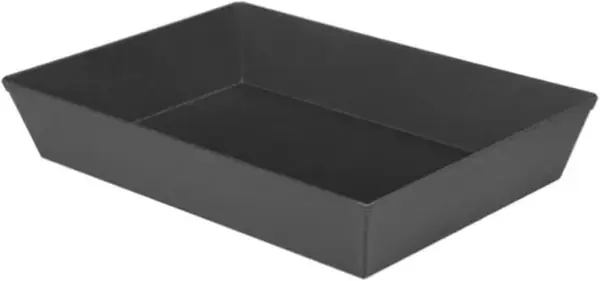
Lloyd Pans Detroit Style Pizza Pan, dark gray aluminum rectangular pan with 2.5-inch walls

Everyday Detroit bakes

Bake Score 96/100
Size
10 x 14 x 2.5 inches
Material
Aluminum
Finish
Pre-seasoned PSTK
Metal Utensils
Yes
View on Amazon

The PSTK finish is why we reach for this pan first. Lloyd's pre-seasoned Tuff Kote surface is the only one here the maker rates for metal utensils, and that allowance matters more than it sounds: the cheese that climbs the wall fuses into the corner during the bake, and a thin metal spatula slides under it without tearing the crust or gouging the coating. We stopped treating this one like it was fragile after the second bake.

The rest of the pan is shaped for the style. The walls stand 2.5 inches tall, the depth that holds cheese against the side long enough to fry into that dark, lacy rim, and the 10-by-14 footprint matches what most Detroit recipes are written for, with 328 cubic inches of capacity for dough and toppings. Aluminum carries heat evenly across the base, so the bottom browns from edge to edge instead of scorching in the middle.

It arrives pre-seasoned, so the first bake needs no ritual, and at 1.4 pounds it's easy to tip with one hand when the square slides out. Dry it fully before it goes back in the cupboard; a coated pan stored damp is a coated pan that stops releasing.

Worth Noting

  • Hand wash only, never the dishwasher
  • Matching lid is sold separately
Our Verdict

Our pick for anyone who bakes Detroit-style regularly: a metal-safe, pre-seasoned pan that lets the crispy rim come free without a fight.

Check Latest Price
2

Jisculo Detroit Style Pizza Pan 10x14 Best Value

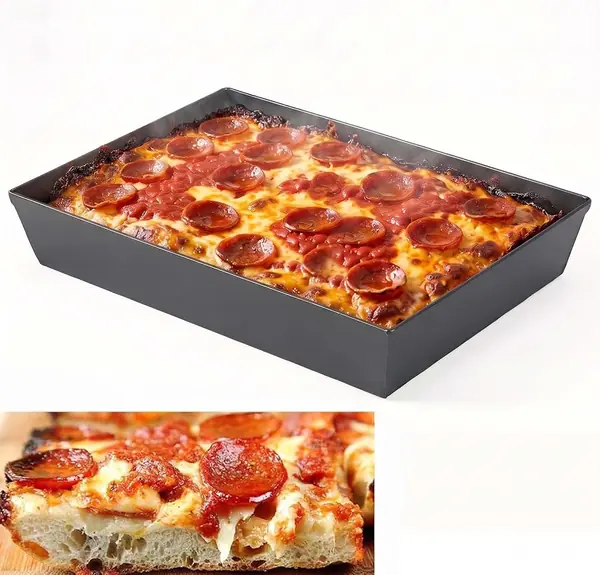
Jisculo hard-anodized aluminum Detroit style pizza pan, black, 10 by 14 inches

Budget high-heat bakes

Bake Score 88/100
Size
14 x 10 x 2.5 inches
Material
Hard-anodized aluminum
Max Temperature
500 °F
Warranty
5 years
View on Amazon

This is the least expensive pan we recommend, and the specifications don't read like a compromise: hard-anodized aluminum, 10 by 14 by 2.5 inches, a 500°F ceiling, and a five-year replacement warranty. If you're buying your first Detroit pan and want to keep the spend modest, this is where we start.

The 500°F rating is the part we care about most. A pan that stops at 450 quietly rules out the hottest Detroit recipes, and this one goes high enough for the bake the style wants. The pre-seasoned surface is slick enough that a full cheese edge tips out with a nudge, and the hard-anodized body spreads heat across the base rather than concentrating it in the center.

Warping is the trade-off. A pan that pops and flexes when it hits a hot oven may never sit flat again, and a rocking pan is annoying on a rack and worse on a stovetop. Bake at 450°F and it's a non-issue; run 500°F every week and it's the reason to look hard at the Lloyd. The warranty takes some of the sting out either way.

Worth Noting

  • Hand wash only; not dishwasher safe
Our Verdict

We point budget-minded bakers here: a 500°F hard-anodized pan with a five-year warranty that bakes a proper Detroit square.

Check Latest Price
3

Stock Your Home Detroit Style Pizza Pan 10x14

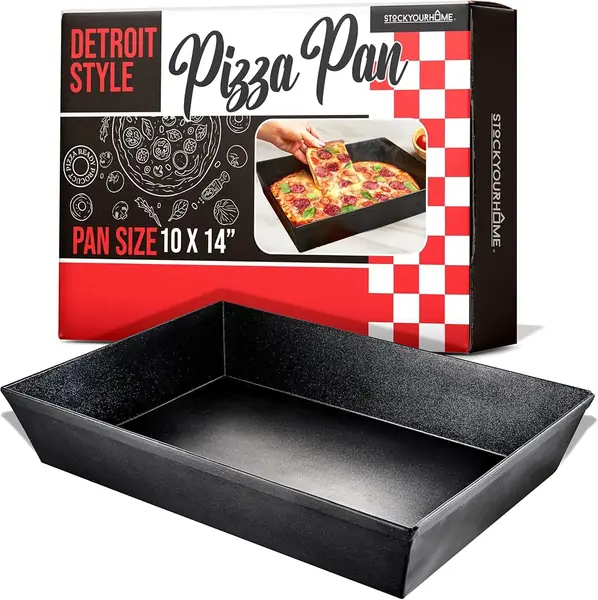
Stock Your Home Detroit style pizza pan in black aluminum with deep 2.5-inch sides

Ovens below 450°F

Bake Score 87/100
Size
14 x 10 x 2.5 inches
Material
Aluminum
Max Temperature
450 °F
Care
Dishwasher safe
View on Amazon

Four hundred fifty is the number that decides this pan, so start there. The top of its oven range sits below the 500°F ceiling on the Jisculo and below where most Detroit recipes set their bake. We still like it — the release is dependable and it's the only pan here rated for the dishwasher — but the rating is the first thing to check against your recipe.

In the oven it does what a good Detroit pan should. The 10-by-14-by-2.5-inch body is the standard size and depth, so dough rises up the walls the way the style needs, and the coated aluminum browns the base evenly and lets a loaded square slide onto a board without a fight. It also earns its shelf space between pizzas: focaccia, brownies, lasagna, and casseroles all bake in it.

Where it fits is a gentler oven. If yours tops out at 450°F, or you bake your pizza at 425 and value being able to put the pan in the dishwasher afterward, that ceiling never comes up. Chase the blistered high-heat Detroit bake and it will, every time.

Worth Noting

  • 450°F maximum rules out hotter bakes
Our Verdict

If your oven never passes 450°F, this is the deep pan we hand you: dependable release, standard size, dishwasher safe.

Check Latest Price

How We Tested Detroit-Style Pizza Pans

We started with every 10-by-14 Detroit pan we could find from specialty bakeware shops and mainstream kitchen brands, then narrowed the list by the things that actually affect a bake: interior dimensions, a wall height near 2.5 inches, an oven rating of at least 500°F, and a non-stick surface free of PFOA. Ten pans made the cut.

Each one went through at least six pizzas over seven months, most of them on Friday nights when the oven was already running hot. We used the same dough and cheese blend every time, pressed it into the corners, and watched whether it crept up the walls or pulled away. At 500°F we noted how evenly the cheese browned from corner to corner and whether the bottom crust set before the top turned dark, then slid a thin spatula under an edge to see if the caramelized cheese released in one piece or tore.

Size and functionality we checked with a ruler and a second recipe. A few pans sold as 10 by 14 measured slightly narrow, which changed how much dough they held, and every pan also had to bake a focaccia and a batch of brownies, since a single-use pan is harder to recommend. We stacked them in a cabinet to see whether the rims nested or wobbled and whether the coating picked up scratches against its neighbors.

After each bake we washed by hand with a soft sponge — once a week with a nylon scraper and dish soap — and checked the surface for flaking or dark patches. Durability got its real test when a hot pan hit a cool counter, and we watched for warping. Non-stick performance we judged on the tenth bake, not the first, and value came down to whether a pan needed extra oil, parchment, or babying to release cleanly.

How to Choose a Detroit-Style Pizza Pan

Depth and Footprint Come First

Detroit-style pizza is defined by its walls. Two and a half inches is the standard, and it's what holds shredded cheese against the side long enough to fry into the dark, lacy rim the style is famous for; a shallower pan bakes a flat square with an ordinary crust. The other half of the decision is the 10-by-14 footprint that most recipes assume.

Measure your oven rack and your sink before ordering, because a 14-inch pan is awkward to soak in a small basin and tight against a narrow oven wall. If space is genuinely short, an 8-by-10 pan makes a smaller but still proper Detroit square.

Match the Rating to Your Oven

Every pan carries a maximum oven temperature, and it's the specification most shoppers skip. Detroit-style recipes commonly run 500°F or above to set the crust before the cheese scorches; a pan rated to 450°F is fine at 425 and out of its depth at 525. Home ovens also overshoot their set temperature on the way up, so a pan living at the top of its range is a pan working without margin.

Decide how hot you actually bake, then buy above that number. The 500°F pans here don't cost more than the 450°F one, so there's rarely a reason to accept the lower ceiling unless your oven can't reach it anyway.

Aluminum, Hard-Anodized, or Blue Steel

Material is where the differences get subtle. Aluminum, anodized or not, conducts heat quickly and evenly across the base, which is why it browns a Detroit square edge to edge without a hot spot in the middle — and it's what all three pans here are made from.

Blue steel, the material of the original motor-city parts trays, takes longer to heat but holds it, browning the bottom harder. It also needs seasoning and thorough drying to stay rust-free. We favor anodized aluminum for a pan that gets used weekly and blue steel for the tinkerer who enjoys the upkeep.

The Finish Is the Lifespan

Pre-seasoned non-stick is what makes a Detroit pan pleasant, and it's also the part that fails first. Chipped or flaking coating can't be repaired, and once the surface starts shedding into the corner where the cheese fries, the pan is finished. The Lloyd pan's metal-utensil rating is the feature we value most here, because cutting into the pan is the most common way a finish gets gouged.

Whatever you buy, wash it by hand with a soft sponge, skip abrasive powders, and never stack another pan inside it without a towel between.

Frequently Asked Questions

Final Verdict

The Lloyd Pans Detroit Style Pizza Pan is the one we point people to. Its pre-seasoned, metal-utensil-safe finish is what makes the difference: you can work a spatula under the fried cheese rim without tearing the crust or the coating, and the standard 10-by-14-by-2.5-inch body browns evenly from edge to edge.

On a tighter budget, the Jisculo bakes the same square and adds a five-year warranty. Choose the Stock Your Home only if your oven tops out at 450°F — above that, its rating becomes the limit you bump into every bake.